
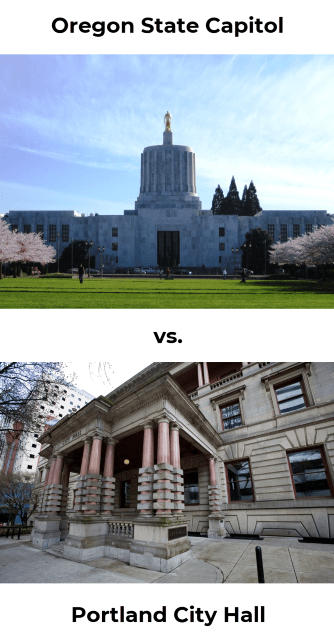
Portland Real Estate Appraisal Brief – Sunday, November 30, 2025: Oregon Rent Laws vs. Portland’s Tenant Protections

Oregon’s 9.5% rent cap for 2026 combines with Portland’s relocation assistance rules, creating distinct valuation considerations for rental properties across the metro area.

Via Wikimedia Commons

Oregon’s statewide rent stabilization framework under the Residential Landlord and Tenant Act provides a uniform baseline for rental increases and evictions across the state, including the Portland metro area. Oregon was the first U.S. state to enact comprehensive statewide rent control in 2019 (via Senate Bill 608), followed by California later that year (via AB 1482) and Washington in May 2025 (via HB 1217). These statutes establish annual limits on rent increases for most residential properties, with exemptions for new construction and certain subsidized housing. However, within the city limits of Portland, local ordinances add layers of tenant protections that require relocation assistance for certain terminations and rent hikes. As a certified residential appraiser serving homeowners, lenders, realtors, estate planners, and attorneys in the region, understanding these distinctions is crucial for accurate property valuations, especially for income-producing rentals where regulatory constraints directly influence projected cash flows and market discounts.

Key provisions include rent increase limits under ORS 90.323 and their annual calculation under ORS 90.324.

Statewide Rent Stabilization and Eviction Basics

Under ORS 90.323, landlords cannot raise rent during the first year of tenancy or more than once every 12 months thereafter. The maximum allowable increase for calendar year 2026 is capped at 9.5%. Violations expose landlords to liability for three months’ rent plus actual damages.

Just-cause eviction requirements under ORS 90.427 prohibit no-cause terminations after the first year. Qualifying landlord reasons (major remodel, owner/family move-in, etc.) still require proper notice and, in some cases, one month’s rent as assistance. Exemptions from these protections include units less than 15 years old from the date of the certificate of occupancy, federally subsidized or regulated affordable housing (where the tenant’s portion does not rise or the increase is program-mandated), owner-occupied duplexes or triplexes (where the landlord resides in one unit), and certain short-term rentals.

Portland’s Local Overlay: Enhanced Relocation Assistance

Portland builds on these state protections through City Code 30.01.085 – the Renter Additional Protections ordinance. The city applies Oregon’s statewide cap but adds relocation assistance obligations when rent increases reach 10% or more (for units otherwise exempt from the statewide cap, such as newer construction or subsidized housing). Relocation assistance is also required for:

  • Non-renewal of fixed-term leases
  • Qualifying landlord reasons under state law
  • Substantial changes to lease terms beyond rent or utilities

Payments (due 45 days before termination or within 31 days of tenant request) are scaled by unit size:

  • $2,900 (studio/SRO)
  • $3,300 (1-bedroom)
  • $4,200 (2-bedroom)
  • $4,500+ (3+ bedrooms)

Landlords must file exemption forms with the Portland Housing Bureau when applicable and notify the Bureau of payments within 30 days.

Valuation Implications for the Portland Metro Area

For estate planners and attorneys handling inherited rentals, these combined rules often lock in below-market tenancies. Homeowners converting properties to rentals must project income conservatively. Realtors listing income properties typically disclose scheduled rents via RMLS. A listed property with units significantly below market rent levels may receive low offers and usually sells at a substantial discount.

Lenders benefit from reduced turnover risk but must recognize higher operating costs inside Portland city limits. For appraisers, the dual framework means statewide rent caps set the ceiling, while Portland’s relocation obligations add another layer of financial consideration.

Geographic Scope

Oregon’s statewide rules apply in the Portland Region (Columbia, Clackamas, Hood River, Multnomah, Washington, and Yamhill Counties). Portland’s relocation overlay is city-specific. Properties in the Vancouver Region (Clark, Cowlitz, Klickitat, and Skamania Counties) fall under Washington’s separate statewide stabilization law (enacted May 2025), which exempts new construction for 10 years and caps annual increases at 7% + inflation, not to exceed 10%.

Further Reading & Resources

  • Oregon Residential Landlord and Tenant Act (full chapter): ORS Chapter 90
  • Rent Increase Limits & Notice Requirements: ORS 90.323
  • Annual Rent Cap Calculation: ORS 90.324
  • Termination of Tenancy without Tenant Cause: ORS 90.427
  • Portland Renter Additional Protections (City Code 30.01.085): Official City Page
  • Portland Mandatory Relocation Assistance Brochure (PDF): Download
  • Portland Housing Bureau Relocation Rules & Exemption Form: HOU-3.05
  • Oregon Law Help – Eviction & Termination Notices: Guide
  • Oregon Senate Bill 608: PDF
  • California AB 1482
  • Washington HB 1217

Thanks for reading—I hope you found a useful insight or an unexpected nugget along the way. If you enjoyed the post, please consider subscribing for future updates.

Question: Do you think other cities in Oregon will add relocation assistance provisions?

CODA

Are you an agent in Portland and wonder why appraisers always do “x”?

A homeowner with questions about multifamily income properties, GRMs, or income calculations?

If so, feel free to reach out—I enjoy connecting with market participants across Portland and the surrounding counties, and am always happy to help where I can.

And if you’re in need of appraisal services in Portland or anywhere in the Portland Region, we’d be glad to assist.


Portland Real Estate Appraisal Brief – Saturday, November 29, 2025: Oregon Sets 2026 Rent Cap at 9.5%

Oregon’s 2026 rent cap is set at 9.5%. See the key details and implications of this policy for Portland metro rental valuations, property owners, and investment strategies.

Portland appraisal brief graphic for Oregon 2026 9.5% rent cap official announcement.

The Oregon Department of Administrative Services (DAS) has released the official rent stabilization percentages for 2026, offering clarity for landlords, tenants, and housing professionals statewide. As a certified residential appraiser serving the Portland metro area, I track these updates closely because they influence rental market dynamics, which in turn affect property valuations for homeowners, lenders, realtors, estate planners, and attorneys.

This annual adjustment, governed by ORS 90.323 (maximum rent increase) and ORS 90.324 (calculation and publication), ensures rent increases align with inflation while offering predictability in a volatile housing market. Published on September 30, 2025, the announcement ties directly to the state’s rent control measures enacted to protect tenants from excessive hikes.

For most residential tenancies in the Portland region, the maximum allowable rent increase will be 9.5% starting January 1, 2026. This figure represents the lesser of 10% or 7% plus the Consumer Price Index for All Urban Consumers (CPI‑U) for the West Region, All Items, based on data from the previous 12 months. The calculation reflects a measured response to rising living costs, down slightly from the 10.0% cap in 2025.

Key Details on the 2026 Rent Cap

Understanding the nuances of this cap is essential for anyone involved in residential leasing or valuation in Oregon. The 9.5% limit applies broadly to tenancies under ORS 90.323, which covers most single‑family homes, apartments, and multifamily units in the region. Landlords must provide at least 90 days’ written notice for any increase up to this threshold, and the cap applies per 12-month period and increases may only be given once in any 12-month period.

Exemptions and special cases:

  • Smaller facilities (≤30 spaces): Manufactured dwelling parks or marinas follow the same formula—10% or 7% + CPI (9.5% in 2026).
  • Larger facilities (>30 spaces): Parks or marinas face a stricter 6% maximum increase under ORS 90.600.
  • Exclusions: New tenancies in the first year, fixed‑term leases without renewal, and exempt properties (e.g., subsidized housing). Utilities and fees may rise separately from base rent.

These provisions help maintain stability in the Portland metro area’s rental landscape, where median asking rents have hovered near $1,987 for a two‑bedroom unit according to RentCafe’s Portland rental market report (Nov 2025). Zillow places the overall average asking rent across unit types at $1,772 (Zillow Portland Rental Market; snapshot date 11/28/2025). Neighborhood‑level data shows two‑bedroom rents ranging from $1,800 to $2,400, underscoring the variability across the metro.

For appraisers, knowing the precise rent cap helps model the timeline required to bring a property or multifamily project back to market rents, especially when current leases are below prevailing rates. This allows for more accurate income projections.

Implications for Portland Metro Property Owners and Professionals

  • Homeowners: Must factor the 9.5% ceiling into rental conversion ROI, especially when evaluating single‑family properties for lease. The cap limits upside potential in a demand‑heavy market and affects long‑term income projections.
  • Realtors: Benefit from being able to project realistic rental growth figures in listings, particularly for multifamily properties (2+ units). The cap provides a clear ceiling for annual rent increases, which helps set buyer expectations and avoid overpromising future income.
  • Lenders: Gain greater clarity into a property’s income potential, allowing for more accurate underwriting and valuation.
  • Investors: Stay aligned with prevailing market rates while complying with legal pacing. For multifamily portfolios, knowing the exact rent cap helps plan staggered increases and avoid underperformance due to below-market rents.

Sources & Further Reading

Thanks for reading—I hope you found a useful insight or an unexpected nugget along the way. If you enjoyed the post, please consider subscribing for future updates.

Question: Do you think the annual cap will ever drop significantly, or will persistent inflation keep the annual increase at about 10%?

CODA

Are you an agent in Portland and wonder why appraisers always do “x”?

A homeowner with questions about multifamily income properties, GRMs, or income calculations?

If so, feel free to reach out—I enjoy connecting with market participants across Portland and the surrounding counties, and am always happy to help where I can.

And if you’re in need of appraisal services in Portland or anywhere in the Portland Region, we’d be glad to assist.

Portland Real Estate Appraisal Brief – Thursday, November 27, 2025: $21M in Unspent Rental Fees Discovered

A recent city review found that Portland has accumulated approximately $21 million in rental-registry fees that were designated to support emergency rental assistance and eviction-prevention programs. During the period in which these funds remained unused, landlords in Multnomah County filed an estimated 800 to 1,200 eviction cases per month, though not all filings result in an eviction order.

Portland Oregon skyline at sunset with Mount Hood in the background and overlay text “$21 Million in Unspent Rental Assistance Funds,” illustrating the impact of housing policy and unspent rental-aid funds on the Portland metro real estate appraisal market.

The rental-registry program requires landlords to pay fees and register units, with the revenue earmarked specifically for tenant-support programs. Poor tracking and administrative delays left the money unspent, even as demand for rental aid remained elevated across the Portland metro area.

Leadership Change and Severance Package

The discovery coincided with the resignation of Portland Housing Bureau Director Helmi Hisserich. Following paid administrative leave, Hisserich received a severance package equal to her full annual salary of approximately $241,000. The city continues to examine how the funds went unused for an extended period.

Appraisal Implications in the Portland Region

Residential Properties (1–4 Units)

The unspent funds have no immediate direct effect on comparable sales selection or adjustment grids for typical single-family or small-multifamily appraisals in the Portland metro area. Broader affordability pressure and eviction volume remain relevant market-condition factors, but no abrupt shift in residential values is likely from this development alone.

Commercial Multifamily and Investor-Owned Properties

If the $21 million is successfully redeployed for rental assistance and eviction defense, occupancy stability in larger apartment properties (5+ units) could improve. Lower economic vacancy risk and reduced turnover expense represent positive influences on net operating income, which in turn support lower capitalization rates and higher valuations for income-producing assets across the region.

Appraisers working on commercial assignments in Multnomah County should monitor city council actions regarding reallocation of these funds in the coming weeks to months.

Homeowners, lenders, realtors, estate planners, and attorneys relying on accurate valuation of investment-grade multifamily residential properties will benefit from understanding how policy execution—or delays—can influence income metrics and risk adjustments in appraisal reports.

Sources & Further Reading

Thanks for reading—I hope you found a useful insight or an unexpected nugget along the way. If you enjoyed the post, please consider subscribing for future updates.

Question: Do you think the $21 million will be disbursed soon, or will it take months before the funds can be used for rental assistance?

CODA

Are you an agent in Portland and wonder why appraisers always do “x”?

A homeowner with questions about income-producing properties?

If so, feel free to reach out—I enjoy connecting with market participants across Portland and the surrounding counties, and am always happy to help where I can.

And if you’re in need of appraisal services in Portland or anywhere in the Portland Region, we’d be glad to assist.