
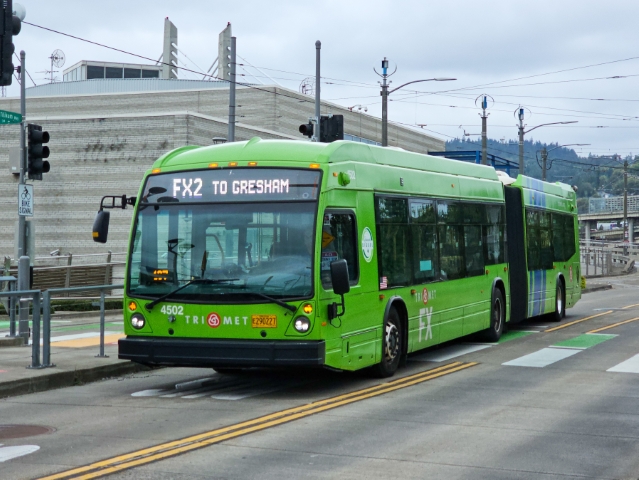
Photo: Truflip99 via Wikimedia Commons (CC BY 4.0)
TriMet’s Initial Service Adjustments Take Effect
On November 30, 2025, TriMet implemented the first phase of service reductions, focusing on reduced frequency during low-ridership evening hours on five bus lines. These changes include:
- Line FX2–Division: Every 24–35 minutes after 7 p.m. daily.
- Line 35–Macadam/Greeley: Hourly after 9 p.m., with partial route suspension after 9 p.m.
- Lines 52–Farmington/185th, 77–Broadway/Halsey, and 81–Kane/257th: Hourly after 9 p.m. on weekdays.
These targeted adjustments aim to address a projected $300 million budget gap over the coming years, driven by operating costs rising over 50% since 2019, ridership recovering to only about two-thirds of pre-pandemic levels, and insufficient new funding sources. A second phase of similar reductions on additional lines is planned for March 2026, with broader changes potentially following in late 2026 and 2027 if revenue challenges continue.
While these initial cuts are modest and timed for off-peak periods, they signal ongoing fiscal pressures on public transit in the Portland metro area.
Appraisal Implications
Residential Properties
Reliable transit access contributes to neighborhood demand and home marketability in the Portland region, particularly in areas with higher Transit Scores. These evening-focused reductions may have limited immediate impact on most single-family homeowners, many of whom have vehicle alternatives for off-peak travel.
Appraisers should remain attentive to buyer preferences in affected submarkets, such as parts of East Multnomah County or Washington County’s outer corridors served by these lines. Properties near core MAX stations or frequent daytime routes are likely to retain stronger connectivity advantages.
Multifamily Properties
Multifamily operators and investors may benefit from closer monitoring of these changes, especially for properties serving tenants with lower vehicle ownership rates. Reduced evening bus frequencies could subtly influence tenant convenience for shift workers or late commutes, potentially affecting renewal rates or lease-up pacing in directly impacted areas.
Early rider feedback highlights these concerns: parents report challenges managing long waits with children during appointments, while commuters note risks of lateness for evening shifts. For income valuations, any emerging softness in rents or occupancy—particularly in outlying complexes reliant on these specific lines—could inform minor adjustments to projected income streams. Core urban assets with redundant transit options should experience minimal effects.
Market Context
Portland’s housing policies continue to emphasize transit-oriented development and density to support affordability and sustainability goals. These initial service reductions—limited to off-peak hours—create some tension with those objectives, as reduced evening access may encourage greater car dependency in affected areas, countering recent efforts to reduce parking minimums and enhance walkability.
Appraisers, lenders, and investors in transit-reliant submarkets should monitor emerging patterns in lease-ups, renewal rates, and buyer feedback as riders adapt to the changes.
Sources & Further Reading
- TriMet first-phase reductions details: KOIN News
- Affected lines and evening changes: KGW Report
- Budget gap and long-term context: OPB Article
- Transit Scores for Portland-area neighborhoods: Walk Score
- Early rider reactions to Phase 1 cuts: KPTV FOX 12 Oregon Report

Thanks for reading—I hope you found a useful insight or an unexpected nugget along the way. If you enjoyed the post, please consider subscribing for future updates.
CODA
Are you an agent in Portland and wonder why appraisers always do “x”?
A homeowner with questions about appraiser methodology?
If so, feel free to reach out—I enjoy connecting with market participants across Portland and the surrounding counties, and am always happy to help where I can.
And if you’re in need of appraisal services in Portland or anywhere in the Portland Region, we’d be glad to assist.

 Portland Appraisal Blog
