
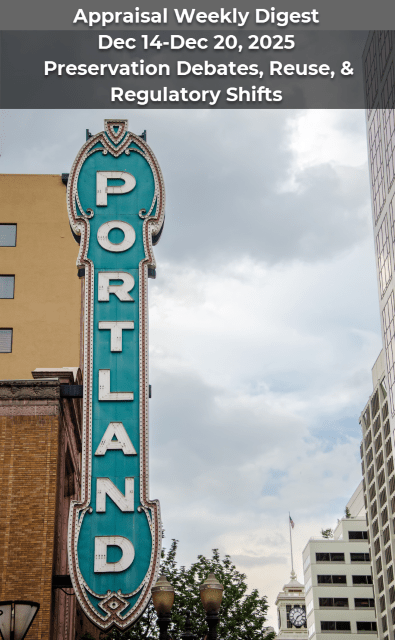
Portland closed out the year with stories that captured the city’s ongoing effort to expand housing thoughtfully—balancing historic preservation against current demand, adaptive reuse of industrial landmarks, and incremental regulatory changes to enable more homes. From supportive towers built with sustainable mass timber to statewide zoning tools re-legalizing neighborhood apartments, and creative transformations of obsolete sites, the week reflected a market navigating caution while pursuing infill and affordability in established areas.
Table of Contents
- Sunday, December 14: Julia West House Supportive Housing Tower Opens
- Monday, December 15: Fannie Mae Expands ADU and Renovation Eligibility
- Tuesday, December 16: Oregon Model Code Enables Neighborhood-Scale Apartments
- Wednesday, December 17: Reviving Portland Development – Design Review Reforms and Bureau Cuts
- Thursday, December 18: Portland’s Historic Homes and the PSU Demolition Debate
- Friday, December 19: 1803 Fund Unveils Adaptive Reuse Plans for Portland’s Historic Grain Silos
- Saturday, December 20: Alberta Alive Townhomes Rise Opposite Historic Alberta Abbey
Sunday, December 14: Julia West House Supportive Housing Tower Opens

580 SW 13th Ave, Portland, Oregon – December 2025
Photo: Portland Appraisal Blog (CC BY-SA 4.0)
Downtown Portland marked a milestone with the opening of Julia West House, a 12-story mass timber tower providing permanent supportive housing for seniors who had experienced homelessness. Built on a former parking lot at 580 SW 13th Avenue, the project delivers 90 units—60 studios and 30 one-bedrooms, with 89 deeply affordable at 30% or less of area median income, plus one unrestricted manager unit. On-site services from partners like Northwest Pilot Project focus on aging in place, addressing the reality that nearly a quarter of the city’s unhoused population is age 55 or older.
As Oregon’s tallest mass timber residential building at 145 feet, it employs cross-laminated timber floors and glulam beams above a concrete podium, shortening the construction schedule by about 14 weeks and incorporating biophilic elements like exposed wood ceilings. Adjacent to another supportive building, it forms a concentrated hub in the West End.
Developments like this expand deeply affordable rental supply in central locations with strong transit access. They provide market evidence of efforts to address affordability and homelessness, informing highest and best use considerations for nearby properties and enhancing neighborhood marketability.
In multifamily assignments, mass timber construction sets emerging precedents for sustainable practices, potentially affecting future replacement costs, capitalization rates, and development feasibility in urban zones. Restricted units supported by tax credits require careful isolation of encumbered interests from hypothetical fee simple value.
Monday, December 15: Fannie Mae Expands ADU and Renovation Eligibility

Via Canva Pro
Fannie Mae updated its guidelines with significant expansions to renovation lending and accessory dwelling unit eligibility, offering more options for homeowners in the Portland region. HomeStyle Renovation loans now allow upfront disbursements of up to 50% of renovation costs at closing, while removing prior caps on manufactured home improvements—now up to 50% of as-completed value.
Effective in 2026, single-unit properties can include up to three ADUs if zoning permits, with total units capped at four even on two- to three-unit homes. These changes align manufactured housing more closely with site-built and build on local incentives like temporary system development charge waivers.
The updates heighten reliance on as-completed valuations for loan-to-value ratios and eligibility. Appraisers may see increased demand for projected-value analyses on properties with multiple ADUs or extensive renovations, requiring solid review of local zoning and market acceptance to support highest and best use conclusions.
These provisions complement Portland metro efforts to encourage middle housing, providing alternatives to jumbo financing alongside rising FHA limits.
Tuesday, December 16: Oregon Model Code Enables Neighborhood-Scale Apartments
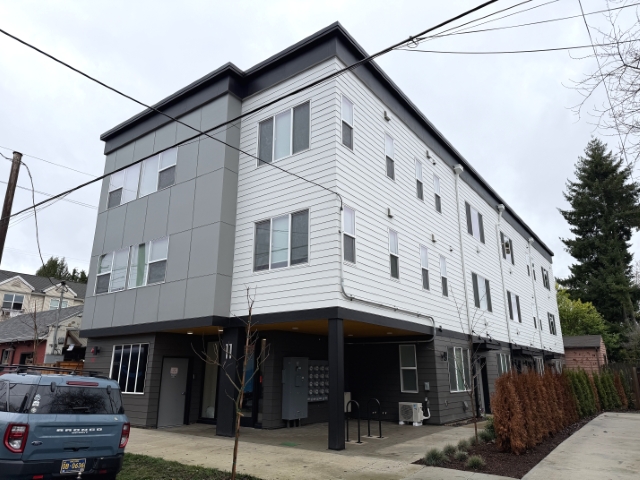
11 NE 55th Ave, Portland, Oregon – December 2025
Photo: Portland Appraisal Blog
Oregon adopted a statewide model zoning code under the Oregon Housing Needs Analysis framework, shifting from unit caps to form-based standards that re-legalize small apartment buildings in residential zones. The rules permit duplexes through fourplexes, townhouses, and cottage clusters outright, with bonuses for accessibility or affordability, while slashing parking mandates.
Affected cities—primarily Oregon’s larger municipalities, including Portland, Beaverton, Gresham, Hillsboro, and others in the metro area—must align zoning with the model code if they fail to meet production targets, though implementation timelines vary by jurisdiction and can extend several years. Form-based limits keep development neighborhood-scale, typically supporting 6–12 units on a standard lot.
These rules expand as-of-right development options on residential lots, particularly corner or larger parcels in single-family zones. Highest-and-best-use analyses may now reflect stronger redevelopment potential for small multifamily or middle housing types in cities subject to the model code.
Although the model code removes unit-count caps, form-based limits on height, coverage, and floor area ratio maintain neighborhood character. While larger projects, such as a 16-unit building, are now more feasible, they remain a different undertaking involving complex regulatory review, commercial-grade construction, specialized financing, and contractor expertise.
Market activity will likely continue to favor rehabilitation of existing homes alongside gradual small-scale infill—many builders focus on single-family with ADUs. Appraisers need to be mindful of what is possible under the new zoning allowances while analyzing what the market is actually doing.
Form-based standards and reduced parking mandates lower barriers to small apartment or townhouse projects, with affordability bonuses providing quantifiable incentives. Over time, this may broaden comparable selection for emerging middle housing.
Wednesday, December 17: Reviving Portland Development: Design Review Reforms, Bureau Cuts, and the Push for More Housing
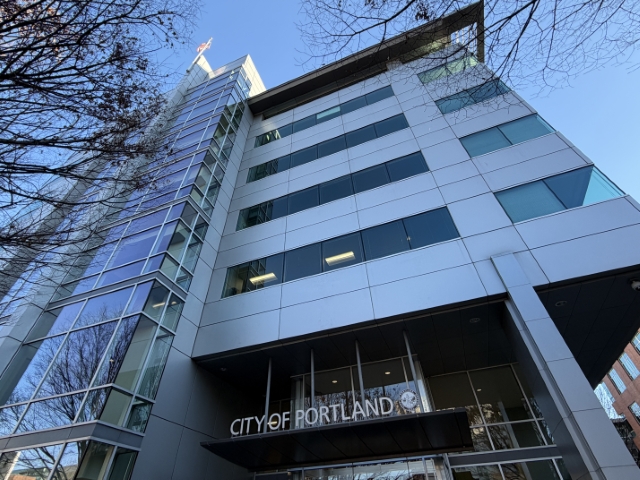
Photo: Portland Appraisal Blog (CC BY-SA 4.0)
New construction slowed markedly in the Portland region, with Q3 2025 single-family sales dropping 25% year-over-year and comprising just 9% of transactions—steeper in Multnomah County at roughly 48%. Reduced activity contributed to monthly shortfalls at the Bureau of Development Services, leading to 72 staff cuts.
City Council advanced studies on design review exemptions and moratoriums for housing, alongside the Unified Housing Strategy’s focus on streamlining, consolidated processes, and incentives like extended state tax exemptions for mixed-use.
Short-term staffing reductions may prolong timelines, impacting feasibility in proposed construction assignments.
Longer-term reforms could boost multifamily supply, expanding comparables for vertical mixed-use or conversions—though gains may lag into 2026–2027 amid ongoing caution.
Thursday, December 18: Portland’s Historic Homes and the PSU Demolition Debate

Photo: Portland Appraisal Blog
Portland State University’s plan to demolish two early-20th-century residence halls on the Historic Resources Inventory for new student housing spotlighted preservation challenges. The buildings lack full landmark status, limiting delays, yet advocates highlight rehabilitation benefits for carbon and culture.
In the private market, only 15 verified registered historic single-family sales occurred in Portland from 2023 through Q3 2025, averaging $1,256,588 in premier neighborhoods like Irvington. These reflect premiums for authenticity offset by maintenance and review burdens, with incentives available.
Due diligence via Portland Maps or title reports is essential to confirm designation—many older homes lack it.
Designations influence marketability through higher costs and restrictions, balanced by tax benefits for qualifying owners.
Friday, December 19: 1803 Fund Unveils Adaptive Reuse Plans for Portland’s Historic Grain

Photo: Portland Appraisal Blog (CC BY-SA 4.0)
The 1803 Fund detailed plans to preserve Portland’s 1914 grain silos on the Willamette east bank as a cultural waterfront hub with galleries, event spaces, and mixed-use additions. The $70 million acquisition covers the three-acre silo site plus about 20 tax lots in The Low End (seven acres), totaling roughly 10 acres.
The silo site’s history illustrates functional obsolescence: after $21.5 million modernization in 2013, it sold for $164,000 in 2019 post-rail loss, then $2.9 million in 2021, with a recent $6.5 million listing. Assembly unlocked plottage for master-planned redevelopment, including multi-million remediation of brownfield contamination and a projected $700 million economic impact.
This demonstrates highest and best use shifts in industrial zones—from obsolete terminal to cultural anchor—with rezoning needed for proposed hospitality elements.
Plottage and stigma removal can lift land values in obsolescent corridors, creating uplift via public amenities.
Saturday, December 20: Alberta Alive Townhomes Rise Opposite Historic Alberta Abbey

Photo: Portland Appraisal Blog (CC BY-SA 4.0)
Construction began on Alberta Alive Townhomes in Northeast Portland’s Alberta Arts District, delivering eight permanently affordable three-bedroom units via Proud Ground’s community land trust. Opposite the historic Alberta Abbey, these all-electric, Earth Advantage-targeted homes prioritize families with local ties.
Nearby market-rate three-bedroom attached homes averaged $574,900 over four years (1,650 square feet, $355 per square foot), highlighting the premium these restricted units address through public funding. Local families will be able to enjoy quality townhome units that would otherwise be unaffordable.
Community land trust units—with resale caps—are not directly comparable to unrestricted sales. Appraisers generally omit affordable housing units from analyses involving unrestricted properties.
High-quality infill can stabilize neighborhoods and anchor upward pressure on conventional properties nearby.
Week’s Blog Posts & Further Reading Links
- Sunday’s Brief (12/14): Julia West House Supportive Housing Tower Opens
- Monday’s Brief (12/15): Fannie Mae Expands ADU and Renovation Eligibility
- Tuesday’s Brief (12/16): Oregon Model Code Enables Neighborhood-Scale Apartments
- Wednesday’s Brief (12/17): Reviving Portland Development: Design Review Reforms, Bureau Cuts, and the Push for More Housing
- Thursday’s Brief (12/18): Portland’s Historic Homes and the PSU Demolition Debate
- Friday’s Brief (12/19): 1803 Fund Unveils Adaptive Reuse Plans for Portland’s Historic Grain
- Saturday’s Brief (12/20): Alberta Alive Townhomes Rise Opposite Historic Alberta Abbey
Closing Remarks
This week’s posts revealed Portland’s pragmatic approach to growth—reusing landmarks like grain silos, easing rules for modest density, and targeting affordability without overhauling single-family zones overnight. Preservation and adaptation stood out as practical paths forward in a market still feeling permitting and production headwinds.

Thanks for reading—I hope you found a useful insight or an unexpected nugget along the way. If you enjoyed the post, please consider subscribing for future updates.
Question: Which story from the week—mass timber supportive housing, statewide middle housing tools, or waterfront silo reuse—do you see having the biggest long-term ripple on Portland metro valuations?
CODA
Are you an agent in Portland who wonders why appraisers always do “x”?
A homeowner with questions about appraiser methodology?
If so, feel free to reach out—I enjoy connecting with market participants across Portland and the surrounding counties, and am always happy to help where I can.
And if you’re in need of appraisal services in Portland or anywhere in the Portland Region, we’d be glad to assist.

 Portland Appraisal Blog


