

Photo: Abdur Abdul-Malik, Portland Appraisal Blog (CC BY-SA 4.0)
RMLS (Regional Multiple Listing Service) is the Northwest’s largest REALTOR®-owned multiple listing service, serving approximately 14,000 subscribers across Oregon and Southwest Washington with reliable, timely listing data, tax records, statistics, and professional tools. The RMLS Data Accuracy team works diligently—reviewing hundreds of properties daily and resolving reported issues—to maintain high standards in a high-volume system that supports real estate professionals throughout the region.
Despite these efforts, RMLS is first and foremost a marketing platform for agents, who input listings to maximize visibility and sales. The scale of transactions—roughly 17–21,000 open-market single-family residential sales per year in the broader Portland metro area alone—combined with human entry and marketing priorities, means some inconsistencies and challenges are inevitable. These are not signs of negligence—they are inherent to any large, user-driven listing system.
After years of developing and refining custom tools to auto-correct straightforward issues and flag items for human review—along with well-established procedures for cleaning datasets—I have gained deep insight into these patterns. This meticulous data preparation is vital for producing the high-quality, trustworthy analyses featured on this blog, including quarterly market updates, annual reviews, segment deep dives, and metrics like the Portland Appraisal Blog Affordability Index (PABAI). Raw or minimally processed RMLS data can lead to misleading conclusions in targeted searches or trend analysis. This data preparation is also vital to my private-practice work as I specialize in the valuation of complex properties.
The result of this effort is significantly cleaner data—much like water from a reverse osmosis machine: way purer than the original source, but never 100% pure H2O. Full manual review of every transaction simply isn’t feasible at this scale. This page provides a high-level overview of common challenges, their impacts on market analysis and valuations, and the work required to address them.
Top RMLS Data Challenges at a Glance
- Missing or incomplete fields (e.g., lot size, year built, bathrooms)
- Misclassifications (e.g., condos in Detached or Attached categories, multifamily in single-family categories)
- Square footage and price typos/inflations
- Status/date inconsistencies (e.g., lingering pendings)
- Off-market entries disguised as open-market (e.g., no SNL status)
- Other type mix-ups (e.g., manufactured, land/development parcels)
Understanding RMLS as a Marketing-First Platform
RMLS offers several main Property Categories to organize listings:
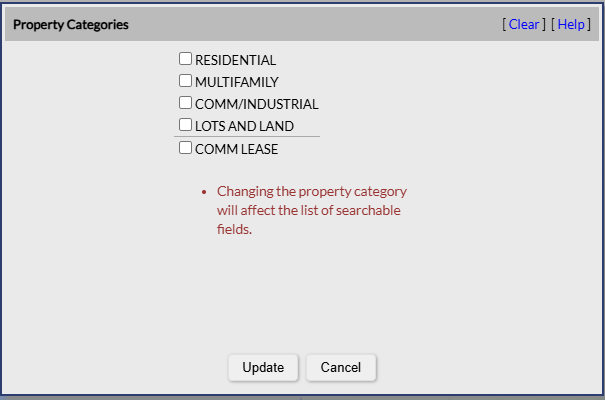
Residential is the primary category for single-family homes, condos, and similar properties, with the following subcategories:
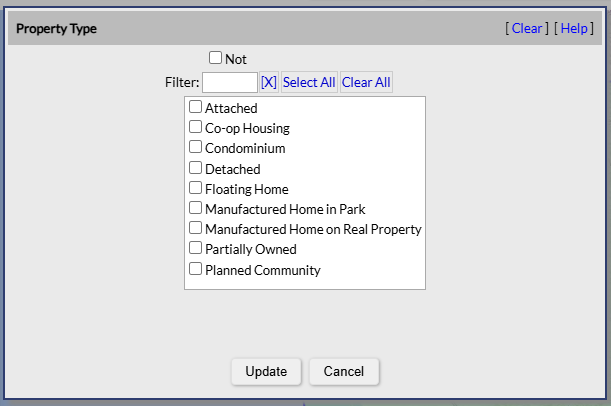
These subcategories are largely descriptive—focusing on physical appearance and structure—rather than ownership rights or financing types. For example, an agent might list a detached condominium under “Detached” to maximize exposure, as it visually resembles a single-family residence. From a marketing perspective, this is often valid and intentional. From an analysis or valuation perspective, however, it can create significant misalignment: Condominiums involve ownership of air-space only (plus interest in common elements and HOA dues), with distinct mortgage underwriting guidelines and form structure compared to fee-simple single-family homes on owned land. Attached townhomes and attached condominium townhomes may look identical but are treated differently by lenders.
Similar descriptive choices can lead to other mismatches, particularly with condos (which often act as “chameleons” in the dataset), manufactured homes, or development-oriented parcels.
Key Challenges & Common Issues
The following table summarizes the most frequent challenges encountered through extensive cleaning work. These issues can distort open-market datasets, comp selection, adjustments, trend analysis, and overall reliability.
| Category | Description | Common Impact on Analysis/Valuation | General Approach to Address |
|---|---|---|---|
| Condo/Ownership Misclassifications | Condos hidden in Attached, Detached, or other subcategories for marketing visibility | Pollutes segment pools; incorrect underwriting assumptions; flawed comparisons | Cross-check ownership docs, legal description, HOA details, tax records |
| Missing/Incomplete Fields | Lot size, year built, bathroom count often blank or outdated | Distorts age/lot utility analysis, depreciation, functional obsolescence | Verify with county assessor/tax records |
| Square Footage Errors/Inflations | Typos (e.g., 1,414 SF inputted as 11,414 SF) | Skews price-per-square-foot trends, size adjustments | Review photos, history; tax record verify if needed |
| Price Anomalies | Inflated original list price typos (e.g., $5M corrected to $500K) | Affects sale-to-list ratios, DOM analysis, market perception | Check listing history for corrections |
| Off-Market Disguised | Comments indicate “sold off-market” but no SNL status used | Inflates open-market datasets with non-representative sales | Exclude based on comments and history |
| Misclassified Property Types | Commercial or development parcels (e.g., land-heavy with dilapidated structure) in Residential/SFR | Distorts residential trends; misapplies valuation principles | Review comments, photos, use; exclude if non-residential |
| Status/Date Issues | Lingering pendings (less common now due to stricter enforcement) | Inaccurate DOM/CDOM, market timing | Cross-check county recorder/closed dates |
| Manufactured Mix-Ups | Manufactured homes in wrong categories (e.g., placed in “Detached” category) | Misleads segment analysis | Verify tax records |
For Agents: Why This Matters
Clean, validated data strengthens CMAs, reduces appraisal surprises, and protects clients. Many issues stem from the fast-moving, marketing-focused nature of MLS entry—not negligence. Double-checking ownership types, using SNL correctly, and verifying key fields upfront helps everyone.
The Effort Required & Best Practices
Custom tools help efficiently auto-correct obvious issues and flag potential challenges across large datasets, but context and nuance require manual desk review—following well-established procedures refined over years. Multi-source verification is essential: county assessor/tax records, listing history, and—for anomalous sales or unclear details (e.g., development potential, zoning, or site configuration)—city/county GIS portals (such as Portland Maps GIS or Clackamas Maps GIS).
My General Cleaning Workflow (High-Level)
- Pull & Initial Filter: Export open-market data and apply basic exclusions (e.g., SNL entries or Sold transactions that are actually SNLs).
- Automated Data Correction/Flagging: Use custom tools to detect anomalies (e.g., SF typos, missing critical data fields, status mismatches). Certain routine errors may be corrected via automated algorithms. Edge cases may be flagged for human review.
- Manual Desk Review & Validation: Cross-check flagged items against tax records, listing history, GIS portals (Portland Maps, county sites), and other sources.
- Document & Finalize: Apply data corrections/exclusions with rationale for reliable analysis.
This hybrid approach (automation + human judgment) yields significantly cleaner, more reliable data for open-market analysis. The result is not perfection, but a substantial improvement—like water from a reverse osmosis machine—that supports credible conclusions.
Conclusion
RMLS provides an invaluable service to real estate professionals throughout Oregon and Southwest Washington, including the Portland Region (six Oregon counties: Columbia, Clackamas, Hood River, Multnomah, Washington, and Yamhill) and the Vancouver Region (four Washington counties: Clark, Cowlitz, Klickitat, and Skamania). The Data Accuracy team’s commitment to improvements and responsiveness deserves recognition.
Thorough data preparation is time-intensive but foundational for accurate market insights and valuations.
Disclaimer: While this overview is based on years of hands-on experience, this is a high-level overview for informational purposes only. RMLS data and tools evolve over time; always verify independently and consult qualified professionals for specific needs. Not legal or financial advice.
Contact
For questions about reliable data handling, custom analyses, or appraisals in the Portland Region, contact me. Portland Appraisal Blog prepares institutional-grade reports tailored to agents, attorneys, investors, and homeowners.
 Portland Appraisal Blog