Portland Real Estate Appraisal Brief – Portland’s Title 11 Tree Code — Benefits, Burdens, and Property Value Impacts

Portland’s Title 11 Tree Code protects urban canopy but imposes mitigation fees ($472/inch), penalties ($1,000/day), and Heritage deed restrictions. This brief explores resale amenity value vs. redevelopment burdens for property owners.

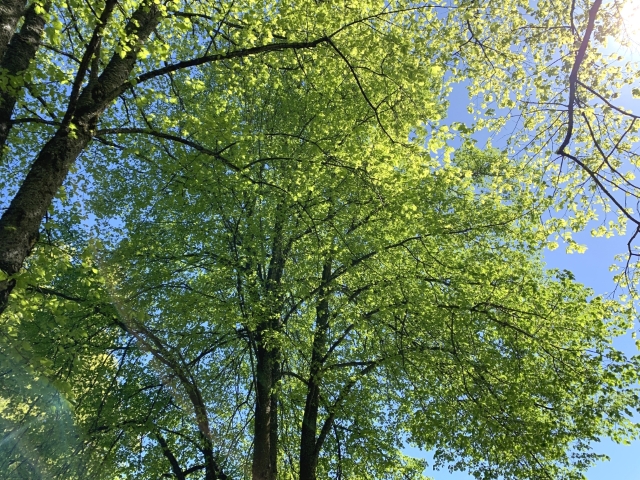
Portland Oregon Arbor Lodge neighborhood street with mature tree canopy forming a shaded tunnel over the road.
Mature tree canopy arching over a residential street in Portland’s Arbor Lodge neighborhood (September 2025). This type of shaded, park-like setting is frequently marketed as an amenity in resale listings.
Photo: Abdur Abdul-Malik, Portland Appraisal Blog

Trees define Portland’s character—from tree-lined residential streets to the vast canopies of Forest Park and Mt. Tabor. The City of Portland’s Title 11 Tree Code establishes comprehensive regulations for tree preservation on private property within city limits.

Portland City Code Chapter 11.00.010 outlines the code’s purpose:

Trees are a fundamental component of the City’s green infrastructure. The chapters within this Title address trees in both development and nondevelopment situations and seek to enhance the quality of the urban forest and optimize the benefits that trees provide. Desired tree benefits include:

1. Providing oxygen and capturing air pollutants and carbon dioxide;
2. Maintaining slope stability and preventing erosion;
3. Filtering stormwater and reducing stormwater runoff;
4. Reducing energy demand and urban heat island through shading of buildings and impervious areas;
5. Providing visual screening and buffering from wind, storms and noise;
6. Sustaining habitat for birds and other wildlife;
7. Providing a source of food for wildlife and people;
8. Maintaining property values and the beauty, character and natural heritage of the City; and
9. Meeting the multi-purposed objectives of the Urban Forest Plan, including reaching and sustaining canopy targets for various urban land environments.

These goals are laudable and align with Portland’s identity as a tree-rich city. Yet real-world implementation has generated significant friction for property owners—permit requirements, mitigation costs, enforcement actions, and occasional liability when protected trees fail.

In Q3 2025 closed detached single-family sales within the City of Portland, “tree” or “trees” appeared in listing remarks for 660 of 1,519 transactions (43%). Properties marketed with tree mentions averaged $678,689—$51,371 higher than those without. After regression-based adjustments for differences in living area ($267.72 per Total SF) and lot acreage ($347,496 per acre), an approximate $23,500 difference remained in favor of the tree-mention cohort. This observational finding—not a controlled paired-sales analysis—suggests the market may reward mature canopy as a contributory amenity in established resale properties. Because listing photographs frequently communicate tree presence more effectively than remarks, and because other influential variables (such as neighborhood, condition, and level of updating) are not controlled for here, the remaining price difference should be viewed as a general market indicator rather than a precise contributory estimate.

Ironically, the same trees that appear to support resale premiums can impose substantial constraints during redevelopment, additions, or even routine ownership.

Trees as Amenity: The Resale Perspective

Mature trees provide shade, privacy, and aesthetic appeal that buyers prize in Portland’s established neighborhoods. The high frequency of tree mentions in marketing remarks (43% in Q3 2025) reflects agent confidence in canopy as a selling point.

Since July 1, 2025, most non-development tree permit applications (routine pruning, removal, or replanting on existing homes) carry no charge—thanks to Portland Climate Emergency Fund support. This relief reduces ongoing maintenance costs for homeowners and reinforces the perceived contributory value of large trees in resale transactions.

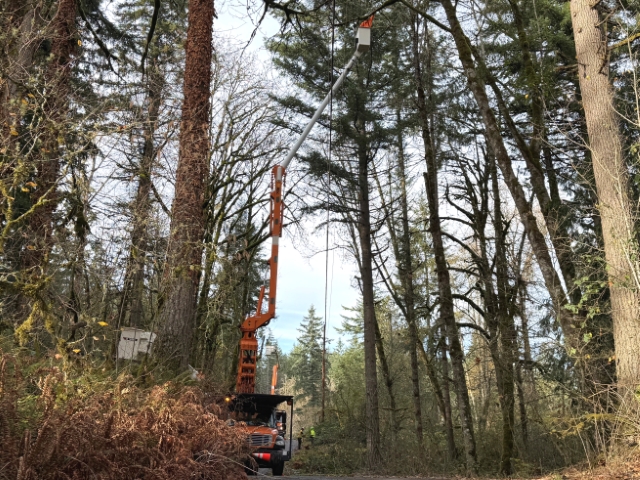
Professional care is often required for large specimens to avoid safety issues or violations.

Portland metro area arborist in bucket truck pruning large tree branches.
Professional arborist pruning a large tree using a bucket truck in the Portland metro area—illustrating the specialized care often needed for mature canopy under Title 11 regulations.
Photo: Abdur Abdul-Malik, Portland Appraisal Blog

Trees as Burden: Real-World Homeowner Experiences

While the code’s environmental intent is clear, enforcement and preservation mandates have created documented challenges for property owners.

In one prominent case, a Southwest Portland family sought removal of a leaning Douglas-fir they considered hazardous. Urban Forestry denied the permit. During the January 2024 ice storm, the tree collapsed onto their home—narrowly missing their young daughter. The family filed suit in April 2025, seeking $4.7 million in damages; the lawsuit remains ongoing as of January 2026.

Similar frustration appears in other accounts: unexpected violation notices and restoration bills, rigid enforcement described as a “nightmare” for residents, and ombudsman investigations into abatement costs shifted to homeowners for trees located far from their property line.

These incidents illustrate the liability risk when protected trees become dangerous—yet removal options remain restricted. Reports nationwide echo warnings: unauthorized tree cutting has led some property owners to severe financial consequences, including liens or loss of equity.

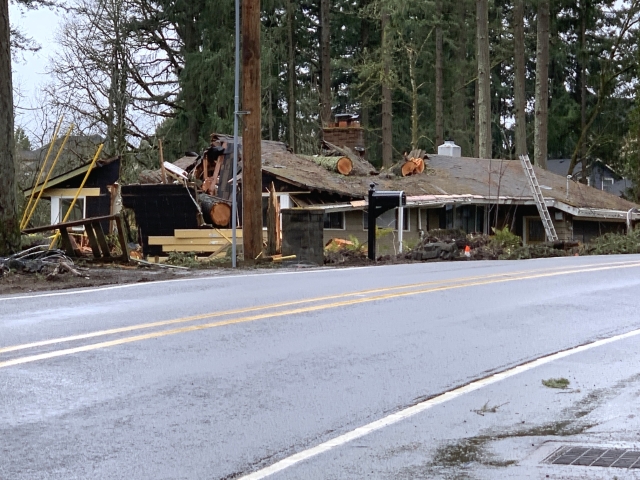
Portland metro area home damaged by fallen tree during 2024 ice storm, showing risks of large tree failure on residential properties.
Illustrative example of tree-failure damage to a single-family home during the January 2024 ice storm in the Portland metro area (Bethany neighborhood, Washington County)—unrelated to the Bond family lawsuit but demonstrating the severity of ice storm impacts and risks posed by large, vulnerable trees.
Photo: Abdur Abdul-Malik, Portland Appraisal Blog

Title 11 Fundamentals: Tree Removal Permits and Notice Requirements

Title 11 protects private trees 12 inches or larger in diameter at breast height (DBH—measured 4.5 feet above ground). Lower thresholds (6 inches DBH) apply in environmental overlay zones.

Tree removal permits fall into two categories: Type A (simpler, no public notice) and Type B (public notice and appeal opportunity). Type A covers smaller trees, limited numbers of healthy trees, dead/dying/hazardous trees, and one large healthy non-nuisance tree per residential lot per year.

Permit TypeProposalCity/Street
or Private
Public Notice/Appeal
AAny Type A request1City/street/
Private
No
AUp to four healthy <20″ diameter nuisance and non-nuisance species treesCity/streetNo
A≥20″ diameter, healthy nuisance or non-nuisance species treeCity/streetNo
BMore than four healthy >12″ diameter nuisance and non-nuisance species treesCity/streetYes
B≥20″ diameter, healthy non-nuisance species treePrivateYes2
BMore than four healthy ≥12″ diameter non-nuisance species treesPrivateYes
Table 30-1 from Portland City Code Title 11, summarizing public notice and appeal requirements for tree removal permits. Type B permits—required for most removals of large healthy private trees—trigger neighbor notification and potential appeals.
  • Note 1: The applicant may appeal any Type A or B permit decision.
  • Note 2: No public notice or opportunity for public appeal is required for removal of one healthy non-nuisance species tree ≥20″ diameter per lot per calendar year in any residential zone.

Root Protection Zones and Buildable Area Constraints

During construction, root protection zones (RPZ) extend roughly one foot of radius per inch of trunk diameter. Encroachment is limited, and fencing plus arborist oversight are mandatory.

On typical R-5 or R-2.5 lots, multiple large trees can shrink buildable area by 20–40%, forcing smaller footprints or eliminating partition potential—directly affecting highest and best use for infill or teardown sites.


Summer foliage on a tree in a Portland neighborhood.
Photo: Abdur Abdul-Malik, Portland Appraisal Blog

Mitigation and In-Lieu Fees: The Primary Development Cost

When preservation standards are not met (generally one-third of regulated trees), options include on-site replanting or payment into the Tree Planting and Preservation Fund.

The primary development mitigation is the per-inch fee paid to the fund for off-site planting and 5-year establishment. An alternative flat fee per on-site tree applies when partial retention or replanting occurs but full density is not achieved—often used when site constraints limit complete preservation.

Per City Code 11.10.070:

Where allowed by other provisions of this Title, a fee may be paid into the Tree Planting and Preservation Fund in lieu of planting or preserving trees. The fee per tree is the entire cost of establishing a new tree in accordance with standards described by the City Administrator. The cost includes materials and labor necessary to plant the tree, and to maintain it for five years. The fee will be reviewed annually and, if necessary, adjusted to reflect current costs.

Current FY 2025–26 rates (effective July 1, 2025):

CategoryFee
Planting and Establishment Fee in Lieu (primary development mitigation)$472.00 per DBH inch
Planting and Establishment Fee in Lieu (per on-site tree alternative)$712.00 flat
Preservation Fee in Lieu (Private Trees ≥12″ and <20″ DBH)$1,888.00 per tree
Preservation Fee in Lieu (Private Trees ≥20″ DBH)$472.00 per DBH inch
Most non-development applications (removal, replanting, pruning, etc.)No charge
Selected fees from the FY 2025–26 Title 11 Trees Fee Schedule, highlighting the primary development mitigation rate ($472 per DBH inch) and non-development relief (most applications no charge).

A single 24-inch tree removed during development triggers approximately $11,328 in-lieu ($472 × 24). Multiple trees on infill lots commonly total $20,000–$50,000 or more.

These funds support equity-focused plantings—thousands of free yard and street trees in priority neighborhoods, as detailed in the FY 2023 Fund Report.

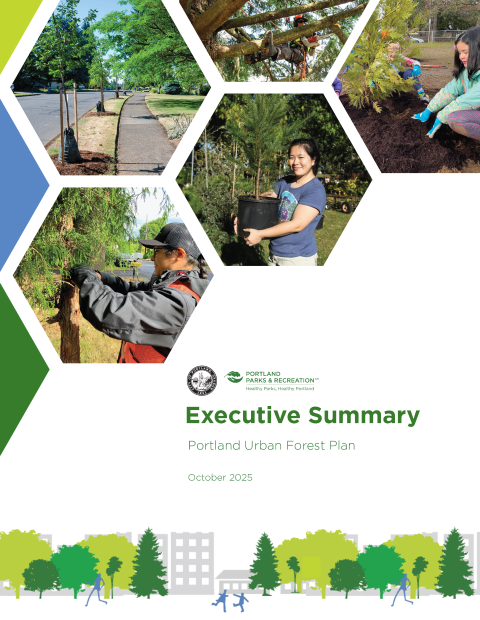
Portland Urban Forest Plan Executive Summary cover featuring diverse community members planting and caring for trees in Portland neighborhoods.
Cover of the Portland Urban Forest Plan Executive Summary (October 2025)—a vibrant collage highlighting community planting events, equity-focused tree giveaways, and the joyful stewardship that in-lieu mitigation fees help fund across Portland.

Enforcement and Penalties

Civil penalties reach $1,000 per tree per day, with restoration fees up to $944 per DBH inch for Heritage Trees (doubled for removal). Liens may be placed on the property.

For example, unauthorized removal of a typical 24-inch Heritage Tree could trigger restoration fees of approximately $22,656 ($944 × 24) plus daily penalties up to $30,000 over 30 days—potentially $50,000 or more in total liability.

Undisclosed prior violations—discoverable via Bureau of Development Services history—can impair marketability and would likely require an adjustment in appraised value.

Heritage Trees: Permanent Deed Encumbrance

Heritage Trees receive elevated protection due to age, size, historical association, or horticultural value. Common designations include Oregon white oaks, European beeches, London planes, and legacy Douglas-firs.

Private trees require owner consent for designation, but once recorded on the deed, the restriction binds all future owners. Removal or significant pruning typically requires City Council approval—a major encumbrance on development feasibility.

Nuisance Trees and Exemptions

Dead, dying, or officially listed nuisance species receive streamlined removal pathways. Certain small lots (<5,000 sq ft) and high-site-coverage scenarios carry lighter standards.

The 2025 Urban Forest Plan: Looking Ahead

Adopted October 22, 2025, the Plan sets ambitious canopy targets (citywide 45% in 40 years; every neighborhood ≥25%) and prioritizes equity in low-canopy areas. Community input emphasized preserving large trees while acknowledging burdens and calling for greater owner rights.

Recommendation #7 explicitly calls for improving City codes to support resilience and urban forest health—signaling Phase 3 Title 11 amendments may adjust preservation standards, mitigation, or incentives in coming years.

Takeaway: Navigating Portland’s Tree Code in Property Valuation

Portland’s urban forest remains one of its greatest assets—delivering shade, beauty, wildlife habitat, and environmental benefits across tree-lined neighborhoods and iconic parks like Forest Park and Mt. Tabor. Title 11’s preservation framework helps sustain this legacy, while mitigation fees fund equity-focused plantings that expand canopy in historically underserved areas.

Yet the code creates meaningful trade-offs for property owners. In resale transactions, mature trees often enhance market appeal and may support modest contributory value—evident in marketing frequency and observational signals from recent sales data. In redevelopment or major improvement scenarios, however, the same trees trigger mitigation costs, root protection constraints, and potential permanent encumbrances—shifting highest and best use and reducing land residual value.

Appraisers reconcile these dual realities through targeted due diligence. Portland Maps provides the tree inventory and Heritage layer for initial screening. Title reports (when available from lenders on purchase transactions) flag recorded Heritage designations. Bureau of Development Services permit history may require direct inquiry if redevelopment potential raises red flags—particularly on infill or teardown lots where prior violations or approved removals can materially affect feasibility. The free PDX Tree Map offers a quick view of city-managed street and park trees for neighborhood context, though private trees (the main Title 11 focus) are not included.

As the 2025 Urban Forest Plan unfolds—with its emphasis on preserving mature trees alongside calls for greater resident cost relief and owner rights—Phase 3 code amendments may refine these balances in coming years. Monitoring regulatory evolution will remain essential for accurate valuation in Portland’s tree-rich market.

Portland Oregon park with vibrant autumn tree foliage and winding path.
Autumn foliage in a Portland park, exemplifying the seasonal beauty and character that mature trees contribute to the city’s residential and public spaces.
Via Canva Pro.

Sources & Further Reading

Decorative text divider.

Thanks for reading—I hope you found a useful insight or an unexpected nugget along the way. If you enjoyed the post, please consider subscribing for future updates.

CODA

Are you an agent in Portland who wonders why appraisers always do “x”?

A homeowner with questions about appraiser methodology?

If so, feel free to reach out—I enjoy connecting with market participants across Portland and the surrounding counties, and am always happy to help where I can.

And if you’re in need of appraisal services in Portland or anywhere in the Portland Region, we’d be glad to assist.
Portland Real Estate Appraisal Brief – Thursday, January 8, 2026: Investment Value and Value-in-Use at Willamette Falls — The Tumwata Village Acquisition

The Confederated Tribes of Grand Ronde’s $15.25 million 2019 acquisition of the contaminated former Blue Heron mill site at Willamette Falls exemplifies investment value and value-in-use, enabling a highest and best use shift stalled under prior ownership.

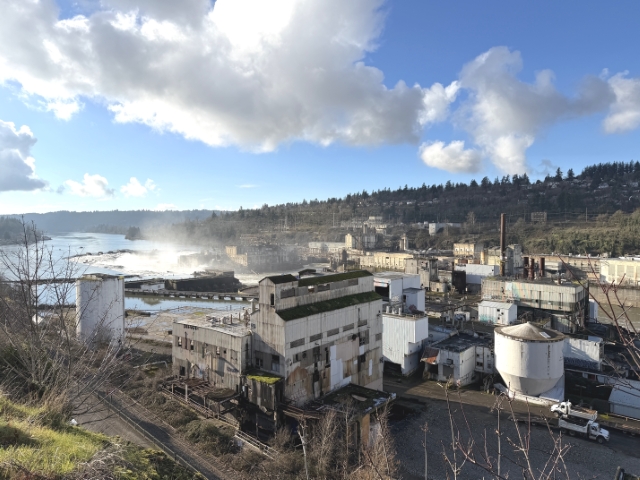
Willamette Falls viewed from the former Blue Heron Paper Mill site in Oregon City, Oregon, showing cascading waters and obsolete industrial structures along the riverfront.
Willamette Falls in full cascade, with the former Blue Heron Paper Mill site in the midground. The dramatic natural setting contrasts sharply with decades of industrial obsolescence on the ~22-acre riverfront parcel.
Photo: Abdur Abdul-Malik, Portland Appraisal Blog (CC BY-SA 4.0)

The former Blue Heron Paper Mill site at Willamette Falls in Oregon City has long exemplified the valuation challenges posed by contaminated industrial brownfields. After the mill’s 2011 closure and subsequent bankruptcy, the ~22-acre riverfront parcel endured years of vacancy, burdened by functional obsolescence, deferred maintenance, and significant environmental liabilities that deterred conventional market participants.

In August 2019, the Confederated Tribes of Grand Ronde acquired the property for a recorded $15.25 million. This transaction stands out for appraisers as a clear illustration of investment value—the worth of a property to a particular purchaser based on individual motivations—and value-in-use, where non-economic factors such as cultural and ancestral significance justify a substantial premium over typical market indicators.

Wide view of the obsolete Blue Heron Paper Mill buildings at Willamette Falls in Oregon City, highlighting industrial decay against the natural river setting.
Panoramic view of the former Blue Heron mill complex along the Willamette River, with falls mist visible on the left. The sprawling structures illustrate extensive functional and external obsolescence following more than a decade of vacancy.
Photo: Abdur Abdul-Malik, Portland Appraisal Blog (CC BY-SA 4.0)

Site History and Market Perception

The property’s ownership and valuation history underscores the stagnation under conventional private ownership:

YearEventRecorded Price / RMV
2000Acquired by Blue Heron Paper Company from Smurfit Newsprint Corp.$2.5 million
2011Mill closure and Chapter 11 bankruptcy filing
2014Bankruptcy court sale to private developer (Falls Legacy LLC)$2.2 million
2018–2019Clackamas County Real Market Value (pre-sale, per contemporaneous reporting)~$2.9 million (improvements minimal)
August 2019Acquired by Confederated Tribes of Grand Ronde$15.25 million
Recent yearsClackamas County Real Market Value (post-acquisition)~$3.6–$4.3 million (land-focused)
2021–2024Phased demolition and remediation (approximately 40% of structures removed by 2024)
RecentOregon City master plan approval (GLUA240002)
Key ownership and valuation milestones for the ~22-acre former Blue Heron mill site, derived from Clackamas County public records and contemporaneous reporting. The lack of nominal appreciation from 2000 to 2014, followed by the substantial premium in 2019, highlights the impact of buyer-specific motivations.
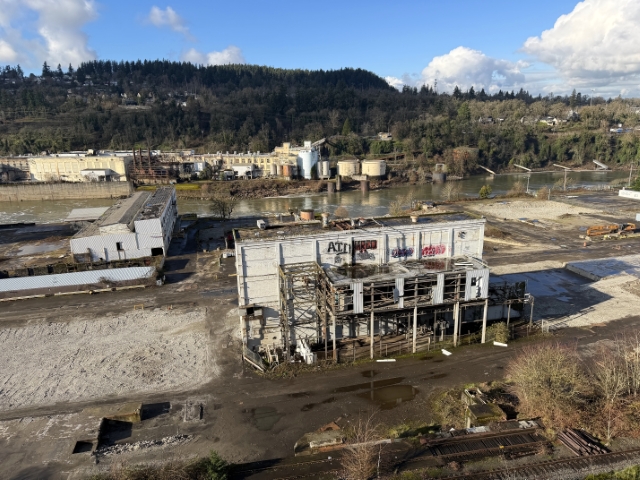
Graffiti-covered rail barrier framing contaminated and obsolete waterfront infrastructure at the former Blue Heron mill site in Oregon City.
Foreground view across derelict waterfront infrastructure at the former Blue Heron site, framed by graffiti-covered rail elements. The image captures visible signs of prolonged obsolescence and inaccessibility.
Photo: Abdur Abdul-Malik, Portland Appraisal Blog (CC BY-SA 4.0)
Close-up of contaminated concrete infrastructure at the former Blue Heron Paper Mill brownfield site near Willamette Falls, Oregon City.
Detailed view of cracked concrete pads and obsolete industrial remnants in the site’s foreground basin area. Such conditions exemplify brownfield liabilities common in post-industrial valuation.
Photo: Abdur Abdul-Malik, Portland Appraisal Blog (CC BY-SA 4.0)

Appraisal Implications—Investment Value and Value-in-Use

The $15.25 million purchase price—nearly seven times the 2014 bankruptcy sale and well above the assessor’s reported Real Market Value immediately preceding the transaction—reflects investment value driven by the Tribe’s profound cultural connection to Willamette Falls, a sacred ancestral homeland and traditional fishing ground. This non-economic value-in-use enabled the Tribe to overcome remediation and holding-cost barriers that had stalled private redevelopment efforts for years.

Appraisers reconciling such sales must distinguish investment value (or value-in-use) from market value derived from arms-length transactions among typical participants. Limited comparable sales for culturally significant or heavily contaminated riverfront parcels often require significant adjustments for buyer motivation, extraordinary assumptions regarding cleanup feasibility, and bracketing with more conventional industrial land comps.

This situation parallels a more recent Portland case explored on this blog: the 1803 Fund’s adaptive reuse plans for historic grain silos along the Willamette River. In both instances, a buyer with specific motivation recognized potential in a functionally obsolete industrial asset that had deterred conventional market participants—ultimately enabling a highest and best use shift through targeted redevelopment.

Close-up of decayed industrial buildings with graffiti and moss at the former Blue Heron site in Oregon City, illustrating functional obsolescence.
Intimate perspective on remaining mill buildings, showing moss-covered roofs, rust, broken windows, and heavy graffiti—clear evidence of functional obsolescence after years of vacancy.
Photo: Abdur Abdul-Malik, Portland Appraisal Blog (CC BY-SA 4.0)

Current Progress and the Tumwata Village Vision

Recent site visits confirm active transformation: demolition equipment, including excavators, is visibly engaged in clearing remaining structures.

Phased demolition began in 2021, with multiple rounds completed by 2024 removing approximately 40% of the former mill buildings. Remediation continues in coordination with state and federal environmental agencies.

A major fire in January 2025 destroyed one of the larger remaining buildings on the site (the former mill’s three-story structure). The incident, ruled arson and unrelated to demolition activities, did not delay the overall redevelopment timeline. Progress has continued steadily, as evidenced by recent infrastructure planning and the current state of the property.

Renamed Tumwata Village, the redevelopment proposes a mixed‑use cultural district that weaves together public access trails, ecological restoration of the riverbank and lagoon, tribal gathering spaces, and a modest mix of commercial and hospitality uses—all grounded in the site’s ancestral significance. By prioritizing riverfront restoration and new trail connections, the plan could open up rare land‑based vantage points of Willamette Falls, a natural landmark that today is mostly viewed from commercial boat tours or distant overlooks. If fully realized, the transformation would support the Confederated Tribes of Grand Ronde in cultural reclamation and long‑term stewardship, while giving Oregon City and the broader public renewed access to a stretch of the falls long closed off by industrial operations.

Oregon City’s recent approval of the master plan (GLUA240002) formalizes this highest and best use shift from interim speculative hold to culturally driven redevelopment.

Readers interested in detailed conceptual plans and site renderings can review the Tribe’s 2022 design report.

Active demolition and site clearance with excavator at the former Blue Heron mill property in Oregon City, showing progress toward redevelopment.
Mid-demolition scene at the site, with construction equipment including an excavator and partially cleared areas visible. Ongoing remediation phases demonstrate the reversal of obsolescence through active transformation.
Photo: Abdur Abdul-Malik, Portland Appraisal Blog (CC BY-SA 4.0)
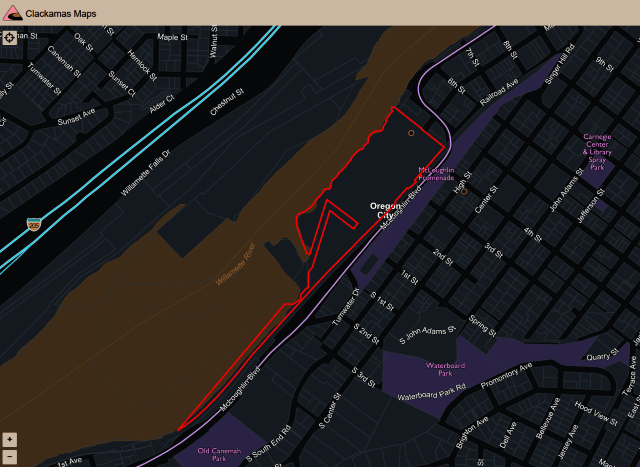
Clackamas County GIS map showing the ~22-acre riverfront parcel of the former Blue Heron Paper Mill site at Willamette Falls in Oregon City.
Clackamas County GIS overview of the ~22-acre former Blue Heron mill site (red outline), illustrating its extensive Willamette River frontage and proximity to the falls. The contiguous parcel configuration supports comprehensive redevelopment potential.
Source: Clackamas County Maps.

Takeaway

The Tumwata Village acquisition serves as a compelling case study in investment value and value-in-use. When a purchaser’s motivations—here rooted in cultural reclamation—align with a property’s unique attributes, transaction prices can far exceed indicators derived from conventional market behavior. Appraisers must remain alert to these distinctions, employing careful reconciliation techniques and appropriate adjustments when comparable data is limited.

Ultimately, the project illustrates how buyer-specific utility can reverse long-standing obsolescence, shifting a site’s highest and best use in ways the open market alone could not achieve. If realized, the vision promises not only tribal stewardship of ancestral lands but also broader public access to one of Oregon’s most iconic natural features—offering land-based and proximate views of Willamette Falls where few currently exist.

Sources & Further Reading

Decorative text divider

Thanks for reading—I hope you found a useful insight or an unexpected nugget along the way. If you enjoyed the post, please consider subscribing for future updates.

CODA

Are you an agent in Portland who wonders why appraisers always do “x”?

A homeowner with questions about appraiser methodology?

If so, feel free to reach out—I enjoy connecting with market participants across Portland and the surrounding counties, and am always happy to help where I can.

And if you’re in need of appraisal services in Portland or anywhere in the Portland Region, we’d be glad to assist.
Portland Real Estate Weekly Appraisal Digest – December 21st – December 27th, 2025: Affordability Barriers and Tax Shifts

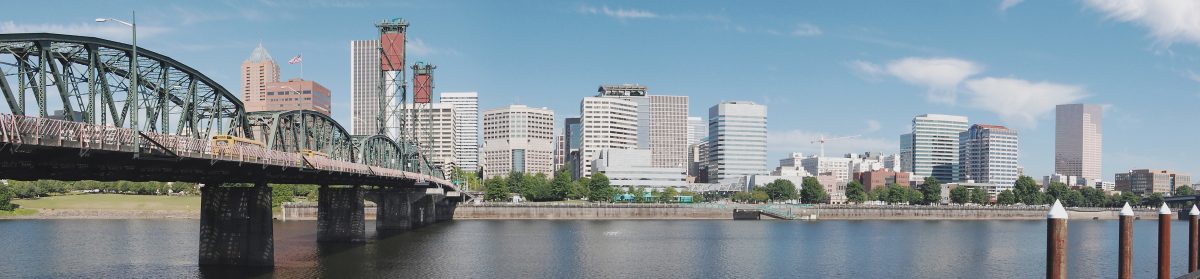
A vibrant sunset casts warm orange and pink hues over the Willamette River in downtown Portland, Oregon. In the foreground, the green steel arches of the Hawthorne Bridge span the calm water, while the city's skyline—featuring prominent high-rise buildings with distinctive architectural elements—rises against the colorful sky. Trees line the riverbank, adding a touch of greenery to the urban scene.

The final full week of 2025 sharpened focus on the deep affordability barriers defining the Portland Region’s housing market, while also spotlighting regulatory and tax issues with real consequences for homeowners—especially veterans. A closer look at the 2024 MAV Reset Clarification revealed how the loss of a disabled veteran exemption can trigger a permanent upward reset in maximum assessed value, locking in higher property taxes even if the exemption is later restored. Meanwhile, groundbreaking on a major apartment project pushed forward despite tight financing, and fresh Q3 data underscored why most first-time buyers must now wait until age 40 to enter the detached single-family market.

That Q3 analysis, powered by the new Portland Appraisal Blog Affordability Index (PABAI), showed that fewer than 10% of recent detached sales were realistically within reach for households aged 25–44 once full PITI costs are considered. A separate deep dive into today’s typical $600,000 home purchase laid out the household income actually required—far above median levels for younger buyers. Together, these pieces highlight a region where entry-level detached ownership remains elusive without substantial down-payment help, outlier earnings, or delayed timelines.

At the same time, multifamily development continues as one of the brighter spots, with projects like the Barbur Apartments aiming to deliver more rental options amid high construction costs and steep financing hurdles. These efforts reflect broader attempts to ease the overall supply crunch, even as single-family affordability stays structurally constrained.

Table of Contents

Sunday, December 21: Barbur Apartments Groundbreaking Highlights Plottage Value

The Barbur Apartments site sits at the prominent intersection of SW Barbur Blvd and SW Capitol Hill Rd.
Photo: Portland Appraisal Blog

Groundbreaking commenced in mid-December 2025 on the Barbur Apartments, a 150-unit affordable family housing project located at the corner of SW Barbur Blvd and SW Capitol Hill Rd in Portland’s Hillsdale/Multnomah Village area. Developed by Innovative Housing, Inc., the complex will feature one three-story building and two four-story buildings, delivering 149 income-restricted units (one reserved for an onsite manager) with many larger two- to four-bedroom layouts targeted at immigrant and refugee families. Amenities include a courtyard and community spaces, with completion expected in Fall 2027.

The project carries an estimated total development cost of approximately $79.4 million, supported by about $27.3 million from the Portland Housing Bureau alongside regional Metro Housing Bond funds, federal sources, and Portland Clean Energy Community Benefits Fund contributions for energy efficiency. It emphasizes transit access along the Barbur corridor, with approved plans providing roughly 45 on-site parking spaces—a ratio of about 0.3 spaces per unit reflecting the transit-oriented design.

From an appraisal perspective, the redevelopment exemplifies plottage, the incremental value gained by assembling contiguous parcels into a larger, more developable site. Four tax lots totaling around 2.19 acres were purchased together in February 2025 for just under $6 million. Individually constrained by size, zoning, and existing improvements, the parcels supported only lower-intensity uses.

One parcel formerly held a 1927-built single-family home of approximately 2,336 square feet that was never listed on the open market and quickly demolished, demonstrating clear functional obsolescence as the corridor evolves. An adjacent former commercial strip—Barbur Blvd Rentals—remains standing but fenced within the construction zone. Together, these lots enable a density and scale unattainable separately, illustrating classic plottage and a shift to higher-density residential as the highest and best use.

Directly across Barbur Blvd sits a large Safeway complex with extensive covered and surface parking, a significant amenity for future residents. However, with the project’s limited on-site parking space and family-oriented unit mix, residents and guests may increasingly rely on this private lot for overflow. A mid-morning site visit revealed a nearly full garage, suggesting potential increased daytime use once occupied—a dynamic worth monitoring.

Local market data from 2024–2025 closed sales in Hillsdale and Multnomah Village underscores limited affordability. Detached homes led with 351 sales averaging $750,000 and 50 days on market. Condominiums, the most accessible ownership segment by volume, averaged $445,000 across 78 sales with longer 68-day absorption. Attached homes, a small segment of just 13 transactions, averaged $581,000—likely due to more recent construction (average year built 2010) and associated premiums. Overall averages reached $691,000, highlighting ownership barriers and the critical role of regulated rentals like Barbur Apartments for lower-income and larger households.

This assemblage aligns with broader city efforts to expand housing through density and public investment, including recent regulatory reforms aimed at reviving Portland development.

Tuesday, December 23: The Measure 50 Compression Trap and the 2024 MAV Reset Clarification

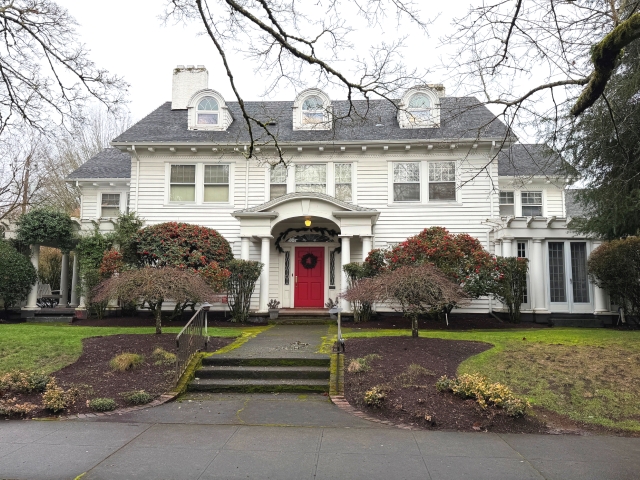
A classic pre-1940 home in the Portland Region – the type of property often benefiting from deep Measure 50 tax compression.
Photo: Abdur Abdul-Malik, Portland Appraisal Blog

In Oregon’s property tax system, established by Measure 50 in 1997, a common pitfall has emerged for buyers of older homes: unexpectedly high tax bills following the loss of certain partial exemptions. This occurs when a veteran or active-duty partial exemption ends—often upon sale or the owner’s passing without a qualifying successor—triggering a reset of the property’s Maximum Assessed Value (MAV) closer to current market reality. Previously, counties preserved the low MAV after removing the exemption, but updated 2024 guidance from the Oregon Department of Revenue now enforces a constitutional recalculation, potentially adding $2,000–$6,000 annually to taxes for pre-1997 properties with deep compression.

Measure 50 created two key values: Real Market Value (RMV), reflecting current market conditions, and MAV, initially set below 1995–1997 RMV and capped at 3% annual growth thereafter (with exceptions). The Assessed Value (AV) is the lesser of the two, leading to substantial compression in high-appreciation areas like Portland, where older homes often have MAV far below RMV. When a partial exemption disqualifies, the new guidance applies the Changed Property Ratio (CPR)—around 0.54 for residential properties in Portland Region counties for 2025–2026—to reset MAV to current RMV multiplied by CPR, aligning taxes more closely with newer homes.

Q3 2025 sales data for detached single-family residences in the Portland Region highlights this compression. Pre-1940 homes averaged $671,295 in sale price but only $6,396 in annual taxes, while 1940–1959 properties averaged $607,466 with $5,766 in taxes. In contrast, 2000–2019 homes averaged $761,061 with $7,685 in taxes. Effective tax burdens remained consistent at ~$9–$10 per $1,000 of sale price across eras, showing the market prices properties assuming similar overall loads. However, absolute taxes rise with newer construction due to less historical compression, and pre-1940 homes often command premiums despite lower taxes—creating vulnerability when resets occur.

The veteran (ORS 307.250) and active-duty (ORS 307.286) exemptions provide modest reductions—up to $31,565 or $108,366 for 2025–2026, worth $400–$700 annually in savings—but their disqualification now triggers the full MAV reset. With over 114,000 veterans in the metro area, affected transactions can see increases of $1,500–$4,000 yearly in typical cases, or $4,000+ in deeper-compression scenarios. This translates to $125–$333 monthly, comparable to a car payment, potentially straining affordability and prompting renegotiations.

For market participants, the reset introduces friction: buyers may demand concessions, sellers (including veterans or surviving spouses) face lower net proceeds, and properties can linger on the market if low current taxes mask future costs. Outliers with unusually low taxes may reflect active exemptions or compression soon to erode.

Appraisers should verify exemption status via county records, estimate post-reset taxes, and comment on marketability when material. Low-tax comparables warrant scrutiny—effective rates of 0.6–0.8% may signal compression, better aligned post-reset at 1.1–1.3%. Providing dual tax scenarios aids informed valuation. As resets appear in more closed sales from 2026 onward, this factor will increasingly explain pricing anomalies in Oregon’s older housing stock.

Thursday, December 25: Portland’s Starter Home Market (Q3 2025) — What $469k Really Buys

A classic early-20th-century bungalow in the Portland area—the type of modest, well-loved home that dominates today’s starter-tier inventory.
Via Canva Pro

In another Appraisal Deep Dive, we examine Portland’s starter-home market using Q3 2025 RMLS data for detached single-family residences in the 5th–35th percentile by price—the same convention Redfin used in its October report highlighting Portland’s strong starter activity.

Redfin’s reported median of approximately $420,000 includes all property types, but focusing solely on detached homes—a popular choice across the metro, including for urban buyers seeking yard space and privacy—yields an average close price of $469,000. Local buyers want to know how much home this budget actually buys, and the data reveals a market overwhelmingly dominated by mid-century inventory, with stark county differences and only a modest presence of brand-new construction.

Across the core counties, Multnomah drives nearly half the volume with the oldest average build year (1951), while Washington posts the highest prices and hosts the most new homes. Outer counties like Columbia and Yamhill offer newer builds on larger parcels but far fewer sales. Square footage emerges as one of the stronger (though still modest) drivers of price, with most sales clustering between 1,200 and 2,000 square feet. Lot size patterns show a clear historical shift: post-war boom homes (1940s–1950s) typically enjoy generous parcels, while newer construction relies on much smaller lots—often the result of infill and divisions.

New homes account for just 4.2% of starter-tier sales (versus 9.1% market-wide), yet their presence remains noteworthy in a high-cost building environment. They sell for only about 3% more than existing homes despite brand-new condition but deliver less interior space and roughly half the land. For buyers, this creates a clear trade-off: modern efficiency and low maintenance on a very small lot (often minimal usable yard, especially in Multnomah and Washington) versus an older mid-century home with significantly more outdoor space, albeit with potential challenges in systems and layout—a choice particularly relevant for growing families prioritizing play areas or privacy.

Appraisal insights reveal that chronological age correlates weakly with both sales price and price per square foot. Effective age, condition, and site utility drive value far more, with lot size advantages in older homes often offsetting credits for new condition. When appraising the limited new-construction sales (down ~25% YoY overall, 48% in Multnomah), appraisers typically rely on other recent builds and adjust heavily for quality of upgrades and site characteristics.

Overall, Portland’s starter segment continues heavy reliance on mid-century stock on larger lots—a pattern unlikely to change dramatically in 2026 without major supply shifts, though the City of Portland is attempting to incentivize new projects via SDC waivers. The modest new-construction foothold demonstrates builder adaptation, but at the clear cost of site size and outdoor space.

Saturday, December 27: Portland’s First-Time Buyers Have No Choice But to Wait Until 40 — Q3 2025 Data Explains Why

Classic Craftsman bungalows homes in a Portland neighborhood. While older detached stock like this offered relatively better access for younger buyers in Q3 2025 (15% affordable in Multnomah County under realistic PITI assumptions), many close-in properties commanded premium prices—this example on the right sold for $1.1 million.
Photo: Abdur Abdul-Malik, Portland Appraisal Blog

Recent Q3 2025 data reveals that only about 10% of detached single-family homes in the Portland Region were affordable to typical households aged 25–44 under realistic payment assumptions, highlighting why first-time buyers are increasingly delayed until reaching age 40. Nationally, the median age of first-time buyers has hit a record 40, with their share of purchases at a historic low, driven by persistent affordability barriers.

Traditional measures, such as the National Association of Realtors’ Housing Affordability Index—which considers only principal and interest with a 25% qualifying ratio—suggest that roughly 28% of Q3 2025 detached sales in the six-county Portland Region were affordable to a household at the area median income of $124,100. However, incorporating actual property taxes and a conservative homeowners insurance estimate into the full PITI payment drops this to 20% for the same benchmark.

This analysis introduces the new Portland Appraisal Blog Affordability Index (PABAI)—a more accurate, PITI-based metric tailored to the Portland Region’s market. The PABAI expresses affordability as an index value (100 indicating exact qualification for the typical home) and derives the percentage of sales affordable to reference households. For the regional benchmark using HUD’s $124,100 area median income, the PABAI stood at approximately 78. For younger 25–44 households with a median income of about $110,000, it fell to 69—meaning only 9.8% of Q3 detached sales (460 out of 4,682) were within reach. The typical $600,000 detached home required roughly $159,000 in household income—45% above this cohort’s median.

County-level variation underscores geographic disparities for 25–44 buyers. Outer areas like Columbia County (34% affordable) and Yamhill County (23%) provided the most options, though often at the cost of longer commutes to urban centers. Multnomah County outperformed at 15%, benefiting from denser, older stock, while suburban Washington (3%) and Clackamas (5%) counties lagged due to larger lots and higher-priced inventory. Hood River registered just 3%.

In Q3 2025, younger buyers seeking detached homes typically needed substantial family assistance, extreme lifestyle sacrifices for larger down payments, or outlier incomes well above cohort medians to gain entry. Without these, most were effectively priced out until accumulating higher earnings in their late 30s or early 40s—or forced into alternatives like condominiums.

The PABAI models affordability with a 20% down payment, 28% front-end ratio, actual rates, listing taxes, and a 0.40% insurance rate, offering granular insights beyond national indices that overlook taxes and insurance. This realistic approach confirms the structural challenges pushing first-time buyer ages upward in the Portland Region.

Week’s Blog Posts & Further Reading Links

Closing Remarks

Taken together, this week’s coverage paints a picture of a Portland metro market where structural barriers—high prices, elevated property taxes, and insurance costs—continue to sideline younger households from detached homeownership. The introduction of the Portland Appraisal Blog Affordability Index offers a clearer, more localized tool for understanding these gaps, showing that realistic PITI-based qualifying leaves fewer than 10% of recent sales within reach for 25–44-year-olds.

Regulatory and measurement topics add another layer of complexity for industry professionals. Clarifications around the 2024 MAV Reset and the accompanying tax implications serve as reminders that appraisal assignments increasingly demand careful awareness of tax policy and its effects on value and marketability.

The common thread remains one of constrained supply at affordable price points, driving both multifamily investment and prolonged timelines for single-family entry. These dynamics suggest the region will continue favoring those with established equity or higher earnings, while first-time buyers face extended waits or alternative paths like condominiums.

Decorative text divider.

Thanks for reading—I hope you found a useful insight or an unexpected nugget along the way. If you enjoyed the post, please consider subscribing for future updates.

Question: With first-time buyers now commonly having to wait until 40 to purchase a detached home in the Portland Region, what trade-offs are younger households making today to eventually break into ownership?

CODA

Are you an agent in Portland who wonders why appraisers always do “x”?

A homeowner with questions about appraiser methodology?

If so, feel free to reach out—I enjoy connecting with market participants across Portland and the surrounding counties, and am always happy to help where I can.

And if you’re in need of appraisal services in Portland or anywhere in the Portland Region, we’d be glad to assist.
Portland Real Estate Appraisal Brief – Sunday, December 21, 2025: Barbur Apartments Groundbreaking Highlights Plottage Value

$79M Barbur Apartments groundbreaking in SW Portland, with $27M from the city, illustrates plottage as parcel assemblage enables 150-unit affordable housing in a market area averaging $691,000 for ownership.

Street signs at SW Capitol Hill Rd and SW Barbur Blvd marking the location of the Barbur Apartments affordable housing development in Portland.
The Barbur Apartments site sits at the prominent intersection of SW Barbur Blvd and SW Capitol Hill Rd.
Photo: Portland Appraisal Blog

Barbur Apartments Groundbreaking

Groundbreaking began in mid-December 2025 on the Barbur Apartments, a 150-unit affordable family housing project at the corner of SW Barbur Blvd and SW Capitol Hill Rd in Portland’s Hillsdale/Multnomah Village area.

Developed by Innovative Housing, Inc., the complex will have one three-story building and two four-story buildings, bringing the total unit count to 150. With one unit reserved for an onsite manager, 149 units will be income-restricted, with many configured as larger two- to four-bedroom layouts for immigrant and refugee families—alongside amenities such as a courtyard and community spaces. Completion is anticipated in Fall 2027.

The project has an estimated total development cost of approximately $79.4 million, with the Portland Housing Bureau contributing about $27.3 million alongside regional Metro Housing Bond funds, federal sources, and Portland Clean Energy Community Benefits Fund dollars for energy efficiency.

The project emphasizes transit access along the Barbur corridor. Approved plans include approximately 45 on-site parking spaces—a low ratio of roughly 0.3 spaces per unit that reflects the transit-oriented design.

Appraisal Implications: Plottage and Highest-and-Best-Use Shift

The site’s redevelopment offers a clear illustration of plottage—the added value created when contiguous parcels are assembled into a larger, more viable development parcel.

Four separate tax lots totaling approximately 2.19 acres were acquired together in February 2025 for just under $6 million. Individually, the parcels supported lower-intensity uses limited by size, zoning, and existing improvements.

Annotated Portland Maps aerial showing four assembled tax lots for Barbur Apartments affordable housing project in SW Portland, with labels for demolished home, former commercial building, and nearby Safeway.
Aerial view of the Barbur Apartments site from Portland Maps, showing the four assembled tax lots (outlined in red, totaling approximately 2.19 acres). Labels highlight the demolished single-family home parcel, the former Barbur Blvd Rentals commercial building, and the Safeway shopping center across the street.
Image: Portland Maps

One parcel previously contained a 1927-built single-family home of approximately 2,336 square feet. Never listed on the open market, the house exhibited functional obsolescence relative to the corridor’s evolving highest and best use and was rapidly demolished.

Cleared and fenced parcel at Barbur Apartments site in SW Portland after demolition of 1927-built single-family home.
View of one of the assembled parcels in December 2025. The 1927-built single-family home that once stood here has been fully demolished, illustrating its functional obsolescence as the site shifts to higher-density residential use.
Photo: Portland Appraisal Blog

An adjacent commercial strip—formerly Barbur Blvd Rentals—remains standing but is now fenced within the secured construction zone.

The former Barbur Blvd Rentals commercial building, still standing as of December 2025, forms part of the assemblage.
Photo: Portland Appraisal Blog

Combined, these parcels unlock a scale and density that individual lots could not support, demonstrating classic plottage principles in a transit-oriented location.

Directly across Barbur Blvd, there is a large Safeway complex.

Safeway grocery store and shopping center across SW Barbur Blvd from the Barbur Apartments development in Portland.
The Safeway shopping center opposite the Barbur Apartments site—a major convenience for future residents.
Photo: Portland Appraisal Blog

This Safeway has an impressive open-access parking garage underneath the store. The center’s covered and surface parking serves as a major existing amenity. Given the Barbur Apartments’ family-oriented unit mix and limited on-site stalls, residents and guests may increasingly rely on this convenient private lot for overflow. A recent visit to the garage mid-morning showed a nearly full garage. It’s possible daytime use of the garage may skyrocket once the apartment complex is built—a dynamic worth monitoring as occupancy begins in 2027.

Busy ground-level covered parking under Safeway across from Barbur Apartments site in SW Portland on a typical weekday morning.
Ground-level covered parking beneath the Safeway store, photographed on a Friday morning in December 2025. With only about 45 on-site stalls planned for the 150-unit project, this existing private amenity may see increased use by residents and guests for overflow parking.
Photo: Portland Appraisal Blog

Market Context

In the immediate Hillsdale and Multnomah Village neighborhoods, closed sales from 2024–2025 reflect sustained demand amid limited affordability.

Type# of SalesAvg Close PriceAvg PPSFAvg Total SFAvg CDOM
Detached351$750k$3422,31350 days
Condo78$445k$3211,38268 days
Attached13$581k$3281,84649 days
Total442$691k$3382,13553 days
Source: RMLS closed sales data for Hillsdale and Multnomah Village neighborhoods, 2024–2025. Figures rounded for readability.
Data: RMLS | Portland Appraisal Blog

Detached homes dominated activity with 351 sales at an average of $750,000 and brisk 50-day market times. Condominiums—the most accessible ownership segment by volume—averaged $445,000 across 78 sales, though with noticeably longer absorption (68 days CDOM). While attached homes (such as townhomes) represent a small segment of the market with only 13 transactions, they averaged $581,000—likely reflecting more recent construction (average year built 2010) and associated premiums.

These figures across all segments highlight significant ownership barriers in the submarket, reinforcing the role of regulated rental projects like Barbur Apartments for lower-income and larger families.

This assemblage aligns with broader efforts to expand housing supply through density and public investment, including recent regulatory reforms aimed at reviving Portland development.

Sources & Further Reading

Thanks for reading—I hope you found a useful insight or an unexpected nugget along the way. If you enjoyed the post, please consider subscribing for future updates.

CODA

Are you an agent in Portland who wonders why appraisers always do “x”?

A homeowner with questions about appraiser methodology?

If so, feel free to reach out—I enjoy connecting with market participants across Portland and the surrounding counties, and am always happy to help where I can.

And if you’re in need of appraisal services in Portland or anywhere in the Portland Region, we’d be glad to assist.
Portland Real Estate Weekly Appraisal Digest – December 14th – December 20th, 2025: Preservation Debates, Reuse, and Regulatory Shifts

Via Canva Pro

Portland closed out the year with stories that captured the city’s ongoing effort to expand housing thoughtfully—balancing historic preservation against current demand, adaptive reuse of industrial landmarks, and incremental regulatory changes to enable more homes. From supportive towers built with sustainable mass timber to statewide zoning tools re-legalizing neighborhood apartments, and creative transformations of obsolete sites, the week reflected a market navigating caution while pursuing infill and affordability in established areas.

Table of Contents

Sunday, December 14: Julia West House Supportive Housing Tower Opens

The Julia West House, a modern multistory building in downtown Portland, stands tall with its grid of windows and light brick facade—captured from a low angle that emphasizes its architectural presence.
580 SW 13th Ave, Portland, Oregon – December 2025
Photo: Portland Appraisal Blog (CC BY-SA 4.0)

Downtown Portland marked a milestone with the opening of Julia West House, a 12-story mass timber tower providing permanent supportive housing for seniors who had experienced homelessness. Built on a former parking lot at 580 SW 13th Avenue, the project delivers 90 units—60 studios and 30 one-bedrooms, with 89 deeply affordable at 30% or less of area median income, plus one unrestricted manager unit. On-site services from partners like Northwest Pilot Project focus on aging in place, addressing the reality that nearly a quarter of the city’s unhoused population is age 55 or older.

As Oregon’s tallest mass timber residential building at 145 feet, it employs cross-laminated timber floors and glulam beams above a concrete podium, shortening the construction schedule by about 14 weeks and incorporating biophilic elements like exposed wood ceilings. Adjacent to another supportive building, it forms a concentrated hub in the West End.

Developments like this expand deeply affordable rental supply in central locations with strong transit access. They provide market evidence of efforts to address affordability and homelessness, informing highest and best use considerations for nearby properties and enhancing neighborhood marketability.

In multifamily assignments, mass timber construction sets emerging precedents for sustainable practices, potentially affecting future replacement costs, capitalization rates, and development feasibility in urban zones. Restricted units supported by tax credits require careful isolation of encumbered interests from hypothetical fee simple value.

Monday, December 15: Fannie Mae Expands ADU and Renovation Eligibility

Suburban single-family home with detached guest house (ADU) in a Portland metro area neighborhood, eligible for expanded Fannie Mae financing under December 2025 guidelines.
Detached guest house on a residential property, illustrating expanded ADU eligibility
Via Canva Pro

Fannie Mae updated its guidelines with significant expansions to renovation lending and accessory dwelling unit eligibility, offering more options for homeowners in the Portland region. HomeStyle Renovation loans now allow upfront disbursements of up to 50% of renovation costs at closing, while removing prior caps on manufactured home improvements—now up to 50% of as-completed value.

Effective in 2026, single-unit properties can include up to three ADUs if zoning permits, with total units capped at four even on two- to three-unit homes. These changes align manufactured housing more closely with site-built and build on local incentives like temporary system development charge waivers.

The updates heighten reliance on as-completed valuations for loan-to-value ratios and eligibility. Appraisers may see increased demand for projected-value analyses on properties with multiple ADUs or extensive renovations, requiring solid review of local zoning and market acceptance to support highest and best use conclusions.

These provisions complement Portland metro efforts to encourage middle housing, providing alternatives to jumbo financing alongside rising FHA limits.

Tuesday, December 16: Oregon Model Code Enables Neighborhood-Scale Apartments

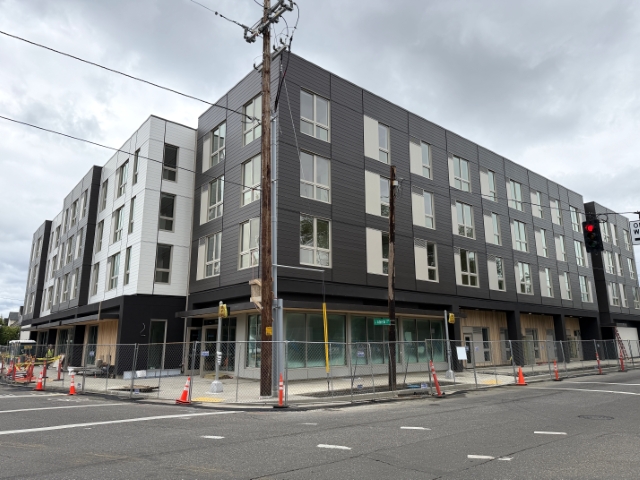
Three-story, 16-unit apartment building on a standard Portland residential lot, illustrating potential density under middle housing reforms
11 NE 55th Ave, Portland, Oregon – December 2025
Photo: Portland Appraisal Blog

Oregon adopted a statewide model zoning code under the Oregon Housing Needs Analysis framework, shifting from unit caps to form-based standards that re-legalize small apartment buildings in residential zones. The rules permit duplexes through fourplexes, townhouses, and cottage clusters outright, with bonuses for accessibility or affordability, while slashing parking mandates.

Affected cities—primarily Oregon’s larger municipalities, including Portland, Beaverton, Gresham, Hillsboro, and others in the metro area—must align zoning with the model code if they fail to meet production targets, though implementation timelines vary by jurisdiction and can extend several years. Form-based limits keep development neighborhood-scale, typically supporting 6–12 units on a standard lot.

These rules expand as-of-right development options on residential lots, particularly corner or larger parcels in single-family zones. Highest-and-best-use analyses may now reflect stronger redevelopment potential for small multifamily or middle housing types in cities subject to the model code.

Although the model code removes unit-count caps, form-based limits on height, coverage, and floor area ratio maintain neighborhood character. While larger projects, such as a 16-unit building, are now more feasible, they remain a different undertaking involving complex regulatory review, commercial-grade construction, specialized financing, and contractor expertise.

Market activity will likely continue to favor rehabilitation of existing homes alongside gradual small-scale infill—many builders focus on single-family with ADUs. Appraisers need to be mindful of what is possible under the new zoning allowances while analyzing what the market is actually doing.

Form-based standards and reduced parking mandates lower barriers to small apartment or townhouse projects, with affordability bonuses providing quantifiable incentives. Over time, this may broaden comparable selection for emerging middle housing.

Wednesday, December 17: Reviving Portland Development: Design Review Reforms, Bureau Cuts, and the Push for More Housing

Low-angle exterior view of the 1900 Building in downtown Portland, Oregon, headquarters of the Portland Bureau of Development Services
Low-angle view of the 1900 Building in downtown Portland, home to the Bureau of Development Services.
Photo: Portland Appraisal Blog (CC BY-SA 4.0)

New construction slowed markedly in the Portland region, with Q3 2025 single-family sales dropping 25% year-over-year and comprising just 9% of transactions—steeper in Multnomah County at roughly 48%. Reduced activity contributed to monthly shortfalls at the Bureau of Development Services, leading to 72 staff cuts.

City Council advanced studies on design review exemptions and moratoriums for housing, alongside the Unified Housing Strategy’s focus on streamlining, consolidated processes, and incentives like extended state tax exemptions for mixed-use.

Short-term staffing reductions may prolong timelines, impacting feasibility in proposed construction assignments.

Longer-term reforms could boost multifamily supply, expanding comparables for vertical mixed-use or conversions—though gains may lag into 2026–2027 amid ongoing caution.

Thursday, December 18: Portland’s Historic Homes and the PSU Demolition Debate

Close-up of Blackstone Residence Egyptian corner sculptures. Blackstone was designed by Elmer Feig and the sculptures reflected national interest following the discover of King Tutankhamun’s tomb. Photographed in 2025.
Photo: Portland Appraisal Blog

Portland State University’s plan to demolish two early-20th-century residence halls on the Historic Resources Inventory for new student housing spotlighted preservation challenges. The buildings lack full landmark status, limiting delays, yet advocates highlight rehabilitation benefits for carbon and culture.

In the private market, only 15 verified registered historic single-family sales occurred in Portland from 2023 through Q3 2025, averaging $1,256,588 in premier neighborhoods like Irvington. These reflect premiums for authenticity offset by maintenance and review burdens, with incentives available.

Due diligence via Portland Maps or title reports is essential to confirm designation—many older homes lack it.

Designations influence marketability through higher costs and restrictions, balanced by tax benefits for qualifying owners.

Friday, December 19: 1803 Fund Unveils Adaptive Reuse Plans for Portland’s Historic Grain

Iconic concrete grain silos along the Willamette River in North Portland, viewed from the east bank with industrial infrastructure and railroad tracks visible – December 2025.
Portland’s iconic grain silos along the Willamette River, as seen today from the east bank. Built in 1914 and long a symbol of the city’s industrial past, these structures are set for creative adaptive reuse while preserving their monumental presence.
Photo: Portland Appraisal Blog (CC BY-SA 4.0)

The 1803 Fund detailed plans to preserve Portland’s 1914 grain silos on the Willamette east bank as a cultural waterfront hub with galleries, event spaces, and mixed-use additions. The $70 million acquisition covers the three-acre silo site plus about 20 tax lots in The Low End (seven acres), totaling roughly 10 acres.

The silo site’s history illustrates functional obsolescence: after $21.5 million modernization in 2013, it sold for $164,000 in 2019 post-rail loss, then $2.9 million in 2021, with a recent $6.5 million listing. Assembly unlocked plottage for master-planned redevelopment, including multi-million remediation of brownfield contamination and a projected $700 million economic impact.

This demonstrates highest and best use shifts in industrial zones—from obsolete terminal to cultural anchor—with rezoning needed for proposed hospitality elements.

Plottage and stigma removal can lift land values in obsolescent corridors, creating uplift via public amenities.

Saturday, December 20: Alberta Alive Townhomes Rise Opposite Historic Alberta Abbey

Early site preparation underway for the Alberta Alive Townhomes in Northeast Portland, with the historic Alberta Abbey visible in the background.
Photo: Portland Appraisal Blog (CC BY-SA 4.0)

Construction began on Alberta Alive Townhomes in Northeast Portland’s Alberta Arts District, delivering eight permanently affordable three-bedroom units via Proud Ground’s community land trust. Opposite the historic Alberta Abbey, these all-electric, Earth Advantage-targeted homes prioritize families with local ties.

Nearby market-rate three-bedroom attached homes averaged $574,900 over four years (1,650 square feet, $355 per square foot), highlighting the premium these restricted units address through public funding. Local families will be able to enjoy quality townhome units that would otherwise be unaffordable.

Community land trust units—with resale caps—are not directly comparable to unrestricted sales. Appraisers generally omit affordable housing units from analyses involving unrestricted properties.

High-quality infill can stabilize neighborhoods and anchor upward pressure on conventional properties nearby.

Week’s Blog Posts & Further Reading Links

Closing Remarks

This week’s posts revealed Portland’s pragmatic approach to growth—reusing landmarks like grain silos, easing rules for modest density, and targeting affordability without overhauling single-family zones overnight. Preservation and adaptation stood out as practical paths forward in a market still feeling permitting and production headwinds.

Decorative text divider.

Thanks for reading—I hope you found a useful insight or an unexpected nugget along the way. If you enjoyed the post, please consider subscribing for future updates.

Question: Which story from the week—mass timber supportive housing, statewide middle housing tools, or waterfront silo reuse—do you see having the biggest long-term ripple on Portland metro valuations?

CODA

Are you an agent in Portland who wonders why appraisers always do “x”?

A homeowner with questions about appraiser methodology?

If so, feel free to reach out—I enjoy connecting with market participants across Portland and the surrounding counties, and am always happy to help where I can.

And if you’re in need of appraisal services in Portland or anywhere in the Portland Region, we’d be glad to assist.