Hillsboro’s residential market responded to Intel’s 2024–2025 layoffs with clear external obsolescence—condominium and attached resale segments showed steepest price declines and longest marketing times. Original RMLS analysis.
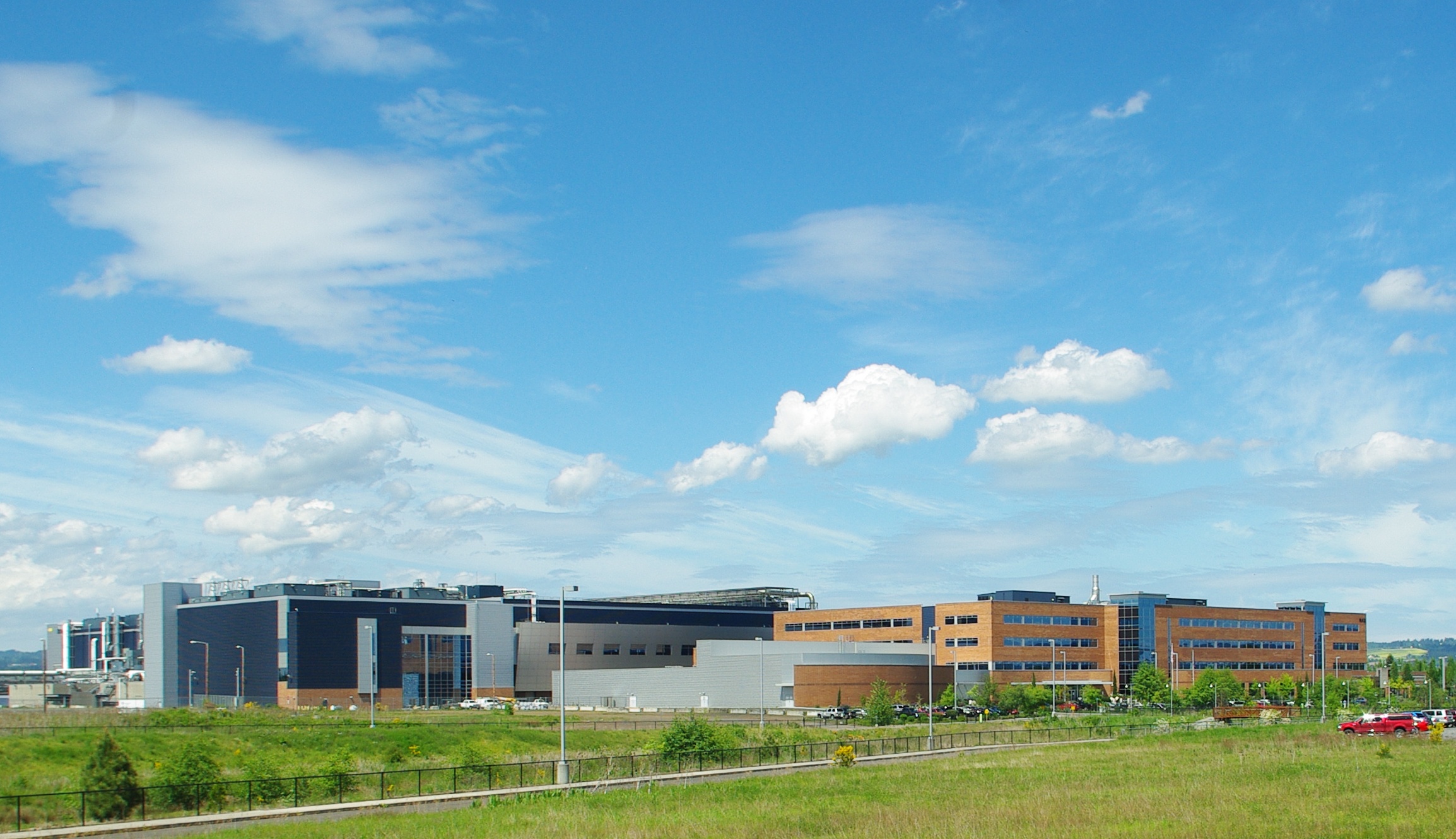
Intel’s Gordon Moore Park at Ronler Acres—the largest campus in Hillsboro and primary site impacted by 2024–2025 workforce reductions. Photo: M.O. Stevens via Wikimedia Commons (CC BY 3.0)
Hillsboro has long been synonymous with high-wage technology employment, anchored by Intel’s extensive campus network. When a dominant employer undergoes significant workforce reduction, the ripple effect can manifest as external obsolescence in the surrounding residential market—reduced buyer demand, extended marketing periods, and downward pressure on realized prices, particularly in segments most tied to that employment base.
Between late 2024 and the end of 2025, Intel eliminated more than 4,400 positions in Oregon, with the vast majority concentrated in Hillsboro facilities. This represented a roughly 20% contraction from peak local headcount. The timeline provides clear inflection points for analyzing market reaction.
October 2024: Approximately 1,300 positions eliminated (separations beginning November 2024).
July 2025: Roughly 2,400 additional positions cut across Ronler Acres, Jones Farm, Hawthorn Farm, and Aloha sites.
November 2025: Further 669 roles removed, bringing the 2025 total above 3,100.
Semiconductor business cluster in Hillsboro, Oregon, illustrating the concentration of Intel campuses (Ronler Acres, Jones Farm, Hawthorn Farm) amid supplier and partner facilities—the geographic core of the employment shock. Via Hillsboro GISApproximate Hillsboro city limits boundary used for RMLS closed-sales analysis (detached, attached, and condominium properties, 2023–2025). Via Hillsboro GIS
Annual market summary for Hillsboro closed sales (all property types, including new construction, 2023–2025). Overall averages reflect relative price stability across the period. Data: RMLS | Portland Appraisal Blog
Data reflects single-family residential class properties within Hillsboro city limits (detached homes, attached townhomes/rowhomes, and condominiums).
Price Trends Reveal a Split Market
Quarterly average close price trends in Hillsboro (all closed sales, 2023–2025). Detached properties maintained relative stability longest, while condominium and attached segments showed earlier and steeper declines. Quarterly average close price trends in Hillsboro (resale properties only, excluding new construction). Removing builder sales unmasks deeper weakness in existing detached and attached stock.
Some local year-end commentary described Hillsboro values as generally stable, citing modest average price gains and balanced overall inventory; this matches the annual market summary table above. However, if you peel back the onion a different picture emerges. The apparent stability reflects the continued delivery of new-construction projects—many planned and entitled well before Intel’s workforce reductions began. When new-construction sales are excluded, existing condominium and attached resale properties show consistent price declines and significantly longer marketing periods—evidence that the employment shock has already exerted measurable external obsolescence on resale stock. The broader market averages may feel the full effect in 2026 and beyond as pre-layoff development pipelines clear.
Type
2023 Avg Close
2024 Avg Close
2025 Avg Close
2025 vs 2023 Change
2025 Avg CDOM
SP/OLP 2025
Condo
$366,533
$361,835
$335,105
–8.6%
66 days
94.89%
Attach.
$449,270
$452,930
$435,573
–3.0%
56 days
96.22%
Detach.
$568,134
$578,012
$570,170
+0.4%
50 days
97.37%
Resale-only trends reveal clearer softening, particularly in condominium and attached segments. Data: RMLS | Portland Appraisal Blog
The Textbook Signal: Rising Cumulative Days on Market
Perhaps the clearest indicator of external obsolescence is the extension of marketing periods. Prolonged days on market with little to no price premium is a hallmark response to localized employment contraction.
Quarterly average cumulative days on market (resale properties only, Q1 2023–Q4 2025). Condominium resale led the increase, followed closely by attached; detached resale joined the upward trend decisively in late 2025.
The extension of marketing periods in resale properties offers one of the clearest indicators of external obsolescence. Condominium resale led the trend with sharp increases beginning in mid-2024, followed closely by attached resale. Detached resale, initially more resilient, joined the upward trajectory decisively in late 2025. By Q4 2025, average cumulative days on market across all three resale segments converged in the 74–83 day range—a dramatic shift from the 20–40 day norms prevalent in 2023.
Key CDOM Inflection Points (Resale Properties)
Type
Avg CDOM Q4 2024
Avg CDOM Q4 2025
Increase
Condominium
50 days
74 days
+48%
Attached
61 days
83 days
+36%
Detached
48 days
78 days
+63%
Average cumulative days on market for resale properties: Q4 2024 vs. Q4 2025 comparison, highlighting the sharpest extensions. Data: RMLS | Portland Appraisal Blog
The near-convergence at 74–83 days by year-end 2025 represents a dramatic shift from pre-2024 norms, when most segments averaged 20–40 days.
Individual Sale Behavior: No Premium for Extended Marketing Time
Scatter analysis of 2024–2025 closed sales reinforces the aggregate trend.
Sales price vs. cumulative days on market—Hillsboro condominium sales, 2024–2025. Flat trend line and long rightward tail illustrate absence of price compensation for prolonged marketing periods. Vertical dashed line at 60 days highlights extended-market properties. Sales price vs. cumulative days on market—Hillsboro attached resale properties only, 2024–2025. Similar flat relationship and extended tail once new-construction sales are removed. Vertical dashed line at 60 days.
Both distributions exhibit essentially zero correlation between longer marketing time and higher achieved price—a buyer’s market signal where sellers concede on price rather than wait.
Upper-Tier Detached Vulnerability
Year
# of Resales
Avg Resale Price
# of New Con
Avg New Con Price
% New Con
2023
24
$1,006,573
17
$981,111
41%
2024
24
$964,685
28
$969,004
54%
2025
35
$954,781
28
$901,582
44%
Total
83
$972,592
73
$945,687
47%
Hillsboro detached sales priced $800,000 and above (2023–2025), separated by resale and new construction. Resale and new-construction prices trend lower while sheer new-construction volume helps support aggregates, leading to an impression of overall market stability. Data: RMLS | Portland Appraisal Blog
Even within the more resilient detached segment, properties priced $800,000 and above—often appealing to higher-compensated technology professionals—displayed noticeable softening. Resale upper-tier homes closed at lower average prices in 2025 ($955,000) than in prior years, while new-construction sales in this bracket experienced even sharper erosion, averaging $902,000 in 2025—an 8.1% decline from the 2023 figure.
Appraiser Perspective: Practical Implications
The data presents several direct challenges in current Hillsboro residential appraisals:
Comparable selection becomes more complex when pre-layoff and post-layoff sales coexist. Appraisers must prioritize recent closings and apply verifiable market condition (time) adjustments, particularly for condominium and attached resale comps.
Reconciliation weighting should favor sales with similar motivation profiles; distressed or relocation-driven transactions carry greater weight in segments showing extended CDOM.
Market condition (time) adjustments are warranted when comparable sales bracket the layoff timeline. Sales closing before mid-2024 often reflect stronger demand and may require negative adjustments when applied to current assignments to account for subsequent market erosion; more recent closings in condominium and attached resale segments typically need little or no adjustment, while pre-layoff comps may warrant downward support in reconciliation.
New vs. resale distinction is critical in attached and upper-tier detached appraisals. Builder sales frequently achieve high sale-to-list ratios through incentives and concessions that are not always reflected in the recorded price, which can distort aggregate trends and make the overall market appear more stable than the resale segment suggests. Generally, appraisers compare new to new and resale to resale. The danger zone arises when comparing a 2–3 year-old near-new resale home to an actual new-construction sale; extensive efforts should be made to verify whether recent new-construction transactions included substantial concessions or favorable financing terms.
New construction accounted for 27.8% of all Hillsboro closed sales from 2023–2025—a notably high share that remained steady year-over-year. These deliveries largely reflect projects planned and entitled before Intel’s workforce reductions began. As that pre-layoff pipeline clears in the coming years, overall market averages may more closely mirror the resale trends observed here.
Lenders, homeowners, and real estate professionals active in Hillsboro should recognize that proximity to the semiconductor corridor no longer commands the same location premium it once did—at least in denser and higher-priced segments. The Portland Appraisal Blog will monitor how the tapering new-construction pipeline shapes broader metrics in 2026 and beyond.
Thanks for reading—I hope you found a useful insight or an unexpected nugget along the way. If you enjoyed the post, please consider subscribing for future updates.
CODA
Are you an agent in Portland who wonders why appraisers always do “x”?
A homeowner with questions about appraiser methodology?
If so, feel free to reach out—I enjoy connecting with market participants across Portland and the surrounding counties, and am always happy to help where I can.
And if you’re in need of appraisal services in Portland or anywhere in the Portland Region, we’d be glad to assist.
Sandy’s sewer moratorium has halted most new development after a 27-year boom where new homes made up ~27% of sales—nearly 3x the regional average. Original RMLS analysis (1998–2025) and field reporting reveal the impacts and what comes next.
The entrance sign to the City of Sandy Wastewater Treatment Plant at 33400 SE Jarl Rd. Built in 1965 for a much smaller population, this facility is at the center of the moratorium on new sewer connections. Photo: Abdur Abdul-Malik, Portland Appraisal Blog
After decades of explosive growth—one of Oregon’s highest rates of new home construction—the City of Sandy faced a severe infrastructure crisis. A federal settlement with the EPA forced the city to impose a moratorium on new sewer connections, halting most new development.
Sandy’s wastewater treatment plant, built in 1965 and last significantly upgraded in 1998, could not keep pace with expansion. Population grew from ~5,000 to over 13,000, adding thousands of homes and overwhelming the system with inflow and infiltration during wet weather. This led to hundreds of violations of Clean Water Act permits, including exceedances of effluent limits and prohibited bypasses that released untreated or partially treated wastewater into Tickle Creek—a tributary of the Clackamas River.
The violations exposed the city to potential civil penalties exceeding $100 million under the Clean Water Act. A fine which, if imposed, could have bankrupted the city. Sandy reached an agreement with the EPA, U.S. Department of Justice, and Oregon DEQ, committing to major upgrades to remediate the pollution.
Key requirements also included limiting new sewer connections—resulting in the moratorium, initiated in October 2022 and extended most recently to June 2, 2026 (Resolution 2025-39). The long-term fix favors piping effluent to Gresham’s plant (target late 2020s–early 2030s).
While vested pre-moratorium projects continue to build and sell in 2026, the backlog will soon run out—likely in the coming years—bringing new construction to a near-total halt. The most significant constraints on supply may therefore emerge 2027–2030, until regional wastewater capacity is fully online.
This post details the timeline, infrastructure roots, and—through original RMLS analysis (1998–2025)—the moratorium’s emerging and future impacts on Sandy’s housing market.
Teaser Stat: New detached single-family homes represented ~27% of all SFR sales from 1998–2025—nearly three times the typical regional average (~10%).
Tickle Creek Trail entrance sign in Sandy. The creek’s water quality improvements came at the cost of a moratorium on new sewer connections to prevent further strain on the system. Photo: Abdur Abdul-Malik, Portland Appraisal BlogTickle Creek in Sandy today—flowing through protected riparian forest. Photo: Abdur Abdul-Malik, Portland Appraisal Blog
The situation underscores the long-term consequences when growth outpaces infrastructure.
The Infrastructure Story – How Sandy Reached the Breaking Point
Sandy’s sewer moratorium didn’t appear out of nowhere. It was the culmination of decades of rapid growth colliding with infrastructure built for a much smaller town.
The city’s wastewater treatment plant was constructed in 1965, designed to serve a population of roughly 2,000–2,500 residents. A significant upgrade in 1998 increased capacity to 1.2 million gallons per day (MGD), but no further major expansions followed.
Meanwhile, Sandy transformed. Between 1998 and 2025, 1,413 new single-family homes were sold (RMLS data)—representing ~27% of all SFR sales over that period, nearly three times the typical regional average.
Population growth accelerated sharply after 1970, leaving the city more than twice as large as it was when the Sandy plant last underwent a major upgrade (1998):
The result placed extraordinary demand on the aging system. During wet weather, inflow and infiltration (I&I)—stormwater entering through direct connections and groundwater seeping into pipes—routinely overwhelmed the system. Rain alone might have caused flooding or diluted overflows, but when combined with effluent from homes (wastewater containing nutrients, bacteria, and solids), it resulted in treatment capacity being exceeded, leading to permit violations including the release of untreated or partially treated wastewater into Tickle Creek.
Storm drain in Sandy during rain. Surface runoff entering the sewer system through drains like this is a primary source of inflow and infiltration (I&I), which overwhelmed the treatment plant and led to permit violations. Photo: Abdur Abdul-Malik, Portland Appraisal Blog
The violations triggered federal enforcement. Under the Clean Water Act, potential civil penalties could have exceeded $100 million—a sum larger than the city’s annual budget. The latest biennial budget is $188 million (2025–2027 adopted). In 2023, Sandy reached a Consent Decree with the EPA, U.S. Department of Justice, and Oregon DEQ. The city settled for a reduced penalty of $324,300 (after completing a $200,000 supplemental environmental project for riparian restoration along Tickle Creek) and committed to comprehensive upgrades.
Central to the agreement was the “Sandy Clean Waters” program—a multi-phase overhaul of collection systems, treatment processes, and long-term planning. A key compliance requirement: limit new sewer connections that increase flows until capacity is proven.
This led directly to the moratorium on new land-use applications requiring sewer hookups, first adopted in October 2022 and extended multiple times—most recently to June 2, 2026 via Resolution 2025-39.
The city’s preferred long-term solution is a regional partnership: constructing an approximately 10-mile pipeline to send effluent to Gresham’s larger treatment facility. Engineering studies and intergovernmental agreements are underway, with completion targeted for the late 2020s or early 2030s.
Aerial view of the Sandy Wastewater Treatment Plant (1965, upgraded 1998), tucked away in a forested area near Tickle Creek. The limited space and aging design were overwhelmed by Sandy’s growth from ~5,000 to over 13,000 residents. Image: Google MapsAerial view of the Gresham Wastewater Treatment Plant – the larger, regional facility that will become Sandy’s primary treatment partner through the proposed 10-mile effluent pipeline, targeted for the late 2020s or early 2030s. Image: Google Maps
In the interim, the city has made progress on immediate fixes—infiltration repairs, basin upgrades, and stress testing—but growth remains capped to protect water quality and avoid further penalties.
The result is a community that grew faster than its infrastructure could support, now navigating the consequences of that mismatch.
The Moratorium – Timeline and Mechanics
With the infrastructure crisis established, the City of Sandy turned to a rarely used tool under Oregon law: a moratorium on development tied to public facilities.
Authorized by ORS 197.520–197.530, such moratoria allow cities to pause land-use applications when a “shortage of public facilities” exists, provided they demonstrate reasonable progress toward resolution. Sandy has relied on this framework since 2022, extending the moratorium multiple times through public hearings and written findings.
Key Timeline
Date
Resolution / Action
Key Details
10/3/2022
Resolution 2022-24
Initial moratorium adopted; no new applications requiring sewer connections accepted
3/20/2023
Resolution 2023-07
First extension; stress testing begins
6/20/2023
Resolution 2023-27
Consent Decree-aligned moratorium; capacity capped at 300 connections
11/20/2023
Resolution 2023-34
Extension to June 2024
5/20/2024
Ordinance 2024-09
Extensions for pre-moratorium approvals to prevent expiration
6/3/2024
Resolution 2024-11
Capacity unlocked to ~451 available (conditional EPA approval)
12/2/2024
Resolution 2024-24
Extension to June 2025
6/2/2025
Resolution 2025-14
Mass allocation closed; focus on extensions/reassignments
11/17/2025
Resolution 2025-39
Current extension to June 2, 2026
Timeline of City of Sandy’s resolutions extending the moratorium.
The moratorium is not a blanket building ban. Remodels, additions that do not increase wastewater flows (e.g., no new bathrooms), and certain replacements are generally permitted. Property line adjustments, variances, and developments using on-site septic systems are also exempt.
What is restricted: new land-use applications that propose additional sewer connections or modifications increasing flows. This includes most new subdivisions, partitions creating additional lots, multifamily projects, and commercial developments requiring hookups.
How Capacity Is Managed
The city uses Equivalent Residential Units (ERUs) as a measure—one ERU roughly equals the wastewater load of a single-family home.
Initial cap (2022–2023): 120–300 ERUs
Conditional EPA approval (April 2024): Potential total of 570 ERUs (with pathway to more pending upgrades)
As of late 2025: Approximately 374 ERUs remain available, primarily reserved for vested pre-moratorium projects, public health needs (failed septics), and limited reassignments—meaning the actual number of new detached single-family homes that can connect is far lower than the ERU figure suggests.
Pre-October 2022 applications (“vested”) retain priority, allowing some construction to continue. However, the backlog is finite, and new non-vested projects face significant hurdles.
The extensions follow state law requirements: six-month terms, public hearings, and findings of ongoing shortage plus progress (e.g., infiltration repairs, engineering for the Gresham pipeline).
This mechanism has bought time for compliance but will eventually constrain supply of new homes—effects explored through market data in the next section.
The Market Impact – An Appraiser’s Original Analysis (1998–2025)
The moratorium’s effects on Sandy’s real estate market are already measurable—and point to a future of tighter supply and shifting values.
Original RMLS analysis of single-family residential (SFR) sales in Sandy ZIP 97055 from January 1998 through December 2025 reveals a market long defined by exceptional new-construction activity, now facing a sharp pivot.
Over 28 years, 5,264 SFR detached home sales closed in Sandy. Of these, 1,413 were new-construction homes—representing ~27% of the total. This is nearly three times the typical share seen in comparable Portland-metro and Clackamas County markets, where new homes rarely exceed 10–12% of annual sales.
Sandy’s reliance on new construction was extraordinary—and, frankly, almost unheard of in mature real estate markets. In peak years like 2001, more than 60% of all single-family sales were brand-new homes—meaning over one in two transactions involved a house that didn’t exist the year before. Even the long-term average of ~27% is roughly three times the norm for established markets. Outside true boom-town anomalies (think early-2000s Las Vegas or parts of Florida), you rarely see new development dominate to this degree. For decades, Sandy operated less like a typical suburb and more like an active greenfield expansion zone.
The pattern was not uniform:
Early 2000s peak: New construction frequently exceeded 50–60% of sales.
Mid-2010s dip: Share fell to single digits during post-recovery caution.
2018–2023 resurgence: New homes consistently 20–32% of sales, reflecting migration, low rates, and Sandy’s appeal as a Mt. Hood gateway.
Focusing on new construction as a percentage of total sales shows Sandy peaking over 60% and beginning a downward trajectory, bottoming in 2017. A new trend began in 2018, interrupted by the moratorium:
The 2024–2025 period marks the clearest shift:
2024: New share fell to 10.3% (lowest since the Great Recession era).
2025: Partial rebound to 26.1%, reflecting the final closings from vested pre-moratorium projects.
This rebound masks the underlying trend: the pipeline of vested developments is thinning. As it exhausts, new supply faces a near-total halt.
Price Per Square Foot Trends
Average price per square foot (PPSF) rose across both segments, but patterns differ due to size variation.
The lines cross multiple times (e.g., 2004–2005, 2010, 2014–2015). In periods of similar size—such as 2014–2015 (both ~1,780 SF)—PPSF was nearly identical, with no consistent advantage for new homes.
Existing homes: Steady increase from ~$100 in 1998 to $290 in 2025.
New construction: Slightly more volatile, often tracking below existing PPSF in many years—largely because new homes averaged significantly larger square footage and PPSF generally declines the larger a home gets.
The 2014–2015 period provides the clearest evidence that PPSF differences are primarily size-driven. During those years, new and existing homes had nearly identical average square footage (~1,780 SF), and PPSF tracked very closely (~$138–$146), with no consistent advantage for new construction. Other crossing points (e.g., 2004–2005, where existing edged higher, and 2010) further illustrate that per-square-foot pricing reflects size and market timing more than construction age.
Size and Age: New Homes Drove Greater Demand
New construction trended larger and more fixture-intensive—amplifying strain on the system.
Average total SF (new): Progressed from ~1,600 in early years to 2,300–2,345 in 2024–2025.
Average bedrooms/baths (new): 3.7–3.8 beds / 2.5–2.6 baths in recent years (vs. existing ~3.3 beds / 2.0 baths).
Sandy’s overall housing stock is notably younger than the broader Portland region. Average year built for all homes sold in the period was ~2003, compared to a regional average age of ~48 years (Q3 2025 data). The narrower gap in the late 1990s reflects an earlier growth surge in the 1980s, which temporarily refreshed the existing stock. The widening gap from 2000 onward illustrates the intensity of subsequent development.
Field Observations: Vested Projects in Transition
On-site visits to pre-moratorium subdivisions reveal ongoing construction in vested phases, contrasting with the broader supply constraint as the backlog thins.
Construction in progress at a pre-moratorium (vested) subdivision in Sandy (October 2025). These projects continue under previously allocated sewer connections, but represent the thinning backlog as the moratorium limits new supply. Photo: Abdur Abdul-Malik, Portland Appraisal BlogHomes in various stages of completion, from foundation recently poured to nearly complete. Photo: Abdur Abdul-Malik, Portland Appraisal BlogA framed home. The average size of new homes has climbed by ~50% since 1998. With fixture count increasing as well. Photo: Abdur Abdul-Malik, Portland Appraisal BlogA subdivision nearly complete, a framed house can be seen in the distance. Photo: Abdur Abdul-Malik, Portland Appraisal Blog
Summary of Impacts
Supply: New construction share has fallen from a long-term ~27% average to volatile single-digit territory in 2024, with 2025’s rebound likely the final surge.
Pricing: Overall PPSF has risen steadily across both segments, influenced by size differences rather than consistent age-based premiums.
Future: As vested projects complete, non-vested development faces severe constraints until regional capacity arrives.
The data confirms a market transitioning from abundance of new inventory to reliance on existing stock—with corresponding pressure on redevelopment and constrained large-scale growth.
Looking Ahead – The Next Decade of Constraints
The moratorium on new sewer connections is currently extended through June 2, 2026 (Resolution 2025-39, adopted November 2025). City staff and council findings indicate continued six-month renewals are likely until permanent capacity is secured.
While some pre-moratorium (“vested”) projects continue construction and sales in 2026, the remaining backlog of allocated connections is finite—approximately 374 ERUs as of late 2025, mostly reserved for committed developments and limited exceptions.
As this pipeline exhausts—likely in the coming years—new non-vested development will face a near-total halt. The most significant supply constraints may therefore emerge 2027–2030, a period when demand from Portland-metro spillover could remain strong but new inventory options are severely limited.
The city’s preferred long-term solution is a regional partnership: constructing an approximately 10-mile pipeline to route effluent to Gresham’s larger treatment facility. Engineering studies and an intergovernmental agreement were targeted for completion by late 2025, with construction and transition spanning several years thereafter (city estimates point to the late 2020s or early 2030s for full operation).
Until then, the Consent Decree and state law require ongoing limits on connections that increase wastewater flows.
Regional Ripple Effects
Sandy’s constraints will soon begin to influence broader county trends. New single-family detached sales in the Portland region show Washington County maintaining strong dominance in volume, with Clackamas County (home to Sandy) less than half the volume. As Sandy’s vested backlog thins, Washington County’s lead in regional new construction is likely to grow.
The Rising Cost of Connection
The Clean Waters program and eventual Gresham partnership come with substantial financial implications for ratepayers and future development.
To fund the estimated $211–$245 million total program cost, Sandy has implemented significant rate increases. Residential sewer bills now include a base fee of $35.08 per month plus a usage charge of $9.00 per CCF (Centum Cubic Feet; one CCF equals 100 cubic feet of water, or approximately 748 gallons—a common billing unit for utilities).
For a typical household using 7–10 CCF per month, the extra $40–$50 per month over comparable Gresham rates is equivalent to the cost of two streaming services or a budget gym membership. With projected annual increases of 10–15% to service the program’s debt, this gap is expected to widen in coming years—potentially adding $6,000 or more in additional costs per household over a decade.
Entrance sign for the Gresham waster water treatment plant. This facility is substantially larger than the one in Sandy and has excess capacity and has reached energy net zero. Photo: Abdur Abdul-Malik, Portland Appraisal Blog (CC BY-SA 4.0)Anaerobic digestion tanks with green roofs and associated buildings at the City of Gresham Wastewater Treatment Plant, 20015 NE Sandy Blvd, Gresham, Oregon. View from the entrance road shows solar panels and part of the biogas production and sludge stabilization facilities. Photo: Abdur Abdul-Malik, Portland Appraisal Blog (CC BY-SA 4.0)
Cost Category
HistoricalBaseline (Sandy)
Current/Projected (2025–2026+)
Gresham Benchmark
Total Program Cost
N/A
$211–$245 million
N/A
Monthly Base Rate
~$30
$35.08
$27.18
Usage Rate (per CCF*)
~$7.76
$9.00
$2.41
Est. Monthly Bill (Avg User)
~$55–$65
~$75–$85+ (with increases)
~$44–$51
SDC (Detached SFR)
~$3,000–$5,000
Under review (likely higher)
$7,915
*CCF = 100 cubic feet (~748 gallons). For reference, the average Sandy household uses 7–10 CCF per month. Rising costs reflect the scale of required upgrades and regional partnership. Future SDCs may include contributions to Gresham capacity.
These higher ongoing expenses represent a notable shift. Once the moratorium lifts and regional capacity is online, the elevated barrier to entry—through both system development charges and monthly utility costs—may alter the economics of large-scale new construction compared to the 1998–2023 boom period. The full impact on development feasibility remains to be seen.
Vacant Land and Interim Use
For vacant lots without vested rights, the moratorium creates a prolonged holding period. Highest and best use as immediate residential development is no longer supportable; instead, these parcels function as speculative holds for future development—potentially until the Gresham pipeline is operational around 2030.
This interim use introduces time-value considerations in appraisals: discounted cash flow adjustments for the delay in realizing development potential, alongside uncertainty over final SDC levels and rate structures.
Alternative Development Paths
The moratorium explicitly exempts developments using on-site septic systems, provided they meet Clackamas County health standards for soil percolation, setbacks, and reserve areas (typically requiring ~1 acre minimum for public water, or 2 acres with a well, plus ~10,000 square feet for drainfield and reserve).
This carve-out may encourage a shift in strategy for owners of larger parcels (0.5–2+ acres), particularly on the city’s fringes or within the Urban Growth Boundary. Subdividing such lots into multiple sewer-ready parcels is blocked, as it requires new connections. However, keeping the lot intact and building a single home on septic remains permitted. In fact, owners of adjacent parcels may explore assemblage to create lots large enough to support a single septic system, potentially keeping otherwise vacant land financially viable during the holding period.
Builders—especially spec or custom operators rather than high-volume tract developers—may pivot to this model: larger, high-end homes on assembled junior-acreage or full-acreage sites. This path preserves lot size (necessary for septic viability), limits density, and carries higher upfront costs (~$20,000–$40,000 for the system) plus ongoing maintenance. It is likely most viable for luxury or custom builds, where buyers prioritize space, privacy, and views over urban density.
Over time, this could slow the historical trend toward smaller lots and denser subdivisions (evident in the -15% to -17% correlation between year built and lot size for 1998–2025 sales). Parcels with proven septic suitability may command a premium as one of the few remaining routes to truly new construction.
Market Implications
With new greenfield or large-scale subdivisions effectively paused, buyers will continue relying on existing inventory, including new construction homes already vested. Older properties with existing sewer connections—particularly marginal or teardown candidates—may see increased redevelopment interest, though additions or replacements that increase flows remain prohibited, capping rebuild scale on many lots.
Sandy’s housing market is beginning to adapt to reduced new supply. The next several years will test how it performs under prolonged constraints—until regional capacity finally arrives.
Takeaway
Sandy’s story is a microcosm of a larger challenge facing many growing communities in Oregon and beyond: infrastructure rarely keeps pace with demand. For nearly three decades, new homes made up ~27% of all single-family sales—nearly three times the regional norm—with peaks above 60% in the early 2000s. That pace was extraordinary, but it came at a cost: an aging 1965 treatment plant overwhelmed, permit violations, federal penalties, and now a multi-year moratorium on new sewer connections.
The data reveals a market in transition. The 2024 drop to 10.3% new construction share was an early warning of the supply squeeze, even as 2025 rebounded to 26.1% (likely the final surge from vested projects). While 2026 may still see decent new home closings from the remaining backlog, the real constraints are likely still ahead—potentially dipping to low single-digit percentages (or even near 1%) in the 2027–2030+ period as non-vested development faces a near-total halt.
The long-term fix—a 10-mile pipeline to Gresham—is underway, with engineering studies and intergovernmental agreements targeted for late 2025. However, as of early 2026, it appears the formal IGA between Sandy and Gresham has not yet been signed, illustrating how even well-planned large-scale infrastructure projects frequently encounter delays due to permitting, coordination, terrain challenges, or cost overruns. Such delays could push pipeline completion well into the 2030s and prolong constraints on new supply.
As a result, builders will likely shift their focus to jurisdictions or areas with existing capacity (e.g., neighboring counties or sewered infill sites), further concentrating regional new construction outside Sandy. The next several years will test how the market adapts to prolonged limits—rewarding existing inventory, redevelopment on sewered lots, and alternative paths on larger parcels—until regional capacity finally arrives.
Sources & Further Reading
This post is based on official public records, direct city documents, EPA filings, and original RMLS data analysis (1998–2025). All links were verified as active on January 08, 2026. For the most current moratorium status, always check the City of Sandy’s development moratorium page.
City of Sandy Official Pages
Development Moratorium Information (main hub – current status, extensions to June 2, 2026, ERU allocation): Link
Equivalent Residential Units (ERUs) Currently Available: Link
Sandy Clean Waters Program (project overview, Gresham pipeline, upgrades, $211–$245 million cost range): Link
Wastewater Consent Decree Settlement (city summary and supporting documents): Link
EPA Approves New Sewer Capacity for Sandy (2024 ERU increase details): Link
Adopted Budget 2025–2027 ($188 million biennial budget reference): Link
Thanks for reading—I hope you found a useful insight or an unexpected nugget along the way. If you enjoyed the post, please consider subscribing for future updates.
CODA
Are you an agent in Portland who wonders why appraisers always do “x”?
A homeowner with questions about appraiser methodology?
If so, feel free to reach out—I enjoy connecting with market participants across Portland and the surrounding counties, and am always happy to help where I can.
And if you’re in need of appraisal services in Portland or anywhere in the Portland Region, we’d be glad to assist.
The Ritz-Carlton Residences Portland closed only 11 of 132 units in 2024–2025 at an average $274,000 reduction from original list, illustrating external obsolescence and violation of the principle of conformity in downtown Portland’s soft condo market.
Block 216 (The Ritz-Carlton, Portland hotel and Ritz-Carlton Residences) viewed from West Burnside Street, Portland, Oregon. Photo: Steven Walling via Wikimedia Commons (CC BY 2.0)
As 2025 draws to a close, Block 216—Portland’s tallest residential tower at 460 feet and 35 stories—stands as a prominent feature of the downtown skyline. Completed in 2023–2024, the mixed-use project includes The Ritz-Carlton, Portland hotel on the lower floors and 132 branded luxury condominiums above, marketed as the Ritz-Carlton Residences, Portland.
Launched with considerable optimism for a post-pandemic downtown revival, the residences were positioned as the pinnacle of urban luxury living—complete with Ritz-Carlton service access, premium finishes, and panoramic views. Original list prices ranged from $850,000 to $7,850,000.
Yet the market response has been markedly different. As of December 31, 2025, only 11 units have closed. The original developer transferred the unsold inventory to the lender via deed in lieu of foreclosure in summer 2025, and Christie’s International Real Estate Evergreen was appointed exclusive brokerage in December 2025, with significant price reductions (starting at 50%) scheduled for January 2026.
This appraisal deep dive examines the project’s sales and listing history through RMLS data, placing it within the broader context of the Portland Downtown condominium market and highlighting key valuation principles brought into sharp relief.
Timeline of Key Developments
2019–2023: Block 216 construction and pre-sales period. Residences marketed under Ritz-Carlton branding license as ultra-luxury product with hotel amenity access.
2024: Tower completion and public launch of condominium sales under LUXE Forbes Global Properties. Phased marketing begins.
Late 2023–early 2025: Eleven closings recorded in RMLS, eight of which show 0 days on market (indicative of off-market or exclusive arrangements).
Summer 2025: Developer executes deed in lieu of foreclosure, transferring bulk unsold inventory to lender Ready Capital—a project-level transaction, not individual buyer foreclosures. Public records confirm the hotel portions of Block 216 transferred to a lender REO entity in July 2025.
December 2025: Christie’s International Real Estate Evergreen appointed exclusive brokerage; major price repositioning announced for January 2026.
The Portland Downtown Condominium Market: A Soft Backdrop
The Ritz-Carlton Residences are located in the City of Portland’s “Portland Downtown” neighborhood—the central area immediately south of the Pearl District, encompassing the West End and cultural district around Pioneer Courthouse Square and the South Park Blocks.
The Ritz-Carlton Residences, Portland (Block 216) within the City of Portland’s “Portland Downtown” neighborhood boundary, immediately south of the Pearl District. Map via Bing Maps
This area offers exceptional walkability and proximity to cultural institutions, but the condominium market has remained soft for years. From 2022–2025, 482 condominium sales closed in the neighborhood at an average price of $407,358 and $372 per square foot. Units averaged 1,109 square feet in size, with an average year built of 1982 and average monthly HOA fees of $784.
The scatterplot below illustrates the price distribution over time:
Sales Price vs. Date of Sale for condominiums in Portland’s Downtown neighborhood (2021–2025). All points are sized proportionally by total square feet. Gray dots represent all other sales; colored dots are the 11 closed sales at the Ritz-Carlton Residences, Portland. The Ritz units closed well above the neighborhood norm.
Sales prices have shown remarkable stability—remaining largely in the $200,000–$1.2 million range, with the historical high (prior to Block 216) at $3.065 million from a 2017 transaction. This stagnation reflects persistent oversupply and slow absorption in the urban core.
The table below quantifies the contrast between the neighborhood and the Ritz-Carlton Residences:
Metric
Portland Downtown (482 sales)
Ritz-Carlton (11 sales)
Insight
Avg Close Price
$407,358
$1,500,364
Ritz closed at 3.7× the neighborhood average.
Avg PPSF
$372.27
$1,052.73
Ritz realized 2.8× higher PPSF—still far above neighborhood norm.
SP/OLP %
93.29%
84.48%
Ritz required significantly larger price reductions from original list to close.
Avg Year Built
1982
2023
Ritz is brand-new vs. 40+ year-old neighborhood average.
Avg Total SF
1,109
1,363
Ritz units larger on average.
Avg HOA Monthly
$784
$2,402
Ritz HOA 3× higher—significant carrying cost difference.
Avg CDOM
114
25
Skewed by Ritz exclusives; real public marketing time much longer.
Data: RMLS | Portland Appraisal Blog
The Ritz-Carlton Residences: Pricing Premise vs. Market Reality
Of the 132 total residences, 71 distinct units were publicly marketed in phases—full release of floors 21–23 (the “entry-level” tiers) and selective listings on higher floors. These 71 units generated 105 separate listing records in RMLS, with a median of 145 days per active spell and many accumulating 400+ cumulative days across repeated expirations and re-lists.
Only 11 closings were recorded:
Average sold price $1,500,364 (average reduction of $274,000 from original list price per unit).
Average PPSF $1,053 (marginal trend from regression ~$1,665).
These closings occurred between late 2023 and February 2025, with no additional sales recorded in the remainder of the year.
The developer’s original pricing was highly disciplined and size-driven:
List Price vs. Total Square Feet for the 71 marketed units at the Ritz-Carlton Residences, Portland (2022–2025). Trend implies ~$2,096 per square foot.
The closed sales followed a similar pattern but at a lower level:
Sales Price vs. Total Square Feet for the 11 closed sales at the Ritz-Carlton Residences, Portland (~$1,665 marginal PPSF trend, average realized $1,053/psf).
Among the 11 closed sales (primarily on floors 21–31), no discernible premium for higher floors was observed in realized prices:
Sales Price vs. Floor Number for the 11 closed sales at the Ritz-Carlton Residences, Portland (floors 21–31). R² near zero—no contributory value observed for higher floors in current data; upper floors remain unsold.
Notably, eight of the 11 closings showed 0 days on market—likely off-market or exclusive arrangements. The publicly marketed units faced far greater resistance.
The Inclusionary Housing Obligation and Additional External Pressure
Portland’s Inclusionary Housing program requires new residential developments of 20 or more units to either include affordable units or pay a fee-in-lieu. For Block 216, the developer initially proposed 26 on-site affordable units during the entitlement phase but switched to the fee option in 2023.
On-site inclusion proved functionally challenging: even with restricted sale prices, the project’s elevated monthly HOA dues (averaging $2,402 across closed sales) and luxury service model would likely exceed income qualifications for targeted buyers. The calculated fee-in-lieu obligation totaled approximately $7.8 million (base plus interest) and was due December 31, 2025.
Following the summer 2025 deed-in-lieu transfer to lender Ready Capital, uncertainty remains regarding collection of this amount. As of the post date, it is unknown whether the fee has been paid. If unpaid, it would represent an additional external factor appraisers must consider—a financial encumbrance separate from the physical improvements that may influence marketability and value reconciliation for both unsold inventory and existing ownerships.
Appraiser Perspective: The Principle of Conformity and External Obsolescence
The original pricing strategy for the Ritz-Carlton Residences appears to have been calibrated to the Pearl District rather than the property’s actual location in Portland Downtown. The Pearl has demonstrated a proven ceiling around $7 million for top-tier condominiums, as detailed in an earlier Portland Appraisal Blog post analyzing that market over the past decade. In contrast, the highest condominium sale in the Portland Downtown neighborhood prior to Block 216 was $3.065 million in 2017.
By listing units up to $7.85 million, the developer effectively positioned the project outside the neighborhood’s historical range of conformity—a principle of appraisal theory that holds value is maximized when a property aligns with prevailing market expectations in its location. The resulting resistance illustrates how site-specific external factors can override new construction, branding, and amenity premiums.
This pricing strategy mirrors a common challenge appraisers encounter when reviewing sale transactions or proposed listings: comparable sales selected from superior or more established submarkets to support an optimistic value conclusion. The uniform price reductions required on closed sales (average $274,000 reduction from original list price per unit) and prolonged adverse listing history on the unsold inventory further demonstrate concentrated external obsolescence within an already challenged submarket.
Outlook and Implications for Owners and Lenders
The January 2026 price repositioning may improve absorption at levels more aligned with neighborhood norms. However, the influx of discounted intra-building comparable sales could create reconciliation challenges for appraisals of the existing 11 ownerships—particularly the eight early exclusive buyers who closed near original asks.
Lenders and owners of recently purchased units should monitor upcoming sales closely, as distressed marketing conditions on remaining inventory can influence market value indications even for arms-length prior transactions.
For developers and lenders contemplating future high-rise condominium projects in the urban core, the Block 216 experience underscores the importance of grounding pricing premises in location-specific comparable data rather than aspirational benchmarks from adjacent submarkets.
Sources & Further Reading
Christie’s International Real Estate Evergreen appointment and price repositioning announcement: Press Release
The Portland Pearl District Condo Market – The Last 10 Years (2015–2024): Portland Appraisal Blog
Thanks for reading—I hope you found a useful insight or an unexpected nugget along the way. If you enjoyed the post, please consider subscribing for future updates.
CODA
Are you an agent in Portland who wonders why appraisers always do “x”?
A homeowner with questions about appraiser methodology?
If so, feel free to reach out—I enjoy connecting with market participants across Portland and the surrounding counties, and am always happy to help where I can.
And if you’re in need of appraisal services in Portland or anywhere in the Portland Region, we’d be glad to assist.
Q3 2025 RMLS data shows the Portland Region’s detached starter homes (5th–35th percentile) average $469k and are dominated by mid-century builds on larger lots—with new construction offering modern features but far less space. Appraisal and buyer insights below.
A classic early-20th-century bungalow in the Portland area—the type of modest, well-loved home that dominates today’s starter-tier inventory. Via Canva Pro
Earlier this month, Redfin highlighted Portland as one of the stronger markets nationally for starter-home activity, defining starter homes as sales in the 5th–35th percentile by price. We adopt the same percentile convention here for consistency.
Redfin’s reported median of approximately $420,000 for Portland starter homes includes all property types (condos, townhomes, and single-family). Focusing solely on detached single-family residences—a popular choice across the region, including for many urban buyers seeking yard space and privacy over attached ownership—Q3 2025 RMLS data for the 5th–35th percentile tier shows an average close price of $469,000.
Few would be surprised that new construction plays a limited role in true entry-level pricing—after all, building costs remain elevated. Yet the data shows builders are still delivering a modest but meaningful number of brand-new homes into this tier (about 4.2% of starter sales, compared to 9.1% across the full market). This demonstrates that, through efficient design, infill strategies, and lot divisions, new product can compete in the lower price bands.
Local buyers want to know: how much home does a starter budget actually buy? This analysis examines square footage, lot size, build era, and location differences across counties—revealing a market dominated by mid-century homes with a modest but noteworthy presence of brand-new construction.
How Much Home a Starter Budget Buys by County
The table below summarizes Q3 2025 closed sales for detached single-family homes in the 5th–35th percentile across the core Portland Region counties (Hood River row excluded due to only two qualifying sales).
County
Avg Close Price
Avg Yr Built
Avg Total SF
Avg Acres
# of Sales
Clackamas
$474,738
1965
1,553
0.279
256
Columbia
$457,108
1983
1,774
0.617
58
Mult.
$459,909
1951
1,591
0.163
666
Wash.
$488,954
1976
1,495
0.154
323
Yamhill
$453,522
1981
1,532
0.197
113
Grand Total
$468,595
1963
1,565
0.203
1,418
Data: RMLS | Portland Appraisal Blog
Multnomah County drives nearly half the volume, delivering the oldest average build year (1951). Washington County posts the highest average prices and hosts the most new construction. Outer counties like Columbia and Yamhill provide newer homes on larger parcels, though with far fewer transactions.
Surprisingly, across the region, starter homes are very similar in average price. The standard numerical metrics which are easy to see in RMLS, (e.g. total square footage, lot size, year built, etc.), are not the primary determinant of value. As we shall see, what matters more is quality, condition, and overall site & functional utility. Buyers in the starter home tier make conscious trade-offs between older homes with larger lots and newer homes with little to no functional backyard.
Of all the standard numeric metrics, total square footage shows one of the stronger relationships with price in the starter tier—though the influence is still modest.
Close Price vs. Total Square Feet for Starter-Tier Detached Homes ≤ 0.5 Acres (Q3 2025 RMLS data – 1,380 observations). Note: The Y-axis begins at $350,000 to allow for better viewing of the dataset.
Larger homes tend to sell for higher prices, though with considerable variation—most sales fall between 1,200 and 2,000 square feet. The very slight tilt to the right indicates a weak but present relationship between starter home size and close price. The coefficient of determination (R2) for this graph is 0.1253, meaning total square footage explains only about 12.5% of the variation in price. Since total square footage is often one of the primary determinants of value in the broader housing market, this is a big clue that the size of the home isn’t the primary factor for buyers looking to enter the starter home market.
The Historical Supply Pattern: Lot Size and Build Era
Portland’s entry-level inventory bears the clear imprint of the post-war building boom.
Lot Size vs. Year Built for Starter-Tier Detached Homes ≤ 0.5 Acres (Q3 2025 RMLS data – 1,380 observations).
A polynomial trendline highlights the peak lot sizes during the 1940s–1950s post-war era, followed by a steady decline that began in the early 1960s and accelerated in recent decades. The pattern reflects an era when generous lots were standard, followed by shrinking parcels as land values rose, urban growth boundaries took effect, and lot divisions became common. Buyers choosing older starter homes today typically gain significantly more outdoor space than those selecting new construction.
New Construction: A Modest but Noteworthy Presence
While new homes account for only 4.2% of starter-tier sales, their ability to reach this price range in a high-cost building environment remains impressive.
Segment
Avg Close Price
Avg Total SF
Avg Acres
# of Sales
Existing
$467,996
1,569
0.207
1,359
New
$482,387
1,479
0.107
59
Grand Total
$468,595
1,565
0.203
1,418
Data: RMLS | Portland Appraisal Blog
New homes sell for only about 3% more than existing ones despite brand-new condition, but deliver less interior space and roughly half the land.
Buying a new home in the starter tier is akin to buying a new car on a tight budget: you gain the benefits of fresh systems, modern design, and warranty peace of mind, but often in a smaller package with fewer amenities compared to a well-maintained used model from a higher trim line.
County
Avg Close Price
Avg Yr Built
Avg Total SF
Avg Acres
# of Sales
Clackamas
$489,803
2025
1,606
0.154
8
Columbia
$420,000
2025
1,458
0.130
2
Mult.
$450,820
2025
1,098
0.088
18
Wash.
$509,366
2025
1,699
0.079
25
Yamhill
$475,578
2025
1,540
0.216
6
Grand Total
$482,387
2025
1,479
0.107
59
Data: RMLS | Portland Appraisal Blog
For buyers, this creates a clear choice: a brand-new home with modern efficiency but typically on a very small lot—often with minimal or no usable yard space, especially in Multnomah and Washington counties where most new construction occurs—or an existing mid-century home that generally offers significantly more land and outdoor space, albeit with the potential challenges of older systems and layouts. This trade-off is particularly relevant for growing families or those prioritizing play areas, gardens, or privacy.
Appraisal Insights and Challenges
One of the most revealing patterns appears when plotting close price against build year.
Close Price vs. Year Built for Starter-Tier Detached Homes ≤ 0.5 Acres (Q3 2025 RMLS data – 1,380 observations). Note: The Y-axis begins at $350,000 to allow for better viewing of the dataset.
The remarkably consistent price band across decades illustrates that chronological age has little direct influence on value in the Portland Region’s entry-level segment.
In this tier, actual age correlates weakly with sales price because buyers weigh multiple factors:
Functional obsolescence in mid-century stock (outdated floor plans, smaller kitchens/bathrooms, less efficient systems) is often mitigated by updates and strong location appeal.
Effective age and condition drive far more of the value than the original build date.
Lot size and site utility frequently favor older homes; the smaller parcels common in new construction require substantial negative adjustments that offset much of the credit for new condition.
Comparable selection remains within county, where abundant mid-century comps in Multnomah, Clackamas, and Washington provide solid support — but thinner volume in outer counties demands careful bracketing.
When appraising a new-construction home in this tier—where truly similar recent sales are still limited and down approximately 25% year-over-year in Q3 2025 (with Multnomah County off 48%)—appraisers typically rely on other relatively recent builds (often within 10 years) and apply appropriate adjustments for differences in site characteristics, size, and location.
The same pattern holds when looking at the data from a price-per-square-foot lens, but with a slight twist:
PPSF (TSF) vs. Year Built for Starter-Tier Detached Homes ≤ 0.5 Acres (Q3 2025 RMLS data – 1,380 observations).
From the 1950s onward, PPSF becomes progressively more compressed—older homes exhibit wide spreads driven by dramatic differences in condition, updates, historic appeal, and location premiums, while mid-era and late-20th-century stock tightens as market expectations and remodeling homogenize perceived value.
Brand-new 2025 homes, however, break this decades-long compression pattern. Their PPSF spreads out again, reflecting greater influence from location-driven land costs and builder-specific choices (e.g., finishes, lot configuration) rather than the uniformity imposed by age and updates on existing stock. In effect, today’s entry-level new construction reintroduces variation that mirrors pre-1950 homes—but for different reasons: land value dominance and strategic specs to hit price points, rather than condition swings. This underscores why new-construction starter homes often form their own submarket. Appraisers valuing them face a narrower but distinct comp pool.
These dynamics show that the starter home market is not uniform and the appraiser needs to carefully delineate the competitive market segment to avoid having to make large adjustments between disparate properties. One technique appraisers often employ is to use similar, but older sales when recent data is thin and make an appropriate market conditions adjustment.
Conclusion
The Portland Region’s Q3 2025 starter-home segment continues to rely predominantly on mid-century inventory on lots larger than anything new we’re building today—a pattern unlikely to shift dramatically in 2026 absent major changes in new supply. (Although the City of Portland is certainly trying to incentivize new projects with SDC waivers.) The modest foothold of new construction shows builders adapting through infill and efficient design, but at the clear cost of site size and outdoor space.
For buyers, the choice boils down to priorities: modern and low-maintenance on a small lot, or more space and yard with the realities of an older home. For appraisers, lenders, and agents, recognizing how effective age, site utility, location, and condition outweigh chronological age remains key to accurate valuation in this segment.
Portland’s Temporary SDC Exemption for New Housing Units (2025–2028): Portland Appraisal Blog
Thanks for reading—I hope you found a useful insight or an unexpected nugget along the way. If you enjoyed the post, please consider subscribing for future updates.
CODA
Are you an agent in Portland who wonders why appraisers always do “x”?
A homeowner with questions about appraiser methodology?
If so, feel free to reach out—I enjoy connecting with market participants across Portland and the surrounding counties, and am always happy to help where I can.
And if you’re in need of appraisal services in Portland or anywhere in the Portland Region, we’d be glad to assist.
How pre-1997 Portland metro homes—especially those with veteran or active-duty exemptions—are facing sudden property tax jumps on sale or disqualification.
A classic pre-1940 home in the Portland Region – the type of property often benefiting from deep Measure 50 tax compression. Photo: Portland Appraisal Blog
Imagine closing on a well-maintained pre-1940 Craftsman in an established close-in Portland neighborhood. The sale price felt fair, the taxes shown on the listing and county statement appeared reasonable, and the transaction cleared due diligence without issue. Then the next year’s tax bill arrives—$2,000 to $6,000 higher than anticipated. The increase isn’t due to a sudden spike in market value, but to a change in how Oregon counties now calculate Maximum Assessed Value (MAV) when certain partial property tax exemptions end.
This situation is no longer hypothetical. Oregon REALTORS first highlighted the risk in a December 12th, 2025 internal “Forms Tip of the Week” communication, alerting members that the loss of veteran or active-duty partial exemptions—commonly triggered when a qualifying veteran or surviving spouse sells the home or passes away without a qualifying successor—can lead to significant tax increases under updated guidance from the Oregon Department of Revenue.
While the veteran and active-duty exemptions (ORS 307.250 and 307.286) have drawn attention to the issue, the underlying driver is broader: the substantial tax compression created by Measure 50 for properties built or long-held before 1997.
Historically, when these modest partial exemptions ended, counties simply removed the discount and allowed the low underlying MAV to continue. The 2024 guidance change now enforces a constitutional requirement to reset MAV closer to current market reality upon disqualification.
The outcome: buyers may face permanently higher carrying costs they did not expect, sellers (including veterans and surviving spouses) can find their properties harder to market at full value, and appraisers encounter a marketability factor worthy of note when present.
This Deep Dive reviews the mechanics, illustrates the pattern with Portland Region sales data, and provides practical steps for identifying and addressing the issue in appraisal assignments.
Understanding Measure 50: The Foundation of Tax Compression
To grasp why the loss of a veteran or active-duty exemption can now lead to significant tax increases, we must first understand Oregon’s Measure 50 property tax system, approved by voters in 1997.
Measure 50 replaced the previous tax structure with two key values for each property:
Real Market Value (RMV): The county assessor’s estimate of what the property would sell for on the open market. This value can rise or fall annually with market conditions.
Maximum Assessed Value (MAV): A separate taxable value created by Measure 50. For existing properties in 1997, MAV was initially set at approximately 90% of the 1995–1997 RMV. Thereafter, MAV is generally limited to a 3% annual increase, with exceptions for major additions, improvements, or certain other events.
The Assessed Value (AV) is the lesser of RMV or MAV. Taxes are calculated by multiplying the AV by the local tax rate.
In high-appreciation markets like the Portland metro area, this 3% cap creates substantial tax compression over time. A home purchased or built before 1997 can have an MAV far below its current RMV after decades of strong market growth.
Annual property taxes vs. Year Built, excluding new construction and obvious data errors. Note: Scatter plots are limited to properties with annual taxes of $21,000 or less to highlight the primary distribution and improve readability.
The scatter illustrates the effect clearly: pre-1960 homes are overwhelmingly clustered below $10,000–$12,000 in annual taxes, with the densest grouping under $8,000–$9,000. Properties on the far left (pre-1920 builds) often show the deepest compression, having benefited from the longest period of capped MAV growth. Post-1990 homes, by contrast, display significantly higher tax burdens, reflecting less historical compression.
When a triggering event occurs—such as disqualification from a partial exemption—the MAV can be recalculated using the Changed Property Ratio (CPR), typically around 0.54 for residential properties in Portland Region counties for the 2025–2026 tax year, applied to current RMV.
In the next section, we examine local sales data that quantifies the scale of this compression and illustrates why the reset can matter in real transactions.
The Data: Tax Compression in the Portland Metro Market
Q3 2025 sales data from detached single-family residences (SFR) in the Portland Region (Clackamas, Columbia, Hood River, Multnomah, Washington, and Yamhill counties) illustrates the scale of Measure 50 compression and why a MAV reset can create material differences in carrying costs.
The table below summarizes average sale prices and annual property taxes by approximate decade built. Flagged new construction is excluded due to frequently incomplete or preliminary tax assessments at the time of sale, which can distort the pattern of long-term compression. This brings the Q3 2025 dataset to 4,256 sales total.
Decade Bucket
Avg Sale Price
Avg Annual Taxes
Avg Tax per $1k Sale Price
Pre-1940
$671,295
$6,396
$9.33
1940–1959
$607,466
$5,766
$9.53
1960–1979
$640,000
$5,783
$9.16
1980–1999
$714,535
$7,367
$10.31
2000–2019
$761,061
$7,685
$10.10
2020+ (non-new construction)
$924,420
$8,016
$9.12
Grand Total (excluding new construction)
$688,838
$6,665
$9.68
Data: RMLS | Portland Appraisal Blog
Several patterns stand out:
Absolute tax burden increases with newer construction: pre-1980 homes average $5,766–$6,396 in annual taxes, while 2000–2019 properties average $7,685 and 2020+ non-new construction reaches $8,016.
Effective burden consistency: The Tax per $1k column remains remarkably stable at ~$9–$10 across all eras. This indicates the market prices properties assuming a similar overall tax load, regardless of age.
Pre-1940 premium: Outside recent construction, pre-1940 homes command the highest average sale prices ($671,295) despite paying among the lowest absolute taxes.
Street sign in Portland’s Historic Irvington neighborhood—one of the areas with many high-value pre-1940 homes exhibiting significant Measure 50 compression. Photo: Portland Appraisal Blog (CC BY-SA 4.0)Sale price vs. annual taxes, excluding new construction and obvious data errors. Note: Scatter plots are limited to properties with annual taxes of $21,000 or less to highlight the primary distribution and improve readability.
This scatter shows a strong positive correlation, confirming the market efficiently incorporates expected tax burden into pricing.
Annual taxes vs. total square footage, excluding new construction and obvious data errors. Note: Scatter plots are limited to properties with annual taxes of $21,000 or less to highlight the primary distribution and improve readability.
Here, numerous low-tax outliers are visible below the trend line—properties paying substantially less than size and location would otherwise suggest, consistent with Measure 50 compression.
Taken together, the data reveals a market that rewards older stock with lower absolute taxes without discounting sale prices accordingly. When a MAV reset occurs, absolute taxes move toward levels seen in newer comparable properties, creating the potential for noticeable increases in annual carrying costs.
In the following sections, we explore the specific veteran and active-duty exemptions and the 2024 guidance change that can trigger this alignment.
The Veteran and Active-Duty Exemptions
The exemptions at the center of the current concern are partial property tax reductions for certain military veterans, surviving spouses, and active-duty service members. With approximately 267,000 veterans living in Oregon (and over 114,000 in the Portland metro region), even a fraction of qualifying owners selling or changing status can affect a meaningful number of transactions.
The disabled veteran or surviving spouse exemption (ORS 307.250) provides a reduction to assessed value for homeowners with a service-connected disability rating of 40% or higher (or unremarried surviving spouses). For the 2025–2026 tax year, the reduction is up to $31,565 (service-connected) or $26,303 (standard), worth roughly $400–$700 in annual tax savings in Portland metro areas depending on local rates.
A separate active-duty exemption (ORS 307.286) offers a larger reduction (up to $108,366 for 2025–2026) for Oregon-domiciled service members on qualifying active duty outside the state.
Both are partial exemptions applied to the assessed value of the owner’s primary residence and tied to personal status. Eligibility generally requires a one-time application and VA certification (re-filing needed only if moving to a new property or certified by a private physician rather than the VA).
While the direct savings from these exemptions is modest ($400–$700/year for most veteran claims), the 2024 DOR guidance change treats their disqualification as triggering a full MAV reset—potentially closing decades of Measure 50 compression and leading to significantly higher taxes.
Active-duty cases (e.g., exemption ending upon return home) are less common and typically involve properties with less historical compression.
In the next section, we detail the 2024 guidance change and how it activates the reset.
The 2024 Rule Change
For decades, when a veteran or active-duty partial exemption ended, county assessors typically removed the reduction but preserved the underlying compressed MAV, allowing it to continue growing at the standard 3% rate.
This practice changed with updated guidance from the Oregon Department of Revenue, effective for disqualifications on or after January 1, 2024.
The DOR clarified that disqualification from a partial exemption triggers the constitutional requirement to recalculate MAV using the Changed Property Ratio (CPR)—the county-wide ratio of average MAV to average RMV for the property class. The new MAV becomes current RMV multiplied by the CPR (typically around 0.54 for residential properties in Portland Region counties for the 2025–2026 tax year).
This administrative enforcement of the existing constitutional language means the modest exemption savings ($400–$700/year) is no longer the only consequence. The reset can close much of the Measure 50 compression gap.
In the Portland Region data, pre-1980 homes average $5,766–$6,396 in taxes. A reset aligns absolute taxes closer to 2000+ levels ($7,685–$8,016 average), producing increases commonly in the $1,500–$4,000 annual range on typical sales, with $4,000+ possible in deeper-compression or higher-rate scenarios.
The change is statewide, though impacts vary by local appreciation and rates. Some counties have noted the potential for “significant increase” on loss of exemption.
In the next section, we examine the real-world implications for transactions and what appraisers should watch for.
Real-World Implications
The 2024 guidance change does not turn every pre-1997 home sale into a crisis, but it introduces friction that can affect negotiations, marketability, and reconciliation of comparables.
Typical tax increases fall in the $1,500–$4,000 annual range for properties in the Portland Region dataset ($600,000–$800,000 sale prices with pre-1980 build years). This translates to $125–$333 extra per month.
The Silent Car Payment
In late 2025 terms:
Average used-car payment: ~$532/month
Average new-car lease: ~$596/month
Average new-car purchase payment: ~$748/month
A $2,000–$4,000 annual increase ($167–$333/month) is less than a typical car payment but still noticeable—equivalent to a permanent, non-negotiable “utility bundle” that never goes away. For buyers already stretched in a higher-interest-rate environment, it can shift affordability and prompt renegotiation.
Outlier cases with deeper compression (often “sweet” pre-1940 homes in high-appreciation locations) can see $4,000–$8,000+ increases ($333–$667/month)—territory overlapping average used-car or new-lease payments. These are the transactions Oregon REALTORS described as producing “increases in the thousands,” sometimes requiring substantial seller concessions or risking fallout during due diligence.
The primary impact is often on marketability rather than outright deal death:
Savvy buyers (or their agents/lenders) anticipate the higher future taxes and adjust offers downward.
Sellers—particularly veterans or surviving spouses downsizing—may receive lower net proceeds (capitalizing a $3,000 increase at 6% equates to ~$50,000 less effective value).
Listings can linger if the low current taxes mask the post-closing reality.
For appraisers, this creates a new lens for outliers:
A comparable with an unexplained lower price, large concession, or extended days on market may reflect buyer reaction to a pending MAV reset.
Low-tax outliers in the grid (visible in the Taxes vs. Total SF scatter) could indicate compressed MAV or an active exemption—worth verifying via county records when material.
The change is statewide, but effects are most pronounced in areas with strong historical appreciation, like the Portland Region.
In the next section, we outline practical steps appraisers can take to identify and address this factor in reports.
What Appraisers Should Do
The 2024 guidance change introduces a marketability factor that appraisers in Oregon should consider when the subject or comparables involve pre-1997 properties, particularly those with potential veteran or active-duty exemptions.
Practical Checklist
Verify Exemption Status Review county tax records and the preliminary title report (if available) for indications of an active veteran, surviving spouse, or active-duty partial exemption. Many counties list it on the property tax statement or online portal.
Estimate Post-Transfer Tax Liability If an exemption is present and likely to disqualify on transfer (e.g., sale to non-qualifying buyer), note the potential increase. Use county assessor tools or CPR data to project the reset MAV (current RMV × CPR) and resulting taxes. Typical jumps in the Portland Region fall in the $1,500–$4,000 annual range, with higher amounts possible in deep-compression cases. Note that tax rates vary by code area.
Comment on Marketability When Material Include commentary if the differential is significant: “The subject property currently benefits from a veteran partial exemption expected to end upon transfer, potentially increasing annual taxes by an estimated $X. This may affect buyer affordability and market reaction.”
Reconcile Outliers with This Lens Low-tax outliers in the sales grid (visible in Taxes vs. Total SF analysis) may reflect compressed MAV or an active exemption—a “decaying asset” under the new guidance. Check effective tax rate (annual taxes ÷ sale price): ~0.6–0.8% may indicate compression; consider post-reset alignment (~1.1–1.3%) in reconciliation. Using a compressed comparable without adjustment risks overvaluing the subject’s marketability, as savvy buyers increasingly factor in the reset.
Use Dual Scenarios if Appropriate For subjects with active exemptions, provide current and projected post-reset tax estimates in the addendum or comments to inform the intended user.
Resources:
County assessor websites (tax statements often flag exemptions)
DOR Veteran Exemptions page
MAV Manual for general mechanics
As resets propagate into closed sales (expected more visibly in 2026 onward), this factor may explain otherwise puzzling comparables. Early identification helps ensure accurate valuation and informed clients.
In the closing section, we look at the broader outlook.
Closing Thoughts
The 2024 DOR guidance change is an administrative enforcement of a long-standing constitutional provision, but its impact is only now becoming visible as disqualifications occur and 2025–2026 tax statements arrive. Larger effects are expected in the 2026–2027 cycle as more veteran-owned properties sell or change status.
The 2025 Oregon Legislative Session saw bills (e.g., HB 2361/SB 387 aiming to lower the disability threshold, HB 3287 to increase exemption amounts) intended to expand veteran benefits. While these efforts highlight recognition of the issue, none addressed the MAV reset trigger itself. The constitutional requirement remains unless amended or re-interpreted.
For appraisers working in the Portland Region and similar appreciation-driven markets, this issue adds one more layer to marketability analysis. Low-tax outliers in older properties represent a benefit that can evaporate on transfer—reliable today, but potentially “decaying” tomorrow.
Awareness helps everyone involved: appraisers reconcile comparables more accurately, agents counsel clients proactively, and buyers/sellers avoid surprises.
If you encounter real-world examples (anonymized comps with concessions due to reset concerns, or listings noting the risk), please share them for future updates. Documenting patterns strengthens our collective understanding.
Thank you for reading this Appraisal Deep Dive. Stay informed and precise in your work.
Quick Reference Cheat Sheet
Reset Formula
Real Market Value (RMV) × Changed Property Ratio (CPR)
Typical CPR (2025–2026, Portland Region residential)
~0.54 (updated annually each October)
Reset Trigger
Disqualification from veteran/active-duty exemption
Thanks for reading—I hope you found a useful insight or an unexpected nugget along the way. If you enjoyed the post, please consider subscribing for future updates.
CODA
Are you an agent in Portland who wonders why appraisers always do “x”?
A homeowner with questions about appraiser methodology?
If so, feel free to reach out—I enjoy connecting with market participants across Portland and the surrounding counties, and am always happy to help where I can.
And if you’re in need of appraisal services in Portland or anywhere in the Portland Region, we’d be glad to assist.


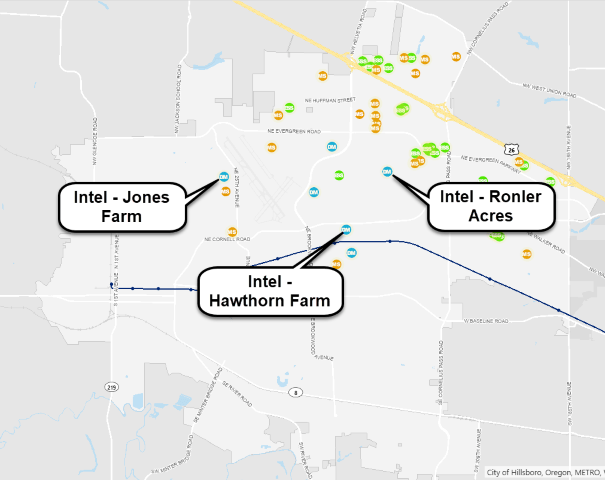
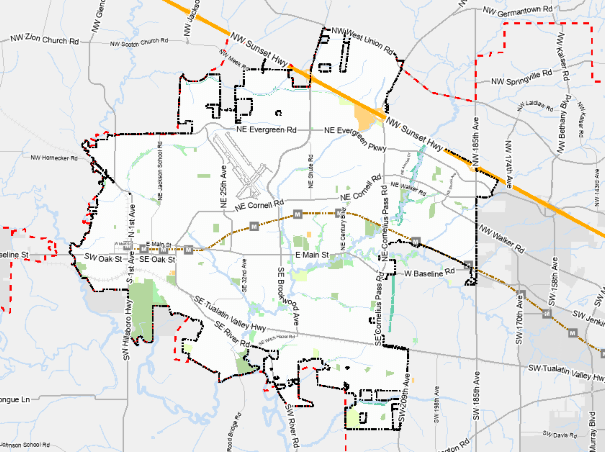
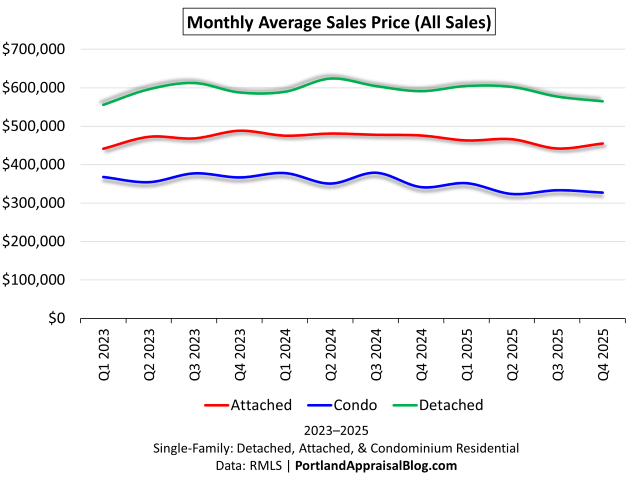
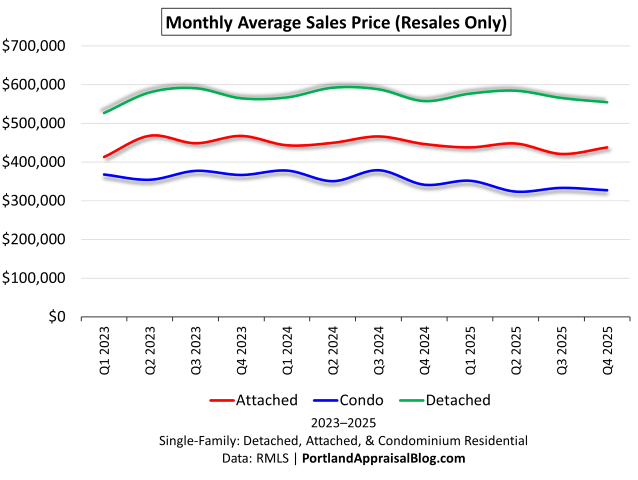
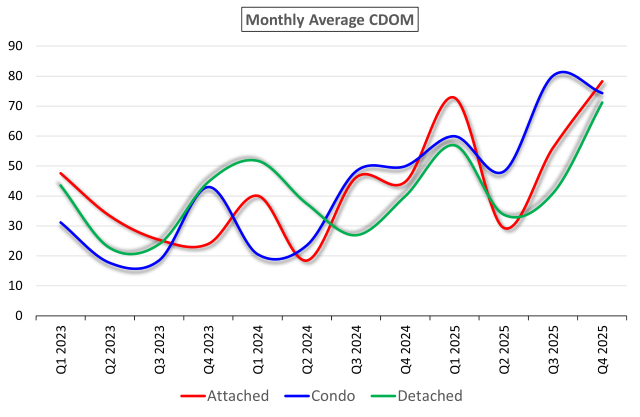
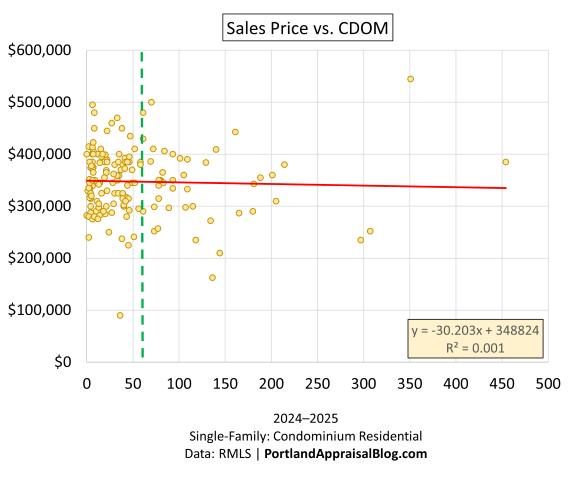
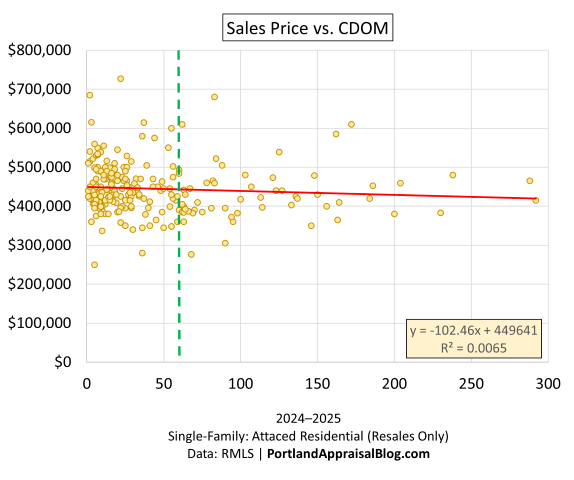


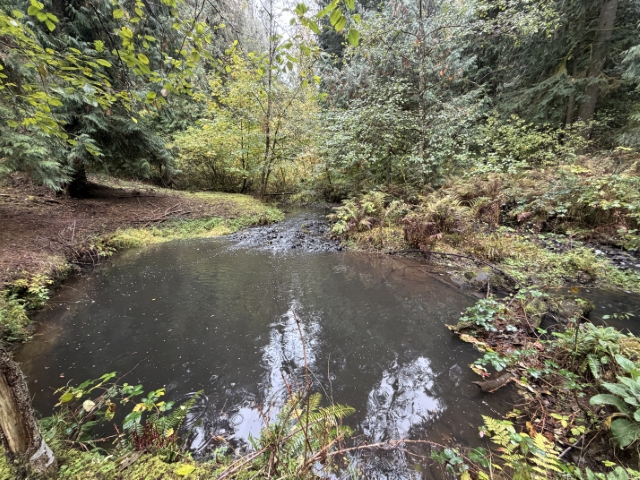
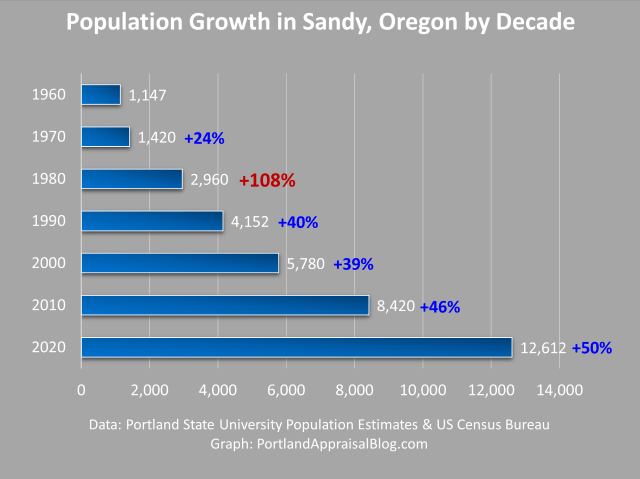


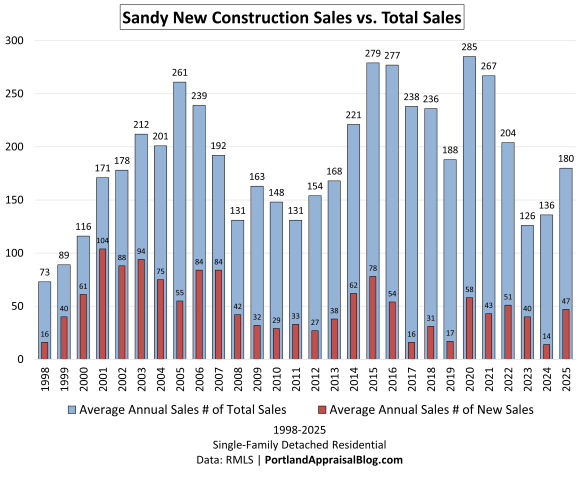

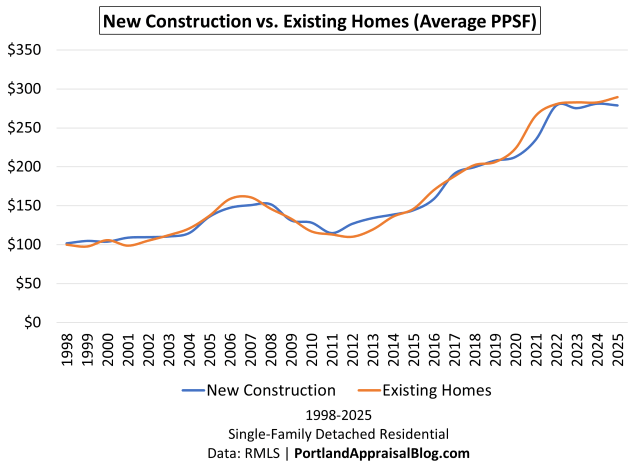
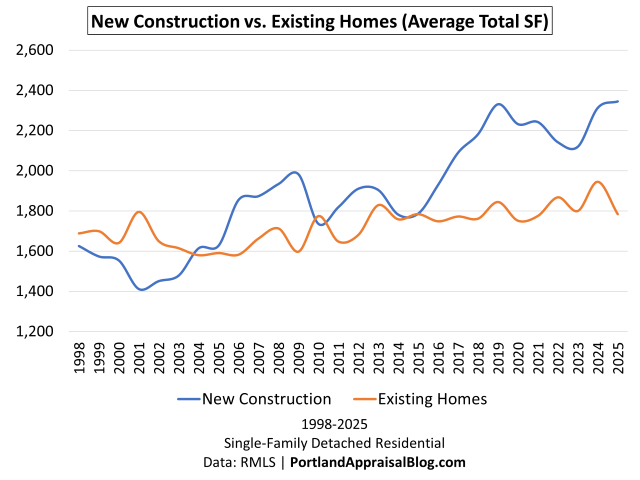
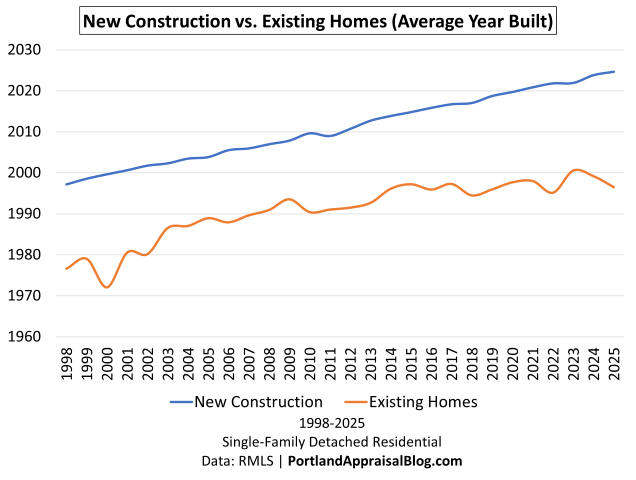
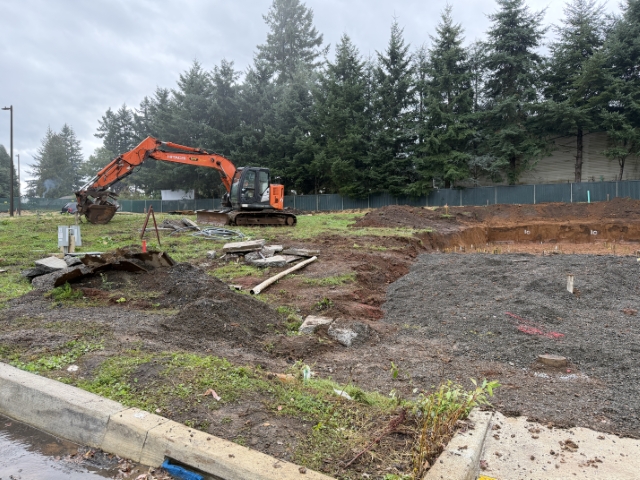
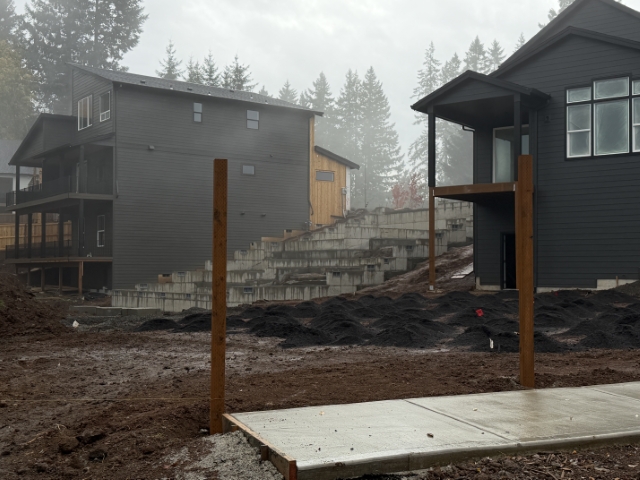
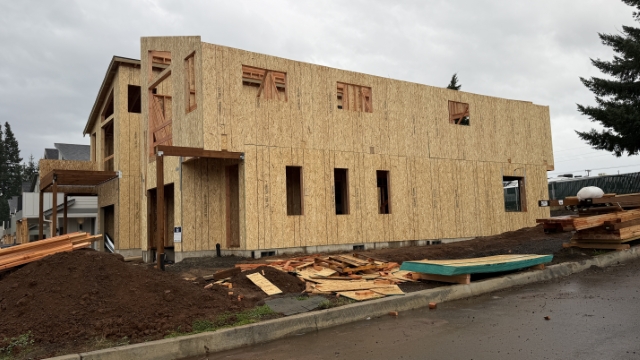
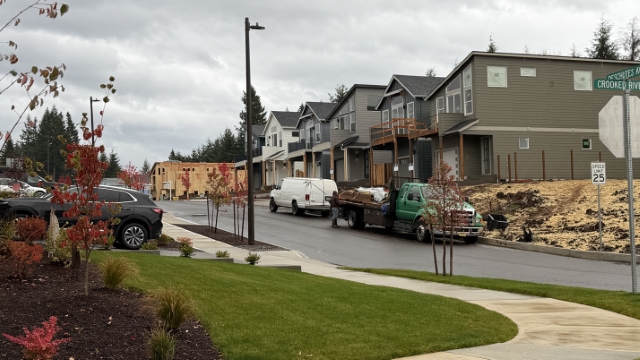
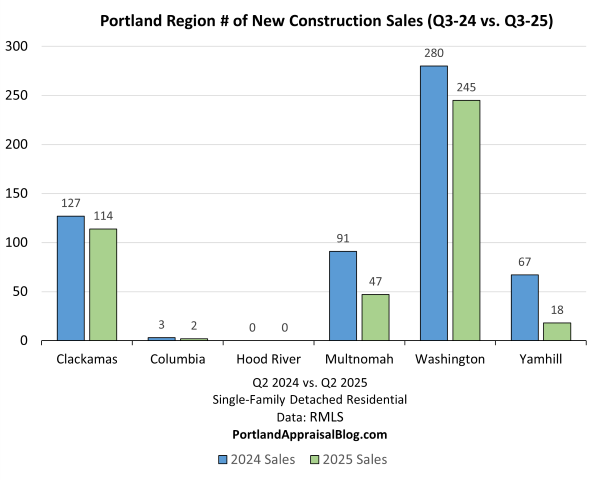

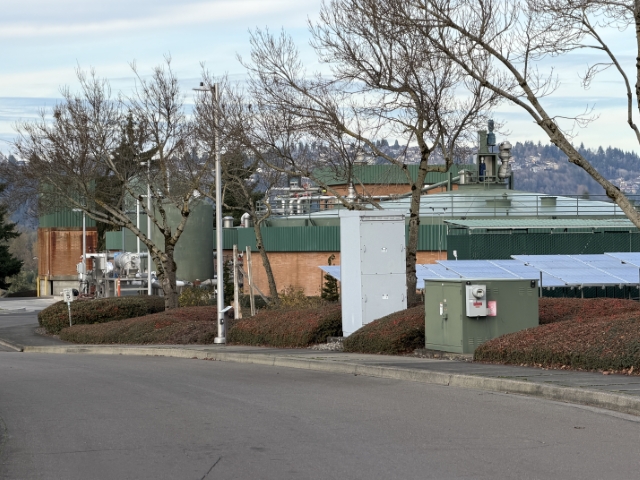

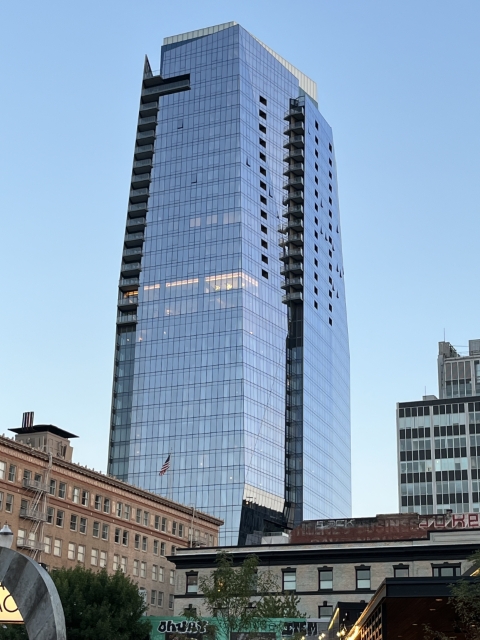
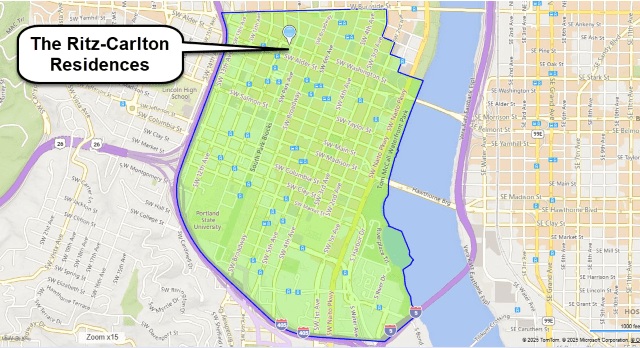
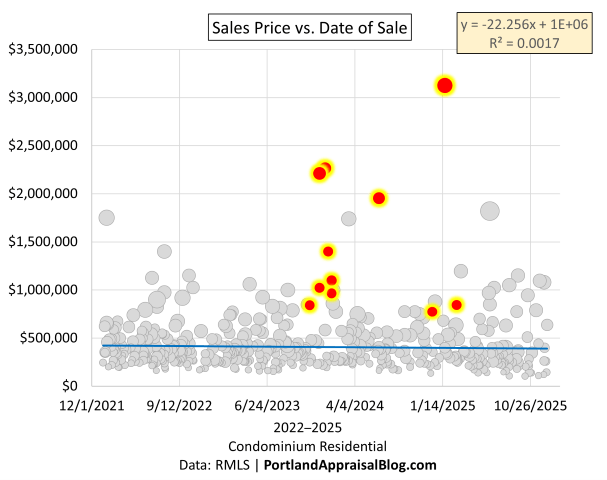
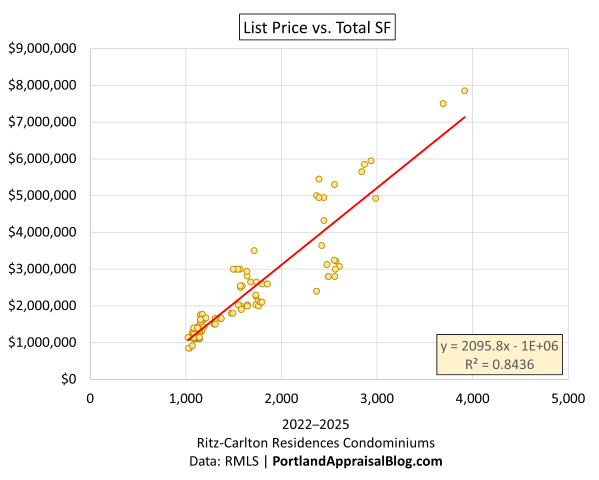
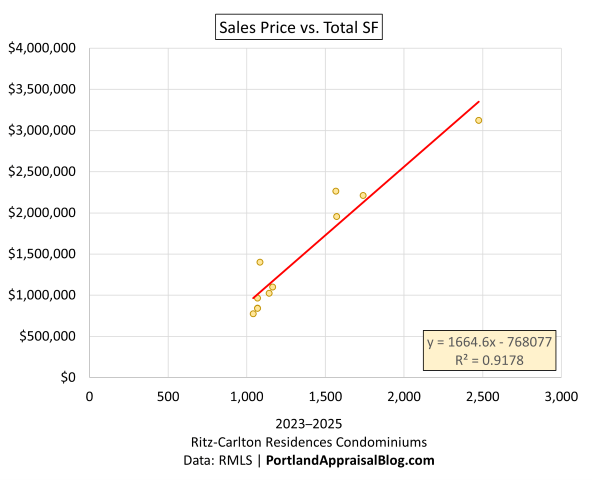
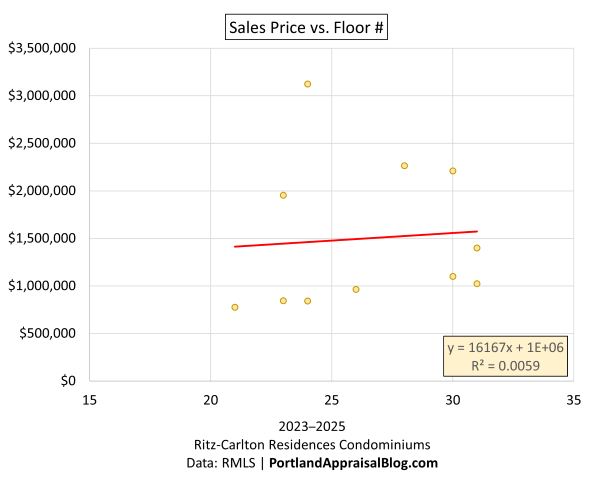

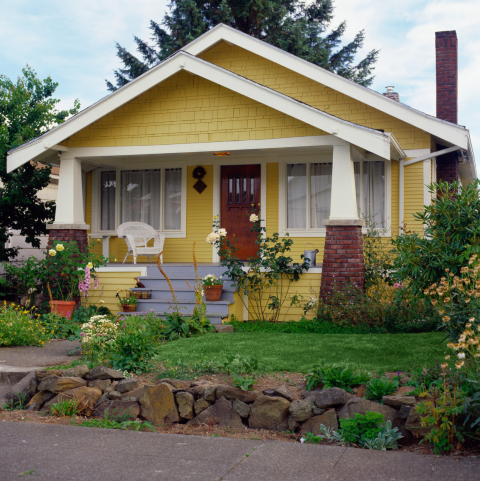


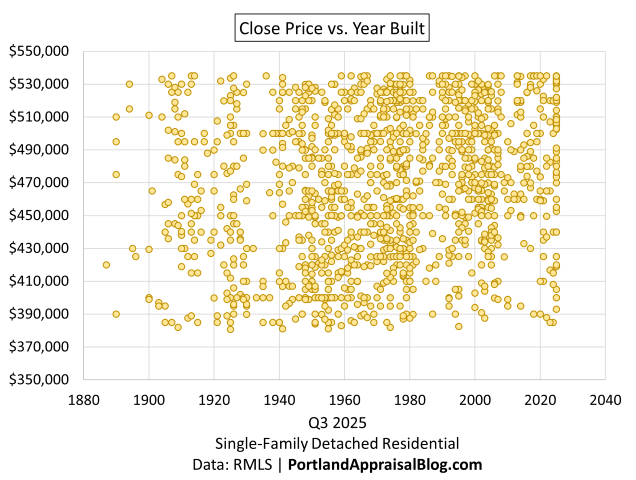
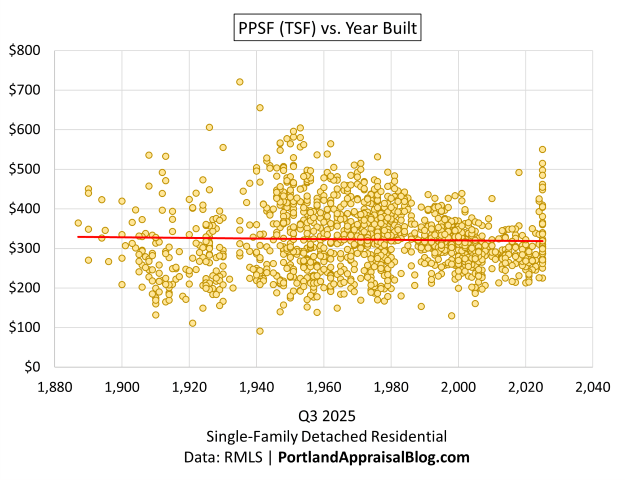

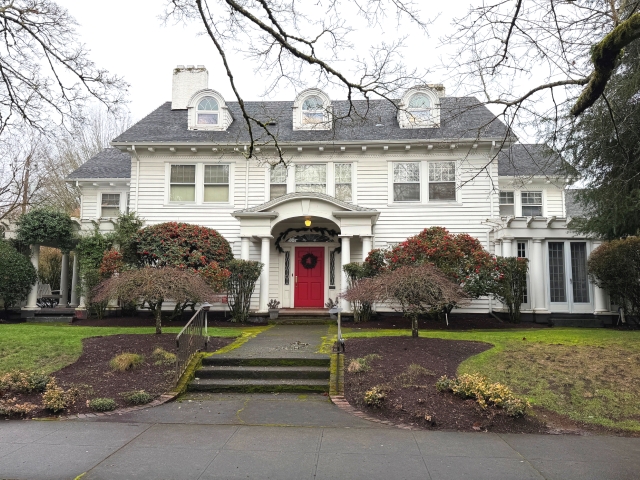
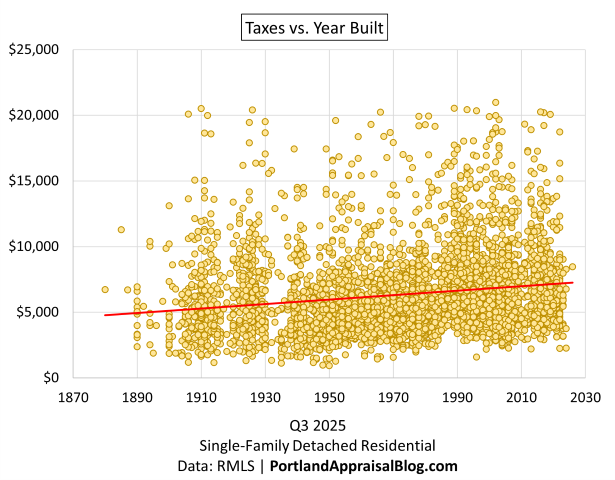

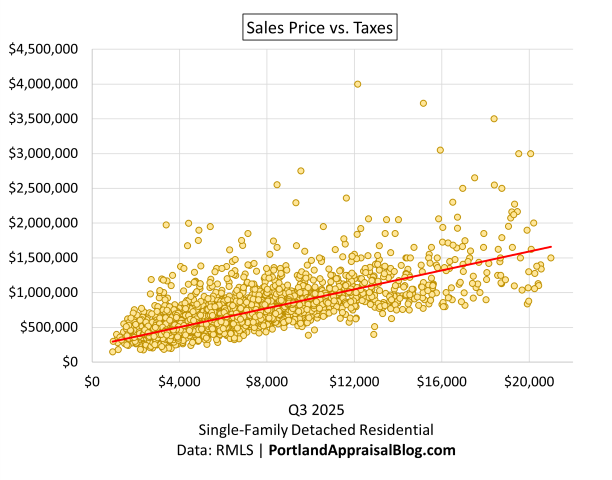
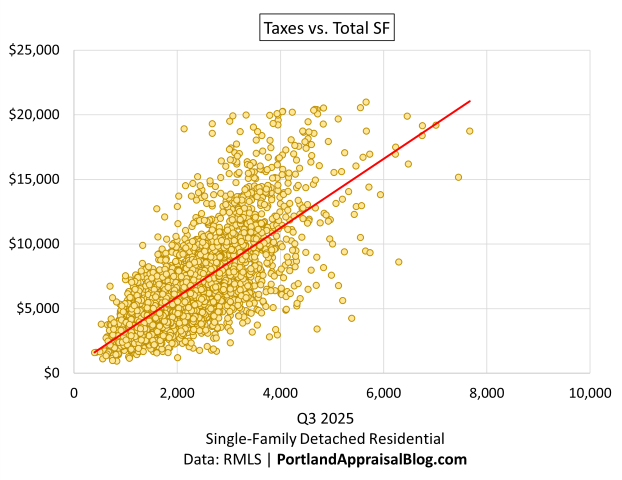

 Portland Appraisal Blog