Portland Real Estate Appraisal Brief – Tuesday, December 16, 2025: Oregon Model Code Enables Neighborhood-Scale Apartments

Oregon’s new OHNA model zoning code removes barriers to small-scale neighborhood apartments in Portland-area cities, with gradual changes expected where market conditions support them.

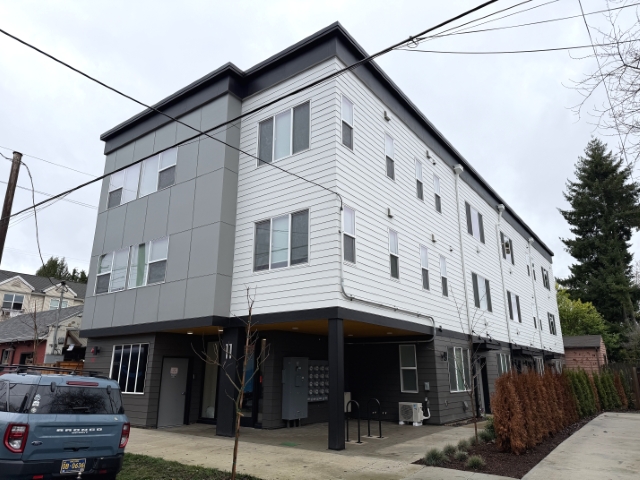
New three-story, 16-unit multifamily on 5,000 sq ft lot at 11 NE 55th Ave, Portland, exemplifying small-scale neighborhood apartments that are possible with new rule shift.
Three-story, 16-unit apartment building on a standard Portland residential lot, illustrating potential density under middle housing reforms
11 NE 55th Ave, Portland, Oregon – December 2025
Photo: Abdur Abdul-Malik, Certified Residential Appraiser

New Statewide Model Zoning Code for Middle Housing

Oregon’s Land Conservation and Development Commission unanimously adopted new rules under the Oregon Housing Needs Analysis (OHNA) framework on December 4, 2025, establishing a statewide model zoning code to accelerate housing production in cities that underperform relative to peers. The amendments build on prior middle housing reforms by moving away from strict unit counts per building toward form-based regulation—controlling height, footprint, lot coverage, and floor area ratios instead.

In practice, the model code re-legalizes neighborhood-scale apartment buildings (typically three to four stories) that have long been prohibited in low-density residential zones. It permits duplexes, triplexes, fourplexes, townhouses, and cottage clusters outright, with bonuses such as additional height or reduced courtyard sizes when projects include accessible units or deeper affordability. Parking requirements are significantly reduced or eliminated for many of these housing types.

Affected cities—primarily Oregon’s larger municipalities, including Portland, Beaverton, Gresham, Hillsboro, and others in the metro area—must align zoning with the model code if they fail to meet production targets, though implementation timelines vary by jurisdiction and can extend several years.

Appraisal Implications

Residential Properties

These rules expand as-of-right development options on residential lots, particularly corner or larger parcels in single-family zones. Highest-and-best-use analyses may now reflect stronger redevelopment potential for small multifamily or middle housing types in cities subject to the model code.

Although the model code removes unit-count caps, form-based limits on height, coverage, and floor area ratio keep development firmly neighborhood-scale—typically supporting 6–12 units on a standard lot, not the higher densities seen in multi-dwelling zones. While larger projects, such as a 16-unit building, are now more feasible, it is important to remember they remain a different undertaking: they involve more complex regulatory review, commercial-grade construction requirements, specialized financing, and contractor expertise that many local rehabbers and small builders are not equipped to handle. Market activity will likely continue to favor rehabilitation of existing homes alongside gradual small-scale infill.

New construction of even single-family homes remains a regular occurrence in Portland despite years of higher density allowances—often with an ADU added. Many builders are primarily set up for that work and not much else. While residential appraisers need to be mindful of what is possible with the new zoning allowances, they must analyze what the market is actually doing.

Income-Producing and Multifamily Properties

Form-based standards and reduced parking mandates lower barriers to feasible small apartment or townhouse projects. Affordability and accessibility bonuses provide quantifiable density incentives that investors can underwrite with greater certainty. Over time, this may broaden comparable selection for emerging middle housing product.

Market Context

The statewide model code aligns with recent local efforts to facilitate missing-middle and infill development. It complements initiatives such as Portland’s easing of code for single-exit four-story apartments and the city’s temporary system development charge exemption for new housing units (2025–2028).

These changes simply remove long-standing barriers to the creation of small-scale apartment buildings in cities that previously had hostile zoning laws for such structures. It does not mean they will sprout on every street, but we may gradually begin to see more of them where it makes economic and market sense.

Sources & Further Reading

Thanks for reading—I hope you found a useful insight or an unexpected nugget along the way. If you enjoyed the post, please consider subscribing for future updates.

Coda

Are you an agent in Portland who wonders why appraisers always do “x”?

A homeowner with questions about appraiser methodology?

If so, feel free to reach out—I enjoy connecting with market participants across Portland and the surrounding counties, and am always happy to help where I can.

And if you’re in need of appraisal services in Portland or anywhere in the Portland Region, we’d be glad to assist.

About the Author — Abdur Abdul‑Malik, SRA, ASA

Abdur Abdul‑Malik is the founder, author, and publisher of the Portland Appraisal Blog, where he produces original regional and neighborhood‑level housing analytics for the Portland Region. He is a certified residential appraiser serving Oregon and Washington, drawing on RMLS transaction data, public records, and custom segmentation models he has built.

He developed the Portland Appraisal Blog Affordability Index (PABAI), a payment‑based affordability metric built from actual RMLS sales. PABAI incorporates weekly updates based on the prevailing 30‑year fixed mortgage rate, providing a locally grounded measure of housing affordability across the region.

Learn more → PABAI explainermortgage rate seriesfull author bio

Portland Real Estate Appraisal Brief – Monday, December 15, 2025: Fannie Mae Expands ADU and Renovation Eligibility

Fannie Mae’s SEL-2025-10 expands ADU eligibility to up to three per single-unit property and enhances renovation financing—relevant implications for Portland metro appraisals and housing flexibility.

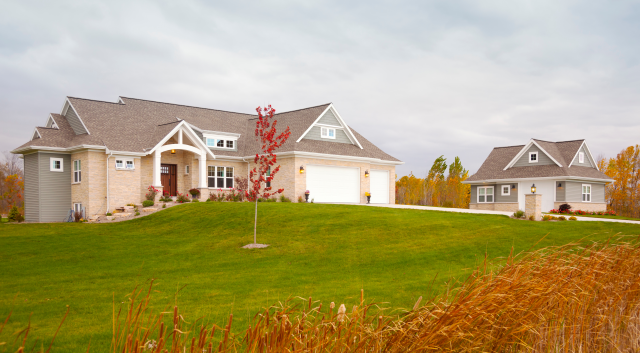
Suburban single-family home with detached guest house (ADU) in a Portland metro area neighborhood, eligible for expanded Fannie Mae financing under December 2025 guidelines.
Detached guest house on a residential property, illustrating expanded ADU eligibility
Via Canva Pro

Fannie Mae issued Selling Guide Announcement SEL-2025-10 on December 10, 2025, introducing updates to renovation lending programs and property eligibility guidelines.

These changes support greater flexibility for home improvements and accessory units in conventional financing.

Renovation Lending Updates

HomeStyle Renovation loans now permit upfront disbursements of up to 50% of total renovation costs at closing for materials, permits, architectural or design fees, and borrower deposits.

For manufactured homes, the previous $50,000 renovation cost cap has been removed; costs may now reach 50% of the as-completed appraised value, aligning with site-built properties.

Limited cash-out refinances under this program can include buying out a co-owner’s interest—such as in inheritance or divorce scenarios—alongside renovations, with no cash back to the borrower.

HomeStyle Refresh, rebranded from HomeStyle Energy and effective for applications received on or after March 31, 2026, finances up to 15% of the as-completed appraised value for cosmetic or functional upgrades, disaster resiliency improvements (e.g., storm barriers or wildfire-resistant roofing), and environmental remediation (lead, asbestos, or mold).

Energy reports are often not required under this streamlined option.

Interior renovation work on a residential property
Via Canva Pro

ADU and Manufactured Housing Expansions

Effective March 31, 2026, and requiring compliance with UAD 3.6, Fannie Mae broadens accessory dwelling unit (ADU) eligibility.

Single-unit properties may now include up to three ADUs if permitted by local zoning.

Two- to three-unit properties qualify for ADUs provided the total unit count does not exceed four.

Standard manufactured homes, including single-wide models, are eligible for one ADU classified as real property.

MH Advantage properties support multiple ADUs, with the overall unit total capped at four.

These expansions also extend eligibility to two- to four-unit and multi-story manufactured homes.

While a small subset of the overall market, the Portland Region sees about 300 sales a year of manufactured homes on owned land. These provisions will materially expand options for manufactured home owners.

In the Portland metro area, where local policies already encourage middle housing and ADUs to address supply constraints, these guidelines complement recent incentives such as the temporary SDC exemption for new housing units.

Appraisal Implications

The updates increase reliance on as-completed appraised value for determining loan-to-value ratios, renovation limits, and eligibility.

Appraisers serving the region may see growing demand for projected-value analyses on properties with multiple ADUs, manufactured home additions, or significant renovations.

Highest-and-best-use conclusions will need to carefully reflect local zoning allowances and market acceptance of these configurations.

Lenders and homeowners exploring alternatives to jumbo financing may find added flexibility here, especially alongside the recently announced higher FHA 2026 loan limits in the Portland metro.

Sources & Further Reading

Decorative text divider.

Thanks for reading—I hope you found a useful insight or an unexpected nugget along the way. If you enjoyed the post, please consider subscribing for future updates.

Coda

Are you an agent in Portland who wonders why appraisers always do “x”?

A homeowner with questions about appraiser methodology?

If so, feel free to reach out—I enjoy connecting with market participants across Portland and the surrounding counties, and am always happy to help where I can.

And if you’re in need of appraisal services in Portland or anywhere in the Portland Region, we’d be glad to assist.

About the Author — Abdur Abdul‑Malik, SRA, ASA

Abdur Abdul‑Malik is the founder, author, and publisher of the Portland Appraisal Blog, where he produces original regional and neighborhood‑level housing analytics for the Portland Region. He is a certified residential appraiser serving Oregon and Washington, drawing on RMLS transaction data, public records, and custom segmentation models he has built.

He developed the Portland Appraisal Blog Affordability Index (PABAI), a payment‑based affordability metric built from actual RMLS sales. PABAI incorporates weekly updates based on the prevailing 30‑year fixed mortgage rate, providing a locally grounded measure of housing affordability across the region.

Learn more → PABAI explainermortgage rate seriesfull author bio

Portland Real Estate Appraisal Brief – Sunday, December 14, 2025: Julia West House Supportive Housing Tower Opens

Julia West House, a 12-story mass timber tower in downtown Portland, opens with 90 units (89 regulated) of supportive housing for seniors amid ongoing regional affordability challenges.

Full-height view of Julia West House, a 12-story mass-timber building in downtown Portland, Oregon, showing the light brick facade with protruding window surrounds, orange accents, and the building name on the lower canopy, under a clear blue sky.
Julia West House, Oregon’s tallest mass-timber affordable senior housing building, viewed from the street corner in downtown Portland.
580 SW 13th Ave, Portland, Oregon – December 2025
Photo: Abdur Abdul-Malik, Certified Residential Appraiser

Julia West House Opens in Downtown Portland

The Julia West House, a 12-story mass timber apartment tower in downtown Portland’s West End, officially opened in late 2025, delivering 90 units of permanent supportive housing targeted at formerly unhoused seniors. Located at 580 SW 13th Avenue on a former surface parking lot owned by First Presbyterian Church—the site of a historic home previously used for church programs—the project provides 90 total units: 89 regulated affordable units (60 studios and 30 one-bedrooms) reserved for individuals earning 30% or less of area median income, with the remaining unit serving as an unrestricted on-site manager apartment.

The tower retains the name Julia West House in honor of Julia West Lindsley, wife of the church’s first pastor, continuing a legacy of community service at the address. Situated directly across SW 13th Avenue from the Sam Galbreath Alder House—a renovated income-restricted single-room occupancy building also offering supportive services—the location creates a concentrated hub for permanent supportive housing in the West End. This focus addresses a critical segment of need: nearly a quarter of Portland’s unhoused population is age 55 or older, with BIPOC communities disproportionately represented.

Before-and-during views of the Julia West House site at 580 SW 13th Avenue in downtown Portland: pre-demolition historic structure (2023, top) and cleared construction site (2024, bottom)
Before-and-during views of the Julia West House site at 580 SW 13th Avenue in downtown Portland: pre-demolition historic structure (2023, top) and cleared site (2024, bottom)
Image: Google Street View (composite screenshot)

On-site wraparound services, delivered by Northwest Pilot Project, Native American Rehabilitation Association of the Northwest, and Community for Positive Aging, include case management, health support, and programs to promote aging in place and housing stability. As Oregon’s tallest mass timber residential structure at 145 feet, the building utilizes cross-laminated timber floors and glulam beams above a concrete podium, enabled by Type IV-B heavy timber provisions. This construction method reduced embodied carbon, shortened the schedule by approximately 14 weeks, and incorporates biophilic and trauma-informed design elements—such as exposed wood ceilings—for resident well-being.

Financing combined public and private sources, including 4% Low-Income Housing Tax Credits and contributions from the Portland Clean Energy Community Benefits Fund, demonstrating a viable model for deeply affordable urban infill.

Low-angle view of the Julia West House, a tall building with light-colored brick exterior and grid-patterned windows, showcasing its modern architectural design and prominent entrance signage.
The Julia West House, a modern multistory building in downtown Portland, stands tall with its grid of windows and light brick facade—captured from a low angle that emphasizes its architectural presence.
580 SW 13th Ave, Portland, Oregon – December 2025
Photo: Abdur Abdul-Malik, Certified Residential Appraiser

Appraisal Implications

Residential Properties

Developments like Julia West House expand the supply of deeply affordable and supportive rental housing in the Portland metro area, where single-family inventory remains limited. These projects provide market evidence of ongoing efforts to address affordability and homelessness in central locations with strong transit access, informing highest and best use considerations for nearby properties and enhancing neighborhood marketability.

Multifamily Properties

Mass timber construction in high-density supportive projects sets emerging precedents for sustainable building practices, potentially affecting future replacement costs, capitalization rates, and development feasibility in urban zones. Restricted affordable units, supported by Low-Income Housing Tax Credits and similar programs, require appraisers to carefully isolate restricted interests from fee simple value. While challenges persist—as illustrated by the 1,863 vacant regulated units reported earlier this week—successful openings like Julia West House highlight effective delivery models for mission-driven housing with integrated services.

Market Context

Q3 2025 median prices for detached single-family homes stood at $600,000 regionally and $555,000 in Multnomah County, reinforcing the ongoing need for affordable alternatives beyond the for-sale market. Purpose-built supportive housing adds targeted supply that supports broader regional stability without directly competing in the single-family segment.

Sources & Further Reading

Decorative text divider.

Thanks for reading—I hope you found a useful insight or an unexpected nugget along the way. If you enjoyed the post, please consider subscribing for future updates.

Coda

Are you an agent in Portland who wonders why appraisers always do “x”?

A homeowner with questions about appraiser methodology?

If so, feel free to reach out—I enjoy connecting with market participants across Portland and the surrounding counties, and am always happy to help where I can.

And if you’re in need of appraisal services in Portland or anywhere in the Portland Region, we’d be glad to assist.

About the Author — Abdur Abdul‑Malik, SRA, ASA

Abdur Abdul‑Malik is the founder, author, and publisher of the Portland Appraisal Blog, where he produces original regional and neighborhood‑level housing analytics for the Portland Region. He is a certified residential appraiser serving Oregon and Washington, drawing on RMLS transaction data, public records, and custom segmentation models he has built.

He developed the Portland Appraisal Blog Affordability Index (PABAI), a payment‑based affordability metric built from actual RMLS sales. PABAI incorporates weekly updates based on the prevailing 30‑year fixed mortgage rate, providing a locally grounded measure of housing affordability across the region.

Learn more → PABAI explainermortgage rate seriesfull author bio

Portland Real Estate Appraisal Brief – Saturday, December 13, 2025: FHA 2026 Loan Limits Rise to $701,500 in Portland Metro

FHA 2026 one-unit limit in Portland metro rises modestly to $701,500, opening 3.5% down-payment financing to ~48 additional Q3 2025 detached sales.

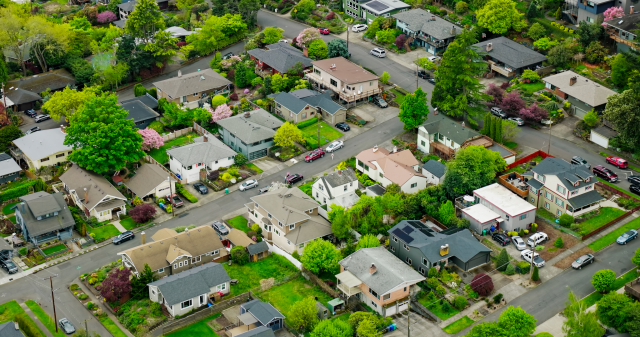
Aerial view of a tree-lined single-family residential neighborhood in Portland, Oregon – representative of homes now eligible for 2026 FHA loan limits up to $806,500
Single-family neighborhood in Portland, Oregon–representative of homes affected by 2026 FHA loan limit of $701,500
Via Canva Pro

HUD Announces 2026 FHA Loan Limits

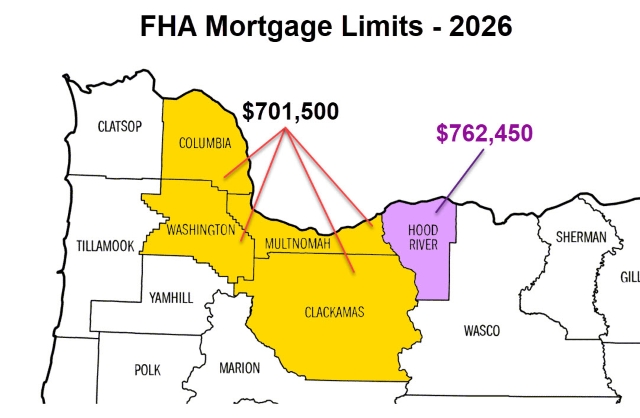
The Federal Housing Administration has released its 2026 loan limits. In the Portland–Vancouver–Hillsboro MSA (38900)—covering Clackamas, Columbia, Multnomah, Washington, and Yamhill counties in Oregon, plus Clark and Skamania in Washington—the new one-unit limit increases from $695,750 in 2025 to $701,500 in 2026, a rise of $5,750 (0.83%).

Hood River County is not part of this MSA and retains its 2025 limit of $762,450 (unchanged for 2026). No detached SFR sales in Hood River County reported FHA financing in Q3 2025.

Appraisal & Lending Implications

In addition to developing an opinion of value, appraisers on FHA assignments focus primarily on identifying property deficiencies or conditions that could render a home ineligible for financing—lenders handle the loan-to-value calculations against the limit using the appraised value alongside borrower qualifications.

The modest increase means approximately 48 additional detached homes that closed in Q3 2025 now fall within FHA-insured financing eligibility. Lenders handling FHA assignments with case numbers assigned on or after January 1, 2026, will apply the new $701,500 ceiling across the core Portland metro counties.

Q3 2025 Context – Detached Single-Family Residences

RMLS data for Q3 2025 detached SFR closings in the region illustrate the practical effect:

Q3 2025 Portland metro detached SFR sales by price band showing 48 homes now eligible under the 2026 FHA loan limit of $701,500
  • 48 detached homes closed between $695,751 and $701,500—previously above the 2025 limit.
  • Only 2 of these 48 reported FHA financing (likely large down-payment exceptions). Now, all 48 would be eligible under the 2026 limit.
  • Above $701,500, FHA usage drops to 0.71% (11 of 1,548 sales).
026 FHA loan limits by county in the Portland region – Portland metro MSA at $701,500, Hood River County at $762,450
2026 FHA one-unit loan limits by county. The Portland–Vancouver–Hillsboro MSA (yellow) rises to $701,500; Hood River County (purple) remains $762,450.
Source: HUD

2026 FHA one-unit loan limits by county. The Portland–Vancouver–Hillsboro MSA (yellow) rises to $701,500; Hood River County (purple) remains $762,450.

For broader Q3 2025 market trends, see the most recent quarterly update.

Sources & Further Reading

Decorative text divider.

Thanks for reading—I hope you found a useful insight or an unexpected nugget along the way. If you enjoyed the post, please consider subscribing for future updates.

Coda

Are you an agent in Portland who wonders why appraisers always do “x”?

A homeowner with questions about appraiser methodology?

If so, feel free to reach out—I enjoy connecting with market participants across Portland and the surrounding counties, and am always happy to help where I can.

And if you’re in need of appraisal services in Portland or anywhere in the Portland Region, we’d be glad to assist.

About the Author — Abdur Abdul‑Malik, SRA, ASA

Abdur Abdul‑Malik is the founder, author, and publisher of the Portland Appraisal Blog, where he produces original regional and neighborhood‑level housing analytics for the Portland Region. He is a certified residential appraiser serving Oregon and Washington, drawing on RMLS transaction data, public records, and custom segmentation models he has built.

He developed the Portland Appraisal Blog Affordability Index (PABAI), a payment‑based affordability metric built from actual RMLS sales. PABAI incorporates weekly updates based on the prevailing 30‑year fixed mortgage rate, providing a locally grounded measure of housing affordability across the region.

Learn more → PABAI explainermortgage rate seriesfull author bio

Portland Real Estate Appraisal Brief – Friday, December 12, 2025: $20.7M RSO Reallocation, Rent Hikes Reversed, HUD Policy Pause

Portland’s Home Forward reverses rent hikes at subsidized properties amid 14% vacancies, $20.7M RSO reallocation, and HUD’s CoC pause—appraisal risks for multifamily in the Portland–Vancouver region.

The paradox of empty apartments amidst a backlog of applications
Via Canva Pro

The Affordable Housing Paradox: Local Action and Federal Uncertainty

The dynamics of affordable housing in the Portland metro area are currently defined by a convergence of major local policy responses and intense federal uncertainty. The situation presents a complex risk profile for homeowners, investors, lenders, and appraisers focused on the multifamily sector across the region.

Locally, the Portland Housing Authority, Home Forward, recently reversed planned rent increases at two properties, The Yards at Union Station and Pearl Court Apartments, after tenant outcry. The decision was made following reporting that the region has at least 1,863 income-restricted apartments sitting empty while waitlists remain years long—an affordable-housing paradox our brief from Sunday, December 7th examined. Home Forward’s vacancy rate is approximately 14% across its portfolio, significantly above the general market rate. The rent increases, which were as high as 10% for tenants using government rent subsidies, were originally deemed necessary due to a combination of rising operating costs and delayed federal voucher renewals and payment shortfalls. This immediate reversal highlights the degree to which local administrative and political pressures are mitigating instability that often originates from federal payment issues.

Local Fiscal Correction and Spending Priorities

Adding to the local action is the controversy over approximately $20.7 million in unspent funds from the Rental Services Office (RSO), as uncovered in last month’s reporting on landlord relocation fees. This surplus prompted concern after former Housing Director Shannon Singleton told city council she was instructed not to disclose the accumulated balance. The discovery has pushed the City Council to act quickly, especially as Home Forward is currently facing an estimated $35 million budget gap next year due to insufficient federal funding.

The Council introduced a resolution to allocate the approximately $20.7 million. The intent is to “slow the inflow into homelessness” by prioritizing upstream renter stabilization and prevention programs. Key components of the Council’s directed priorities include:

  • $9 million designated for Home Forward to stabilize households affected by ongoing federal funding cuts and help close the agency’s widening budget gap.
  • $4 million over three fiscal years for new, flexible, short-term rent assistance aimed at tenants facing imminent eviction.
  • A minimum of $2 million of RSO revenue set aside for capitalizing a Revolving Loan Fund, which would be used for the future acquisition of market-rate housing or land banking for the development of social housing.

The allocation of these funds underscores a local commitment to mitigating housing instability in the face of dwindling or volatile federal support.

Federal Policy Shifts and HUD Overhaul Pause

The urgency behind the local fund allocation is intensified by volatility at the federal level, which affects the entire Portland–Vancouver region. Nationally, housing authorities and property owners have been dealing with operational disruptions, including delayed Housing Choice Voucher (Section 8) payments to landlords due to a recent federal government shutdown. Furthermore, Home Forward was forced to halt the issuance of new vouchers in August due to the looming $35 million budget gap driven by insufficient HUD funding.

On December 8th, the Department of Housing and Urban Development (HUD) temporarily withdrew its highly controversial Continuum of Care (CoC) Notice of Funding Opportunity (NOFO). This withdrawal occurred just hours before a court hearing related to multiple lawsuits, including one in which both Oregon and Washington were key plaintiffs, as detailed in our December 2nd brief on the HUD lawsuit. The NOFO was widely criticized for proposing a significant shift in federal policy by drastically limiting the amount of CoC funds—the largest federal grant source for homelessness prevention—that could be used for Permanent Supportive Housing (PSH). Oregon Housing and Community Services (OHCS) and other local providers had warned that this policy change would create a conflict with state policies requiring services to be voluntary, threatening to disrupt or displace existing programs. The temporary pause on the overhaul grants local housing authorities and service providers a crucial—though potentially brief—reprieve as HUD reviews its funding strategy.

Appraisal Implications

The confluence of extreme local policy action, high subsidized vacancy rates, and unstable federal funding introduces unique valuation and market risks for properties, particularly in the multifamily segment across Clackamas, Multnomah, Washington, and Clark counties.

Income-Restricted and Section 8 Properties

The financial state of Home Forward, marked by a 14% vacancy rate and a $35 million budget gap, injects severe income-approach risk for appraisers. Restricted rents that appeared stable only weeks ago have proven volatile, and operating expenses continue rising faster than allowed rent adjustments. Appraisers valuing LIHTC, project-based Section 8, or other regulated affordable properties must account for elevated policy risk.

  • Vacancy Analysis: The high vacancy is driven by both administrative issues and market factors. Specifically, many 60% AMI units are no longer competitive as market-rate rents have dropped, causing demand to lag in this specific income tier while the deepest need remains in the 0-30% AMI range. Appraisers must carefully analyze these tiers, alongside physical risks, to determine the actual loss-to-lease and economic vacancy.

Market-Rate Multifamily Rentals

The $20.7 million reallocation and potential influx of new renter stabilization resources may modestly ease pressure on market-rate rents in lower-price segments, though the effect will likely be concentrated in central Portland submarkets.

Sources & Further Reading

Decorative text divider.

Thanks for reading—I hope you found a useful insight or an unexpected nugget along the way. If you enjoyed the post, please consider subscribing for future updates.

Coda

Are you an agent in Portland who wonders why appraisers always do “x”?

A homeowner with questions about appraiser methodology?

If so, feel free to reach out—I enjoy connecting with market participants across Portland and the surrounding counties, and am always happy to help where I can.

And if you’re in need of appraisal services in Portland or anywhere in the Portland Region, we’d be glad to assist.

About the Author — Abdur Abdul‑Malik, SRA, ASA

Abdur Abdul‑Malik is the founder, author, and publisher of the Portland Appraisal Blog, where he produces original regional and neighborhood‑level housing analytics for the Portland Region. He is a certified residential appraiser serving Oregon and Washington, drawing on RMLS transaction data, public records, and custom segmentation models he has built.

He developed the Portland Appraisal Blog Affordability Index (PABAI), a payment‑based affordability metric built from actual RMLS sales. PABAI incorporates weekly updates based on the prevailing 30‑year fixed mortgage rate, providing a locally grounded measure of housing affordability across the region.

Learn more → PABAI explainermortgage rate seriesfull author bio